
8am–6pm London: construction hours, Section 61 and what to ask
Most London boroughs permit noisy construction work from 8am to 6pm, Monday to Friday, with Saturday hours typically shorter and Sundays and bank holidays generally off-limits. That said, every borough sets its own detail, so the safest move is to check your specific council’s code of construction practice or call its noise and pollution team before assuming a builder’s timetable is compliant. Contractors wanting to work outside those windows need formal Section 61 or out-of-hours consent first.
TL;DR:
Noise-sensitive work like impact drilling and heavy demolition is often restricted to specific windows, such as 9am to 12pm and 2pm to 5:30pm in some boroughs, even within permitted hours.
Contractors must apply for Section 61 consent to work outside standard hours, providing detailed plans and neighbor notifications, which can take from three to ten working days depending on complexity.
Most boroughs start noisy construction at 8am and stop by 6pm on weekdays, with shorter Saturday hours and no permitted noise on Sundays unless special consent is obtained.
Noise levels are measured at site boundaries or nearby properties, and evidence like recordings or photos can support complaints about illegal or excessive noise outside permitted hours.
Good contractor practice includes planning work around neighbors through advance notices, clear signage, and visible site contact info to minimize disruption and maintain community relations.
Table of Contents
Construction working hours in London: the borough baseline
Councils don’t invent their own noise rules from scratch, but they do interpret them differently. The widely used baseline across most London boroughs runs 8am to 6pm on weekdays, with Saturdays compressed and Sundays largely protected for residents to get some peace.
Typical patterns you’ll see published on borough websites:
Weekdays: 8am to 6pm for noisy or high-impact work
Saturdays: usually 8am to 1pm, though some boroughs allow up to 2pm
Sundays and bank holidays: no noisy construction work permitted without special consent
Bromley Council’s guidance sets out exactly this structure, and it’s echoed in one form or another across most of London. But the City of London applies a twist: its Code of Construction Practice sets standard hours of 08:00 to 18:00 on weekdays and 09:00 to 14:00 on Saturdays. It also introduces reduced-impact hours near sensitive commercial premises and even considers 24-hour working in limited cases where nobody nearby would be disturbed. Hammersmith & Fulham and the Royal Borough of Kensington and Chelsea publish their own construction noise pages with broadly similar frameworks but their own local wrinkles. Rather than assume your postcode follows the “standard” pattern, look up your own council’s code before booking in noisy trades.
What counts as ‘noisy’ or ‘high-impact’ work?
Not all building work carries the same restrictions. Councils reserve their tightest control for activities that generate the most disturbance, and the label matters because it decides when the work can actually happen.
Common examples of high-impact or noisy work include:
Percussive drilling and breaking out (jackhammers, Kango hammers)
Piling and ground works
Impact fasteners and heavy demolition tasks
Movement of heavy plant and delivery vehicles on site
Some borough codes narrow these tasks into specific windows, separate from the general permitted hours. The Royal Borough of Kensington and Chelsea’s Code of Construction Practice gives an example of high-impact activity being restricted to 09:00 to 12:00 and 14:00 to 17:30, leaving a quieter midday and end-of-day buffer even within an otherwise permitted working day.
Pro Tip: If a task genuinely can’t be heard beyond the site boundary, quieter jobs like internal fit-out or painting can often continue outside the noisy-work windows. It’s the noise reaching neighbours that triggers restriction, not the calendar clock alone.
How do contractors get permission to work outside permitted hours?
Section 61 of the Control of Pollution Act 1974 is the legal mechanism behind most out-of-hours approvals. It lets a contractor apply for prior consent to work beyond standard hours, and once granted, the council effectively pre-agrees the terms rather than treating every session as a potential complaint.
The process generally follows a similar shape borough to borough:
Submit a written application describing the proposed hours, the work involved, and why standard hours aren’t workable.
Include a noise assessment and mitigation plan showing how disturbance will be minimised.
Notify neighbours directly, often with a written notice and an on-site contact number.
Wait for the council’s decision, which usually comes with conditions attached.
Keep the consent documentation on site for the duration of the approved works.
A full application typically needs:
Predicted working hours and duration of the out-of-hours period
A description of the equipment and processes involved
Evidence of neighbour consultation
Contact details for a responsible person on site
Processing times vary sharply by borough and complexity. Westminster City Council aims to process simple out-of-hours (OOH) requests within three working days, but more involved Section 61 applications, especially those covering piling or demolition, can take ten working days or longer. Emergency works, such as fixing a burst water main, are normally exempt from these restrictions, but contractors are still expected to notify the council and record their reasoning.
Reporting construction noise outside permitted hours
If drilling starts at 7am on a Tuesday, or work continues past 6pm without any visible consent notice, you have grounds to report it. Most councils, including Southwark, operate online reporting forms through their noise and pollution teams, and Gov can point you to the right local authority if you’re unsure which one covers your address.
Evidence strengthens your case considerably. Useful details include:
The exact date, start time and duration of the disturbance
Audio or video recordings taken from inside your home
Photographs of any site notices, or the absence of one
Statements from other affected neighbours
Once a complaint lands, councils can issue a warning, serve a formal notice under Section 60 or 61, or in persistent cases pursue prosecution. Some borough guidance, including Hammersmith & Fulham’s, cites fines of up to £20,000 for breaches. It’s worth being realistic, though: if the work is happening within permitted hours and at a reasonable volume, councils generally won’t intervene just because it’s inconvenient. Best Practicable Means doesn’t mean silence, it means reasonable effort, and Royal Greenwich’s guidance makes that distinction explicit.
What good contractors do to minimise disruption
A well-run site doesn’t just follow the letter of permitted hours, it actively manages the experience for everyone living nearby. Best Practicable Means covers a set of practical choices: quieter plant where available, soundproof media units for acoustic mitigation, sensible site layout, exhaust silencers, and switching off idling engines rather than leaving them running between tasks.
Neighbour liaison matters just as much as equipment choice. That typically includes:
Advance written notices before major noisy phases begin
A named on-site contact and visible phone number
Notice boards showing the current programme and expected disruption
At least two weeks’ notice ahead of the loudest stages of work
Mitigation on site can extend to sound screens, clustering noisy tasks together rather than spreading them across the day, and building in respite periods so neighbours get predictable quiet windows.
Pro Tip: When you’re briefing a contractor, ask for a written pre-start letter that names the site manager, confirms working hours, and sets out how noisy phases will be scheduled. If a contractor can’t produce this before work starts, that’s worth noting.
How construction hours affect local businesses and community relations
Permitted hours don’t just protect residents trying to sleep in. They shape how nearby shops, cafés and offices experience a building project too, and the relationship between site and street matters more in dense West and Central London streets than it might elsewhere.
A café next to a six-month refurbishment lives with dust, restricted access, and unpredictable delivery vehicles blocking the pavement, even before noise enters the equation. Where a contractor keeps to predictable hours and communicates clearly, that relationship tends to stay workable. Where it doesn’t, complaints escalate quickly and can affect footfall for the businesses either side of the site.
Community relations also shift depending on how visible the mitigation is. A hoarding with a clear notice board, a published programme, and a contact number reads very differently to passers-by than a bare scaffold with no information at all. Councils increasingly expect this kind of visible liaison as part of a Code of Construction Practice submission, not as an optional courtesy. For homeowners commissioning work near retail parades or busy junctions, factoring this into contractor briefings helps keep goodwill intact for the length of the project, and can smooth the path if an out-of-hours request ever becomes necessary.

Health and safety rules that shape working hours
Permitted hours aren’t only about noise. Health and safety regulation also influences when and how work can safely happen on a London site, particularly on projects governed by the Construction (Design and Management) Regulations 2015, which set out duties for planning, managing and monitoring construction risk throughout a project.
Working hours interact with fatigue management, particularly on projects running compressed programmes to hit deadlines. Long or irregular shifts increase the risk of accidents, so principal contractors are expected to plan realistic hours rather than push crews into extended days purely to recover lost time. Lighting matters too: any work scheduled into darker winter hours needs adequate site lighting to remain safe, which is one practical reason many contractors avoid extending into early morning or evening slots even where noise consent might technically allow it.
Scaffolding, crane operations and deliveries also tend to cluster around specific hours for safety reasons independent of noise rules, since London’s narrow residential streets make out-of-hours vehicle movements riskier when visibility is poor and pedestrian traffic patterns are less predictable. A contractor managing permitted hours well is usually managing site safety well too. The two considerations tend to reinforce each other rather than pull in different directions.
How is construction noise measured during permitted hours?
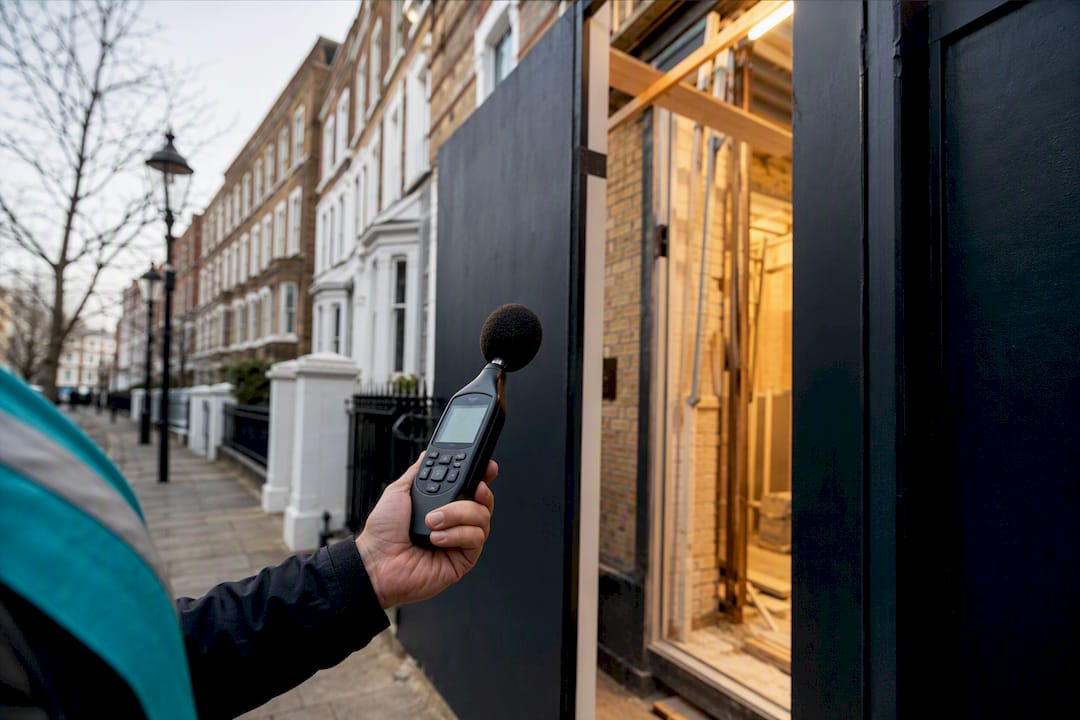
Noise complaints aren’t decided on impression alone. Environmental health officers can attend site with a sound level meter and take readings against thresholds set out in the relevant Code of Construction Practice, measuring decibel levels at the site boundary or at the nearest affected property.
The key test most boroughs apply, echoed in Southwark’s guidance, is whether noise is audible beyond the site boundary during restricted periods. That’s a deliberately practical standard: it doesn’t require an exact decibel reading to trigger action, though officers can and do use metering equipment where a formal Section 61 condition sets a specific limit. Larger or more sensitive projects, particularly those involving piling or vibration-heavy plant, sometimes commit to ongoing vibration and noise monitoring as a condition of consent, with data logged and made available to the council on request.
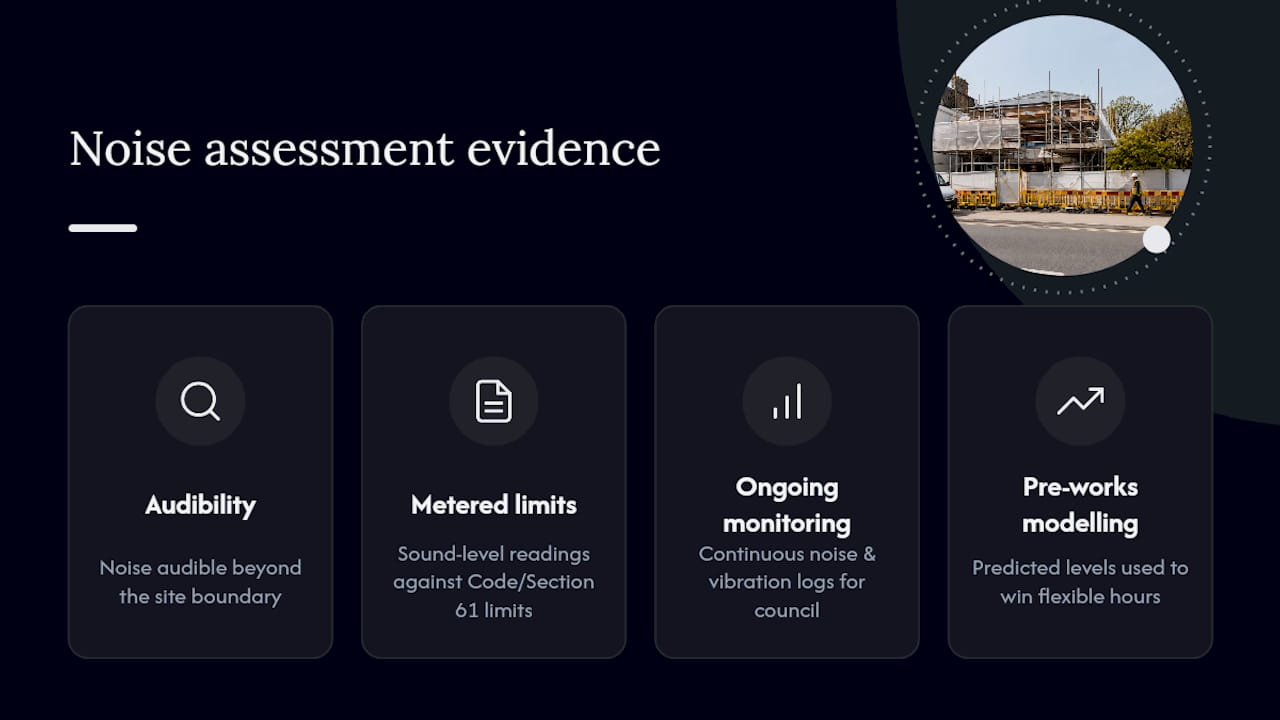
Pre-works noise modelling can work in a contractor’s favour too. Presenting evidence that predicted noise levels sit comfortably within permitted limits can persuade a council to grant more flexible hours than the default code allows, particularly for projects with genuine operational constraints. Conversely, a poor monitoring history on a previous phase can lead councils to tighten conditions on later applications for the same site.
Contractor perspective: balancing programme and neighbours
Every London project involves trade-offs between programme and courtesy. We schedule the loudest phases in clear blocks rather than spreading disruption across weeks, and every site carries a named manager’s contact number and a notice board with the current phase written up. Our advice to homeowners commissioning work: ask your contractor how they’ll communicate with neighbours before the first delivery arrives, not after the first complaint.
— Mateja
Tenen Ltd: contractors who plan around your neighbours, not against them
Tenen Ltd has been delivering extensions, loft conversions and full refurbishments across Fulham, Chelsea, Kensington, Chiswick, Hammersmith and Notting Hill since 2006, and every project starts with a written programme that respects local permitted hours from day one.

Rather than leaving neighbour liaison as an afterthought, our director-led project management builds Best Practicable Means and a clear communication plan into the schedule before groundworks begin, so you’re never caught out by a Section 61 application submitted too late. That means fewer surprises for you and for the people next door, and a build that stays on the right side of your borough’s code from the first delivery to the final snag list. If you’re planning an extension or refurbishment and want a realistic programme built around permitted hours, book a site survey for your extension project and get a written schedule before you commit.
This article is general information, not a substitute for advice from a qualified lawyer. Consult a qualified legal professional about your own circumstances before acting on anything here.
Sources
FAQ
What time is construction noise allowed to start in the UK?
Most London boroughs permit noisy construction work from 8am on weekdays, with a later, shorter window on Saturdays and no noisy work generally allowed on Sundays or bank holidays.
Are builders allowed to work before 8am?
Not usually, unless the contractor holds Section 61 or out-of-hours consent from the local council for that specific project; without it, working before 8am on a noisy task typically breaches standard permitted hours.
What hours do builders work in the UK?
Standard construction hours across most London boroughs run during typical daytime weekday hours and shorter periods on Saturdays, though some councils, including the City of London, set their own variations.
What time can my neighbour start drilling?
Drilling counts as noisy or high-impact work, so it should generally wait until the standard permitted start time in your borough, usually 8am on weekdays, unless out-of-hours consent has been granted and neighbours notified in advance.
Is DIY subject to the same hour restrictions as builders?
No. Small-scale DIY carried out at reasonable times is generally treated differently from commercial construction, though councils still expect it to stay within reasonable hours to avoid becoming a nuisance.
Recommended
Comments