
Why invest in refurbishment: boost value in London homes

TL;DR:
Well-executed refurbishments like loft conversions and extensions can significantly increase home value.
Focus on space, neutral finishes, and functional upgrades to maximize return on investment.
Overpersonalized or niche improvements may not recoup costs and can deter potential buyers.
Most homeowners assume that dramatic, high-end upgrades are the surest route to a higher sale price. In reality, the opposite is often true. Simple, well-executed refurbishments regularly outperform costly personalised renovations when it comes to actual return on investment. Loft conversions and extensions can add between 13% and 24% to a property’s value, yet many London homeowners overlook these options in favour of luxury finishes that buyers may simply strip out. This guide breaks down what refurbishment genuinely means, which upgrades deliver real value, and how to approach your project strategically so your investment works as hard as possible.
Table of Contents
Key Takeaways
Point | Details |
Refurbishment boosts value | Strategic projects like lofts or extensions can add up to 24% to your home’s value. |
Universal upgrades win | Focus on space and condition over personal tastes for the best return on investment. |
Avoid the overcapitalisation trap | Luxury or niche upgrades rarely repay their cost in the London market. |
Smart planning pays | Research, budgeting, and focusing on turnkey appeal reduce risk and maximise returns. |
What does refurbishment actually mean?
To understand why and how refurbishment delivers value, it’s vital to define what it does and doesn’t mean. The word gets used loosely, and that confusion can lead homeowners to spend in the wrong places.
In the West and Central London context, refurbishment refers to improving an existing property’s condition, functionality, and appearance without necessarily changing its structure. Think fresh kitchens, updated bathrooms, new flooring, rewiring, replastering, and repainting. A renovation is broader and often structural. An extension adds physical space to the footprint of the home. All three can overlap, but understanding the distinction helps you plan with clarity.
Exploring property refurbishment in London reveals just how wide the scope can be. Popular upgrades in areas like Fulham, Chelsea, and Notting Hill include:
Kitchen and bathroom modernisation
Loft conversions to create additional bedrooms
Rear or side extensions to open up living space
Cosmetic refreshes including painting, flooring, and lighting
Electrical and plumbing updates for safety and efficiency
There are also clear trends shaping what buyers in prime London expect. Flexible, open-plan layouts, neutral colour palettes, and high-quality but understated finishes consistently attract broader interest. Niche choices, such as bold colour schemes or highly personalised layouts, tend to narrow your buyer pool rather than widen it.
One of the biggest pitfalls is over-capitalisation: spending more on a project than the local market will ever reward. There are ways to transform your property that avoid this trap by focusing on what buyers in your specific area actually value.
Pro Tip: Before committing to any upgrade, research recent sold prices for comparable properties on your street. If refurbished homes nearby are selling for £50,000 more than unmodernised ones, that’s your ceiling for sensible investment.
How refurbishment impacts property value
With a clear understanding of refurbishment, let’s dig into how, statistically and practically, it affects home values.
The numbers are genuinely compelling. Adding a loft conversion with a bedroom and bathroom can increase a property’s value by up to 24%, while simply adding an extra bedroom through a loft conversion alone adds around 13%. On a £900,000 Chiswick terrace, that’s potentially £117,000 to £216,000 in added value from a single project.
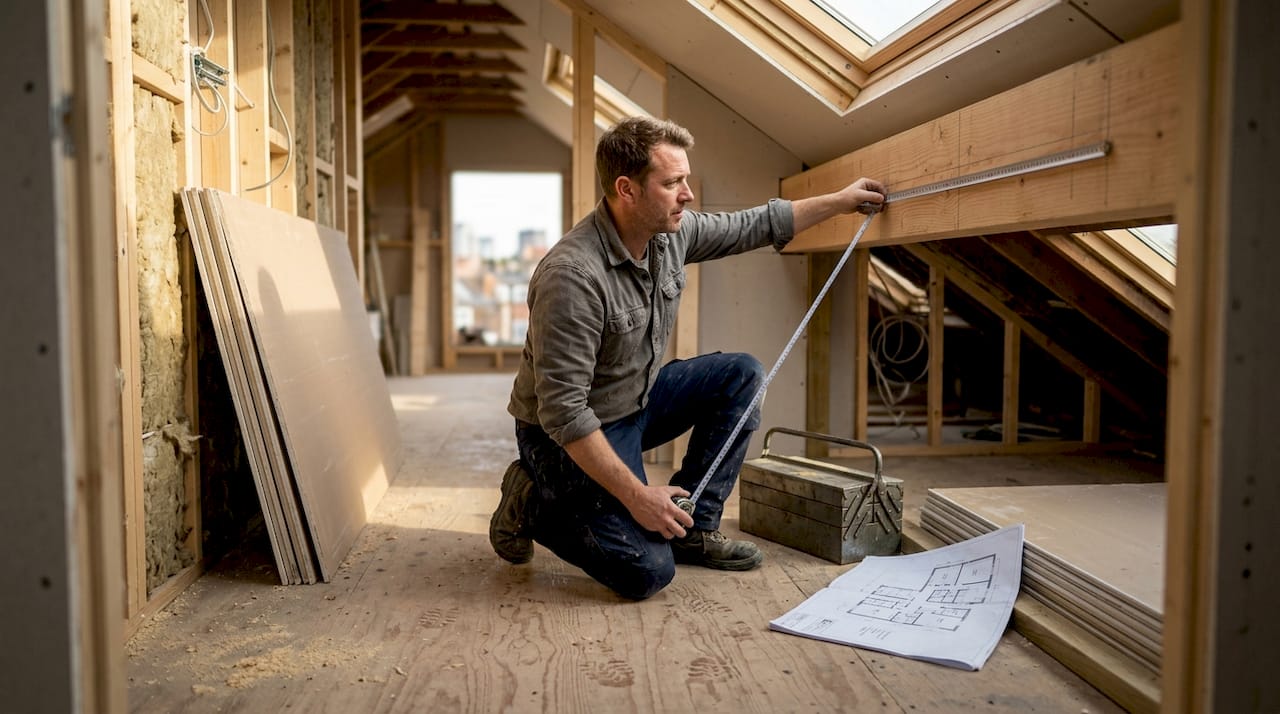
Loft conversions in West London are particularly popular precisely because they unlock unused space without requiring planning permission in many cases. Similarly, home extension benefits extend beyond square footage: a well-designed rear extension can transform a cramped kitchen into a bright, open living and dining space that buyers immediately connect with.
Bathrooms deserve special attention. A tired, dated bathroom can actively suppress a property’s value, while a clean, modern one signals quality throughout. Bathroom refurbishment is one of the most cost-effective ways to shift buyer perception.
“Fixer-uppers carry real risk in a rising-cost environment. Buyers discount unmodernised homes, and strategic refurbishment consistently beats full renovation for return on investment in a slow-growth market.”
Here’s a quick comparison of typical value uplifts:
Upgrade type | Estimated value uplift |
Loft conversion with bedroom and bathroom | Up to 24% |
Loft conversion with bedroom only | Around 13% |
Rear extension | 10 to 15% |
Kitchen modernisation | 5 to 10% |
Bathroom renovation | 3 to 5% |
Cosmetic refresh (paint, flooring) | 1 to 3% |
Upgrades that typically pay off well:
Space creation through loft or extension
Kitchen and bathroom updates with neutral finishes
Improved energy efficiency (insulation, double glazing)
Structural repairs and electrical upgrades
Upgrades that rarely recoup their full cost:
Highly personalised luxury kitchens
Swimming pools or niche outdoor features
Smart home technology beyond basic systems
What upgrades actually deliver return on investment?
Knowing the impact on value, it’s crucial to distinguish between worthwhile upgrades and those that rarely recoup their costs.
The core principle is simple: upgrades that appeal to the widest possible buyer pool deliver the strongest returns. Overcapitalisation risk is real. Personal taste upgrades such as luxury bespoke kitchens or elaborate smart home systems may not recoup their costs because buyers either don’t share your preferences or plan to change them anyway.
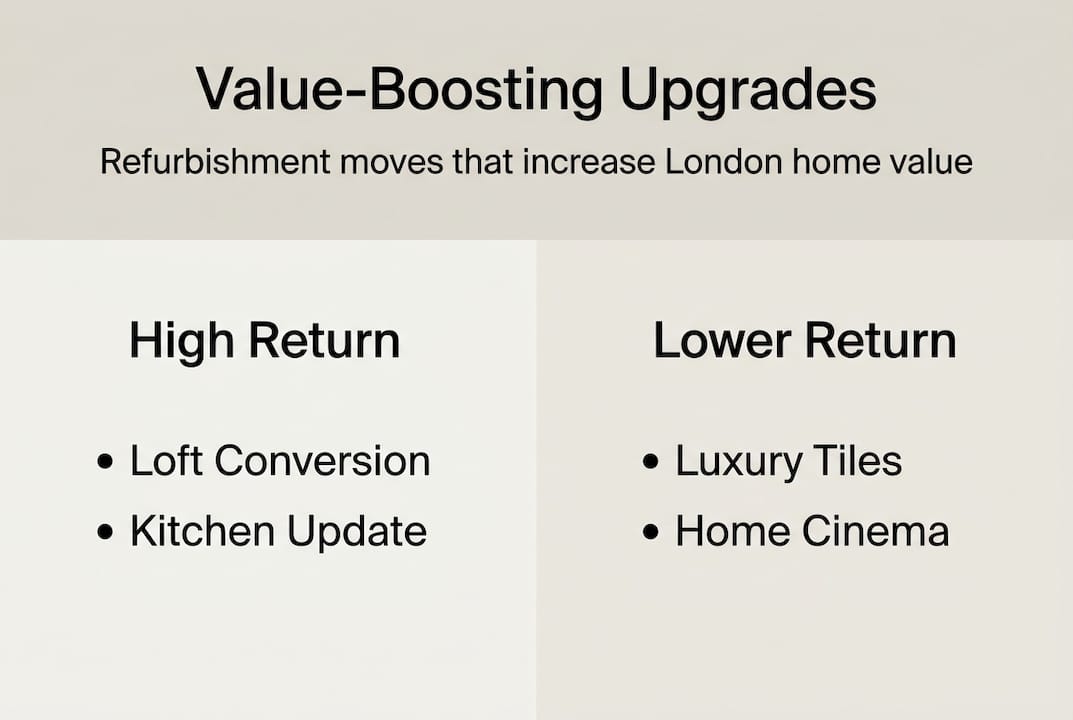
A costly renovation trap that catches many homeowners is investing in high-end personalisation that buyers immediately want to undo. Pools, niche technology, and bold design choices are frequently stripped out after purchase, meaning you’ve funded something the buyer didn’t want.
Here’s a direct comparison of upgrade categories:
Upgrade category | ROI potential | Key risk |
Space creation (loft, extension) | High | Planning and build costs |
Kitchen and bathroom (neutral) | Medium to high | Over-specifying finishes |
Decorative refresh | Medium | Taste-specific choices |
Smart home technology | Low | Rapid obsolescence |
Outdoor features (pool, niche) | Low | Very limited buyer appeal |
To evaluate ROI before committing to a project, follow these steps:
Get a current market valuation from a local estate agent familiar with your street.
Research sold prices for refurbished versus unmodernised comparable homes nearby.
Obtain at least three quotes from reputable contractors to establish realistic costs.
Calculate the gap between your current value and the refurbished comparable. That’s your maximum sensible budget.
Prioritise projects that close the condition gap rather than exceed the local ceiling.
Exploring property improvement solutions can help you identify which upgrades are most relevant to your property type and location. For a tailored view of what’s possible, London property refurbishments covers the full range of services available.
Pro Tip: Opt for high-quality but understated finishes in kitchens and bathrooms. Buyers in Kensington and Chelsea respond well to clean, timeless design rather than trend-led choices that may feel dated within a few years.
Smart refurbishment strategy for London homeowners
Having identified what works, homeowners need a practical process for a successful refurbishment.
The most common mistake is diving into a project without a clear financial framework. Turnkey properties command premiums in prime London areas, and the data supports planning with market evidence, building in contingency, and considering a hybrid approach that combines refurbishment and selective renovation to build equity without the disruption and cost of relocating.
A smart strategy starts well before any work begins. Use your refurbishment checklist to cover every stage, from initial planning through to snagging. Here are the essentials for a value-focused project:
Set a realistic budget with a 15 to 20% contingency built in from day one
Get a formal valuation before and after comparable refurbishments in your area
Prioritise structural and functional work before cosmetic improvements
Choose neutral, quality finishes that appeal to the broadest buyer profile
Avoid over-improving beyond what comparable sold prices in your street support
Phase the work if needed to manage cash flow and minimise disruption
Use experienced, vetted contractors who understand the local market’s expectations
Local market research is genuinely non-negotiable. What adds value in Hammersmith may differ from what buyers in Notting Hill prioritise. Spend time understanding your specific postcode before finalising your scope of works.
Pro Tip: A hybrid approach works well for many London homeowners. Refurbish the kitchen, bathrooms, and living spaces to a high standard while adding a modest extension or loft conversion. You build significant equity without the cost and upheaval of moving.
The truth most guides miss about refurbishment
Most refurbishment guides hand you a ranked list of value-adding upgrades and send you on your way. The problem is that list rarely accounts for the nuances of London’s prime property market, and following it blindly can cost you.
Here’s what we’ve observed working across Fulham, Chelsea, Kensington, and Chiswick since 2006: buyers in these areas are not just paying for features. They’re paying for confidence. A beautifully refurbished home signals that everything has been done properly, that there are no hidden problems, and that they can move in without stress. That reassurance commands a premium that goes beyond any individual upgrade.
The benefits of refurbishment are therefore as much psychological as they are structural. Informed restraint, choosing quality over quantity and universal appeal over personal preference, is what separates a profitable project from an expensive one. The homeowners who do best are those who treat refurbishment as a strategic decision, not a creative one.
Ready to boost your home’s value with expert refurbishment?
If this guide has given you clarity on where to focus your investment, the next step is working with a team that understands both the craft and the market.
At Tenen Ltd, we’ve been helping West and Central London homeowners transform their properties since 2006. Whether you’re considering London loft conversions, London home extensions, or a full London property refurbishment, we bring the expertise, attention to detail, and local knowledge your project deserves. Explore our services to find the right solution for your home and goals, and take the first step towards a property that works harder for you.
Frequently asked questions
How much value can refurbishment add to a London property?
Loft conversions and extensions can add between 13% and 24% to your home’s value, with a full loft conversion including a bedroom and bathroom delivering the higher end of that range.
Which refurbishments offer the best return on investment?
Universal upgrades such as added space, modernised kitchens and bathrooms, and improved overall condition typically provide the best return, as they appeal to the widest range of buyers. Personalised upgrades like luxury bespoke kitchens or smart home systems often don’t recoup their costs.
Can you lose money on a refurbishment project?
Yes. Overcapitalising or investing in niche upgrades with limited buyer appeal can mean you don’t recover your costs at sale, particularly if your spend exceeds what comparable properties in the area support.
Is it possible to refurbish without moving out?
Many projects, including kitchen and bathroom updates or light decorative works, can be phased or carefully scheduled to minimise disruption, making it entirely feasible to remain in your home throughout.
Do modern smart home features boost property value?
Generally, buyers in prime London prioritise space and condition over technology, so smart home systems rarely deliver strong financial returns and can even deter buyers who prefer simplicity.
Recommended
Comments