
Sustainable refurbishments: key benefits for London homes
- luka bursac
- Apr 2
- 8 min read
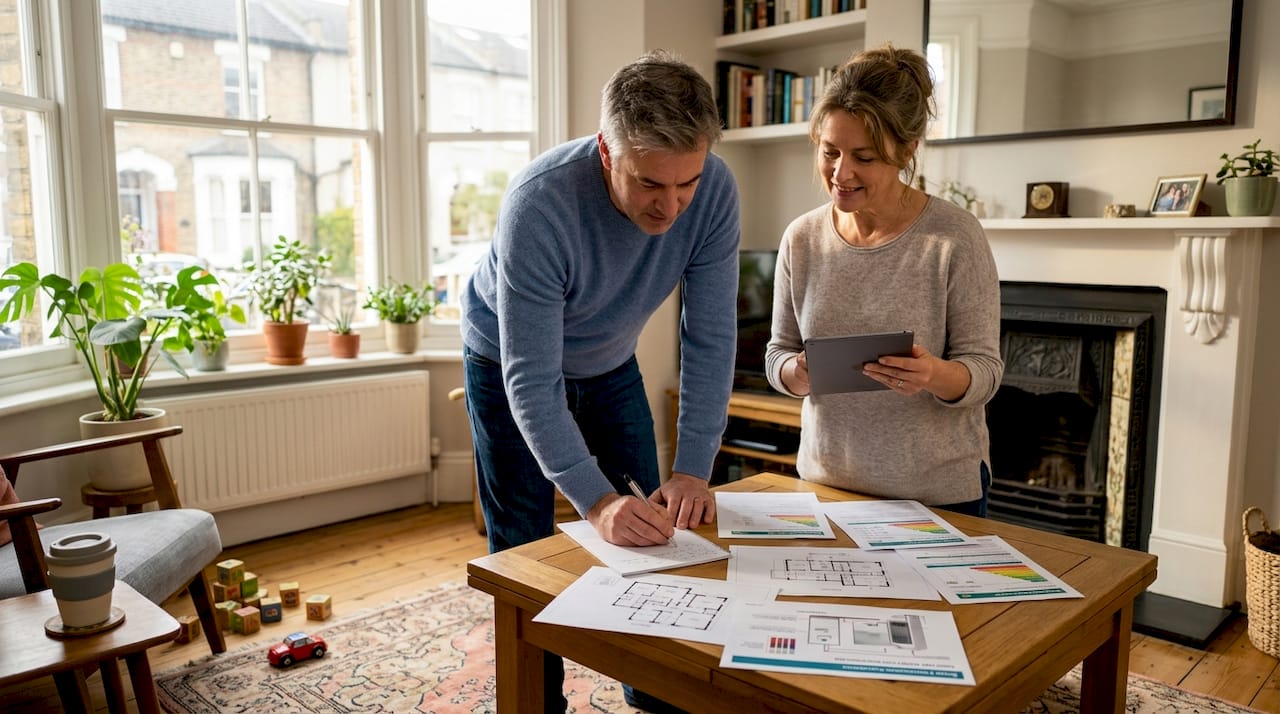
Deep retrofits can halve the carbon footprint compared to new builds, yet most London homeowners still assume demolition and rebuild is the greener route. If your home sits within a conservation area in Kensington, Fulham, or Chelsea, you already know that planning constraints add another layer of complexity to any improvement project. The good news is that sustainable refurbishment is not only achievable within these constraints, it often delivers better long-term value, lower energy bills, and a smaller environmental footprint than starting from scratch. This article maps the practical and financial impact of going green with your existing home.
Table of Contents
Key Takeaways
Point | Details |
Retrofit halves carbon footprint | Deep refurbishments cut whole life emissions by up to 84% compared to new builds. |
Heritage solutions are achievable | London’s conservation area barriers can be overcome with smart testing and breathable materials. |
Payback is realistic | Typical payback for deep retrofit is 5-11 years, with increased property value and comfort. |
Retrofit isn’t always best | Assess your property’s fabric and use low-carbon materials to ensure benefits over the long term. |
Understanding sustainable refurbishments: Why they matter
Sustainable refurbishment means upgrading your existing home to significantly reduce its energy consumption, carbon emissions, and environmental impact, without necessarily tearing it down. It covers everything from wall and roof insulation to triple-glazed windows, heat pumps, mechanical ventilation with heat recovery, and solar panels. The goal is to treat your home as a single, interconnected system rather than a collection of isolated rooms.
For London homeowners, this matters enormously. The city’s housing stock is predominantly Victorian and Edwardian, with solid walls, single-glazed sash windows, and draughty floors. These homes were built for coal fires, not modern living. Upgrading them thoughtfully can transform comfort levels and slash running costs at the same time.
Here is what a well-planned sustainable refurbishment typically includes:
Fabric-first upgrades: insulation to walls, floors, and roofs to reduce heat loss
Air tightness improvements: draught-proofing around windows, doors, and floorboards
Low-energy heating systems: heat pumps or high-efficiency boilers replacing older gas systems
Renewable energy generation: solar photovoltaic panels and battery storage
Mechanical ventilation: controlled fresh air supply to prevent damp and condensation
Smart controls: programmable thermostats and energy monitoring systems
The benefits of property refurbishment extend well beyond lower bills. Research shows that deep retrofits achieve payback in 5 to 11 years, and whole-life carbon is drastically reduced compared to demolition and rebuild. That is a compelling case for homeowners who plan to stay in their property for the long term.
Upgrade type | Typical cost range | Annual saving estimate |
Solid wall insulation | £8,000 to £22,000 | £300 to £500 |
Heat pump installation | £7,000 to £13,000 | £400 to £900 |
Triple glazing | £5,000 to £15,000 | £150 to £300 |
Solar PV with battery | £8,000 to £14,000 | £500 to £900 |
Pro Tip: Avoid upgrading one element in isolation. Fitting a heat pump without improving insulation first is like turning up the heating with the windows open. A whole-building assessment before you start will always deliver better results and better value.
Navigating London’s heritage barriers with sustainable solutions
With an understanding of sustainability and its importance, it is vital to explore how London’s distinctive heritage features create both barriers and opportunities for innovative refurbishment.
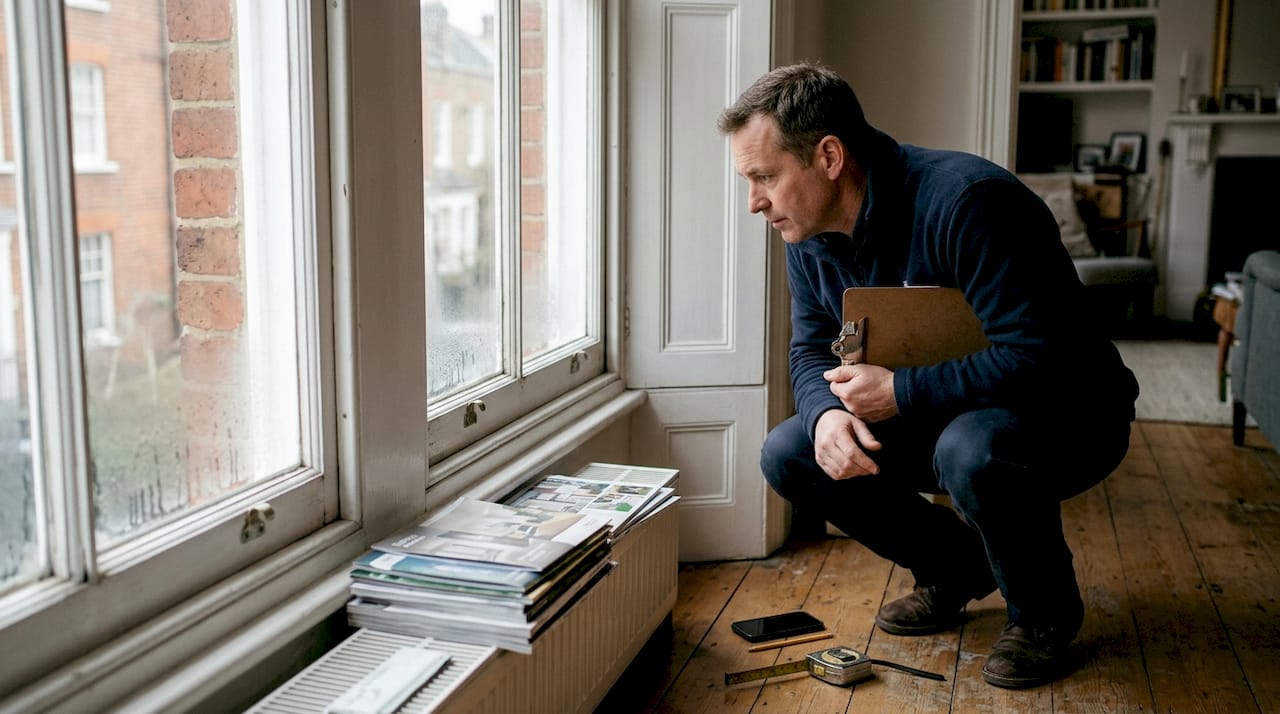
17% of London homes fall within conservation areas, and many more are listed buildings. In neighbourhoods like Notting Hill, Chiswick, and Hammersmith, this means planning restrictions can limit external changes such as visible solar panels or external wall insulation. However, this does not mean sustainable upgrades are off the table. It means you need smarter solutions.
Practical retrofit strategies that work within heritage constraints include:
Internal wall insulation: applied to the inside of external walls, preserving the original facade
Secondary glazing: fitted inside existing sash windows, dramatically improving thermal performance without altering the exterior
Vapour-permeable materials: essential for older solid-wall properties to allow moisture to escape and prevent damp
In-situ U-value testing: measures actual thermal performance of existing walls before specifying insulation, avoiding costly over-specification
Underfloor insulation: installed below suspended timber floors without disturbing original floorboards
Using your home refurbishment checklist to map out which upgrades are feasible before approaching your local council is a wise first step. Many London boroughs, including Westminster and Kensington and Chelsea, now offer pre-application planning advice specifically for sustainable heritage retrofits.
Westminster City Council has documented that careful airtightness improvements in period properties can reduce heat loss by up to 40%, even without touching the original fabric of the building.
This is genuinely encouraging for homeowners who feared that heritage status would block meaningful progress. Exploring property improvement solutions tailored to conservation areas can open up far more options than you might expect.
Method | Heritage compatible | Planning permission needed | Effectiveness |
Secondary glazing | Yes | Usually not | High |
Internal wall insulation | Yes | Rarely | High |
External wall insulation | Limited | Often yes | Very high |
Solar PV (rear roof) | Often yes | Sometimes | Medium to high |
Heat pump (rear garden) | Usually yes | Sometimes | High |
Financial and environmental benefits: Payback, value, and comfort
Once you understand how heritage factors influence refurbishment, it is crucial to see how the decision impacts your finances and your environmental footprint.
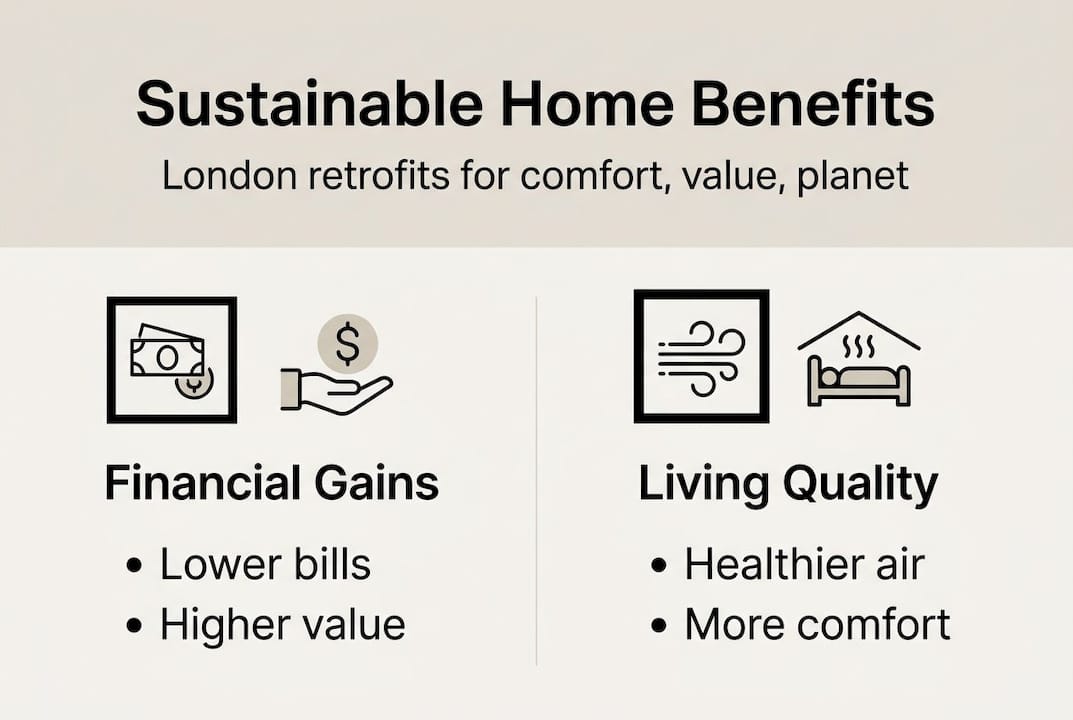
The numbers are persuasive. A typical deep retrofit investment of around £9,000 to £30,000 can achieve payback in 5 to 11 years, with energy and greenhouse gas savings forming the core of the financial case. For London properties, where energy costs are above the national average, the savings accumulate faster.
Here is a numbered breakdown of the key financial and environmental returns:
Lower energy bills: A well-insulated home with a heat pump can cut annual heating costs by 40 to 60%.
Increased property value: Energy-efficient homes command a premium. An EPC rating of C or above is increasingly expected by buyers.
Reduced carbon emissions: A deep retrofit can cut a home’s operational carbon by 50 to 80%.
Improved indoor comfort: Consistent temperatures, reduced draughts, and better air quality make a tangible daily difference.
Health benefits: Better ventilation reduces damp and mould, which directly improves respiratory health.
EPC rating improvement | Estimated property value increase | Annual bill saving |
F to C | 5 to 8% | £1,200 to £2,000 |
E to B | 8 to 14% | £1,800 to £3,000 |
D to A | 10 to 18% | £2,200 to £4,000 |
These figures show why boosting your home’s value through sustainable upgrades is one of the most financially sound decisions you can make in 2026. Understanding refurbishment costs in West London helps you plan a realistic budget from the outset.
Pro Tip: When assessing payback periods, factor in energy price sensitivity. If gas prices rise further, your payback period shortens significantly. A conservative estimate based on today’s prices is always a safer planning assumption.
When retrofit isn’t the best option: New build vs deep retrofit
With benefits outlined, let us tackle the nuance: when might a new build actually be the greener or smarter choice, and how do you assess these options responsibly?
The honest answer is that it depends on the condition of your existing structure. Deep retrofits are generally lower in embodied carbon than new builds, but some cases favour new builds over a 60-year lifetime for operational performance. If a building is structurally compromised, has severe damp penetration throughout, or was constructed with low-quality materials in the 1960s or 1970s, the cost and carbon of retrofitting may outweigh the benefits.
Factors that might favour demolition and rebuild include:
Structural instability requiring full underpinning or steel frame replacement
Severe contamination or hazardous materials throughout the fabric
Non-traditional construction types that are extremely difficult to insulate effectively
Buildings with very poor thermal performance where retrofit costs exceed new-build equivalents
The Entopia Building retrofit in Cambridge demonstrated that a carefully planned deep retrofit can achieve energy use intensity of just 35 kWh per square metre per year, outperforming many new builds.
For the vast majority of West and Central London homes, particularly Victorian and Edwardian terraces, retrofit is the clear winner on both carbon and cost grounds. Exploring your property transformation options with a specialist who understands both routes is the best way to make an informed decision.
Factor | Deep retrofit | New build |
Embodied carbon | Lower | Higher |
Operational performance | Very good (if done well) | Excellent |
Cost | £30k to £100k+ | £200k to £500k+ |
Heritage suitability | High | Low (demolition required) |
Planning complexity | Moderate | High |
Our perspective: The real keys to sustainable refurbishment success
After working with London homes across Fulham, Chelsea, Kensington, and beyond for nearly two decades, we have seen one pattern repeat itself: homeowners who treat sustainable refurbishment as a series of individual upgrades rarely achieve the results they hoped for. The ones who succeed think about the whole building first.
London’s heritage stock is genuinely special, and its constraints are not just bureaucratic obstacles. They push you towards solutions that are often more sympathetic, more durable, and more effective than the default modern approach. Secondary glazing, for instance, outperforms many replacement window systems for acoustic performance as well as thermal comfort.
We also believe the London refurbishment benefits are consistently underestimated when homeowners focus only on payback periods. The non-monetised returns, quieter rooms, warmer floors, cleaner air, and the satisfaction of reducing your environmental impact, are real and meaningful.
For listed buildings, a phased approach is often the most pragmatic route. Westminster City Council advises against non-breathable insulation in historic properties, and rightly so. Getting the specification right from the start avoids costly remediation later. Work with specialists who understand both the technical and planning dimensions of heritage retrofit.
Start your sustainable home refurbishment journey
If you are ready to act on the insights above, here is where to begin your journey towards a more sustainable London home.
At Tenen Ltd, we have been helping West and Central London homeowners transform their properties since 2006. Our team understands the unique demands of heritage refurbishment, from conservation area planning to specifying the right materials for Victorian solid-wall construction. Whether you are considering a full sustainable retrofit or a phased programme of upgrades, our London property refurbishment services cover every element of the project. Explore our full range of sustainable refurbishment expertise, or find out how a loft conversion in London can add both space and energy efficiency to your home. Get in touch today to arrange a consultation.
Frequently asked questions
How long does it take to recoup the cost of a deep retrofit?
Most homeowners see payback in 5 to 11 years, with energy savings and increased property value both contributing to the return. London’s higher energy costs often push payback towards the shorter end of that range.
Is sustainable refurbishment suitable for homes in conservation areas?
Yes, absolutely. Using vapour-permeable materials and secondary glazing, sustainable upgrades are achievable even for listed properties, provided you plan carefully and seek pre-application planning advice.
What are the main financial benefits of sustainable refurbishment?
Energy savings and non-monetised benefits such as improved comfort and health are the primary returns, alongside a measurable increase in property value as EPC ratings improve.
How do I decide between upgrading and rebuilding?
Assess the structural condition and lifetime carbon performance of your existing building. For most London heritage properties, deep retrofit delivers lower carbon and better value than demolition and rebuild.
Recommended
Comments