
Home extension ideas to elevate your London property
- luka bursac
- 7 hours ago
- 8 min read
TL;DR:
Choosing the right extension depends on budget, space, property type, and long-term goals.
Rear extensions and loft conversions are popular for creating more space and increasing property value.
Proper planning, professional input, and understanding local regulations are essential for a successful project.
Most London homeowners want more space and greater property value, but choosing the right extension for your home is rarely straightforward. With period terraces, conservation area restrictions, and premium land values across West and Central London, the stakes are high. Get it right, and you transform your home into something genuinely extraordinary. Get it wrong, and you risk wasted budget and planning headaches. This guide walks you through the most practical and inspiring extension ideas available to London homeowners, helping you match the right approach to your property, your lifestyle, and your long-term goals.
Table of Contents
Key Takeaways
Point | Details |
Choose to fit your property | Select an extension type that matches your home’s style, size, and planning rules in London. |
Add space and value | Rear extensions and loft conversions are proven ways to increase space and boost property value. |
Consult local experts | Working with experienced professionals familiar with West and Central London avoids costly mistakes. |
Light makes a difference | Prioritise features that maximise natural light and connect the indoors to the garden. |
How to choose the right home extension
Before exploring specific extension styles, it helps to understand your own goals and limitations. Every extension project starts with a set of questions, and answering them honestly will save you considerable time and money.
The most important factors to consider when selecting an extension type include:
Budget: Realistic budgets in London typically start from £2,000 per square metre for a basic build, rising sharply for bespoke or basement work
Available space: Whether you have garden depth, a side return, or roof space will determine which options are physically possible
Property age and type: Victorian and Edwardian terraces dominate West London, and their layouts favour specific extension styles
Planning permissions: Conservation areas in Kensington, Chelsea, and Notting Hill carry additional restrictions beyond standard Permitted Development rules
Your lifestyle goals: Are you creating an open-plan family space, a home office, or an extra bedroom for a growing family?
Resale value: Maximising living space and boosting property value are key reasons London homeowners invest in extensions
Planning rules in London are more complex than in many other parts of the country. Permitted Development rights allow some extensions without formal planning applications, but Article 4 Directions in many West and Central London boroughs remove these rights entirely. This means what works in the suburbs may require full planning permission here.
When planning a home extension, it is worth understanding how your property sits within its local context before committing to any design. A good architect or contractor will flag these constraints early. For a detailed breakdown of steps and costs in West London, reviewing local guidance is an excellent starting point.
Pro Tip: Engage a contractor with direct experience of your borough’s planning department before finalising any design. Local knowledge of what gets approved, and what does not, can prevent costly revisions down the line.
Rear extensions: Opening up living space
With your selection criteria clear, let’s start with one of the most flexible and transformative options available to London homeowners.
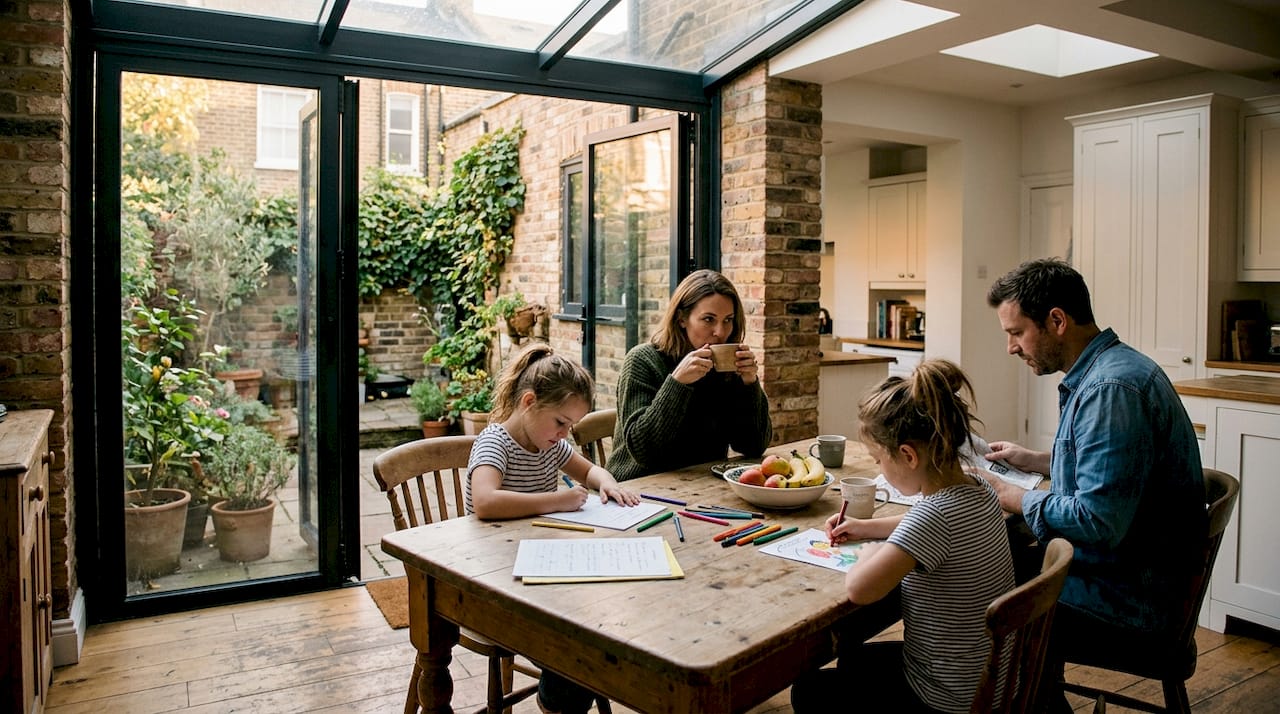
A rear extension adds floor space to the back of your home, typically extending the ground floor into the garden. In West London’s terraced and semi-detached properties, this almost always means transforming a cramped kitchen and dining area into a generous, open-plan family space. The results can be dramatic. Walls come down, ceilings rise, and suddenly a home that felt tight begins to breathe.
Design options for rear extensions have expanded significantly. Full-width glazed doors, roof lanterns, and skylights are now standard features that flood interiors with natural light. The connection between inside and outside becomes seamless, which is particularly valuable in areas like Fulham and Chiswick where garden space is cherished.
Pros and cons of a rear extension:
Pro: Creates substantial additional floor space for kitchens, dining rooms, and family rooms
Pro: Improves connection to the garden and natural light
Pro: Works well with open-plan living trends that buyers respond to strongly
Con: Reduces garden depth, which matters in smaller plots
Con: Can be disruptive during construction, particularly for families living on site
Con: May require planning permission in conservation areas
Rear extensions are one of the most popular choices for increasing kitchen and family space across West London’s period properties.
For homeowners considering premium finishes, exploring luxury design ideas can help you understand how materials and detailing elevate the final result. Understanding extension cost factors early also helps you plan a realistic budget without surprises.
Pro Tip: Opt for full-width sliding or bi-fold doors across the rear elevation. This single design decision maximises garden connection, floods the space with light, and creates the kind of indoor-outdoor flow that genuinely excites buyers.
Loft conversions: Unlocking your home’s hidden potential
If your garden is limited or you simply do not want to sacrifice outdoor space, building upward is the smart alternative.
A loft conversion transforms your unused roof space into a fully habitable room. In West and Central London, where loft conversions are highly sought-after due to space constraints, this option is particularly well suited to Victorian and Edwardian terraces. These properties typically have a generous roof pitch, which means there is real usable volume waiting to be unlocked.

The most common loft conversion types in London are the dormer and the mansard. Dormers extend outward from the roof slope, adding headroom and floor space. Mansard conversions, which alter the roof angle more dramatically, are popular in conservation areas because they maintain a consistent roofline when viewed from the street.
Pros and cons of a loft conversion:
Pro: Adds a bedroom or study without touching the garden
Pro: Often more cost-efficient per square metre than a basement or wraparound extension
Pro: En suite bathrooms can be incorporated to create a genuine master suite
Con: Structural requirements can be complex, particularly in older properties
Con: Staircase placement can be challenging in tighter floor plans
Con: Permitted Development rules for lofts are strict, and many London properties require full planning permission
Adding a bedroom through a loft conversion can increase property value by up to 20%, making it one of the most financially rewarding improvements for London homeowners.
For a clearer picture of what is involved, our guide to London loft conversion projects covers design options, structural requirements, and typical timelines in detail.
Comparing extension styles: Which is best for your home?
Each extension boosts homes in different ways. Here is how the most popular options compare side by side.
Different extension types offer contrasting benefits and suit different properties, which is why a direct comparison is so useful before you commit.
Extension type | Value added | Typical cost range | Planning complexity | Best for |
Rear extension | High | £40,000 to £120,000+ | Moderate | Open-plan family living |
Loft conversion | High | £35,000 to £80,000+ | Moderate to high | Extra bedrooms, studies |
Side return | Moderate | £25,000 to £60,000 | Lower | Widening kitchens |
Wraparound | Very high | £80,000 to £200,000+ | High | Maximum ground-floor space |
Basement | Very high | £100,000 to £300,000+ | Very high | Luxury living, high-value areas |
Choosing the right type is about matching your situation to the right solution. Here is a quick guide:
Growing families needing more communal space: a rear or wraparound extension delivers the best open-plan result
Homeowners with limited garden space: a loft conversion adds bedrooms without reducing outdoor area
Properties with a narrow side alley: a side return extension widens the ground floor and transforms kitchen layouts
High-value homes in prime postcodes: a basement conversion maximises usable space and commands premium resale prices
Homeowners wanting to maximise light: rear extensions with full glazing or loft conversions with roof lights deliver the most dramatic natural light improvements
For further guidance on making the right decision for your specific property, our expert improvement advice covers a wide range of scenarios across West and Central London.
Our take: Practical tips for getting the most from your extension
After working on extensions across Fulham, Chelsea, Kensington, and beyond since 2006, we have seen what separates a genuinely successful project from one that disappoints. The honest truth is that most problems do not come from bad design. They come from decisions made too early, without enough professional input.
One of the most consistent mistakes we see is homeowners designing for today rather than for the next decade. A stunning open-plan kitchen is wonderful when children are young, but a flexible layout that can adapt as your family changes delivers far more long-term value. Multi-use spaces, good storage integration, and future-proofed wiring and plumbing are rarely exciting to discuss, but they matter enormously.
Underestimating costs is another common issue. Always build in a contingency of at least 15% above your quoted budget. London builds have a habit of revealing surprises once walls come down.
Finally, the extension benefits in London are real and significant, but only when the project is executed properly. Engage contractors who know your local planning authority, who can show you completed projects nearby, and who communicate clearly from the first meeting. That combination is rarer than it should be, and worth prioritising above all else.
Explore expert London home extension services
If you are ready to turn inspiration into reality, working with an experienced team makes all the difference. Navigating West and Central London’s planning requirements, sourcing the right materials, and delivering a high-quality finish demands genuine local expertise.
At Tenen Ltd, we have been helping London homeowners transform their properties since 2006. Whether you are considering working with our London home extension specialists, exploring local loft conversions, or planning kitchen and bathroom upgrades as part of a wider refurbishment, our team brings the experience and attention to detail your home deserves. Get in touch to book a consultation and take the first step towards a home that truly works for you.
Frequently asked questions
What adds the most value: loft conversion or rear extension?
Different extension types suit different properties, so the best choice depends on your home’s layout. In West and Central London, rear extensions tend to boost family space appeal while loft conversions add sought-after bedrooms.
How much does a typical home extension cost in London?
A basic extension starts from £2,000 per square metre, but costs rise considerably depending on design complexity, finishes, and site constraints specific to your property.
Do I need planning permission for my extension?
Some extensions fall under Permitted Development, but planning rules in London are more restrictive than elsewhere, particularly in conservation areas. Always confirm your permitted rights before proceeding.
How long does a home extension project usually take?
Most extensions take between 3 and 6 months from planning to completion, though larger or more complex projects such as wraparounds or basements can take considerably longer.
What’s the best way to bring more light into a new extension?
Large sliding or bi-fold doors and strategically placed skylights are the most effective solutions, and designing for maximum light also adds genuine resale appeal to your property.
Recommended
Comments