
What is multi-room renovation: a homeowner's guide
TL;DR:
A multi-room renovation involves updating two or more spaces in a coordinated project, offering cost savings and design harmony. Proper planning, clear communication, and realistic timelines are essential to manage complexity and avoid delays. When executed well, it significantly enhances home value and creates a cohesive living environment.
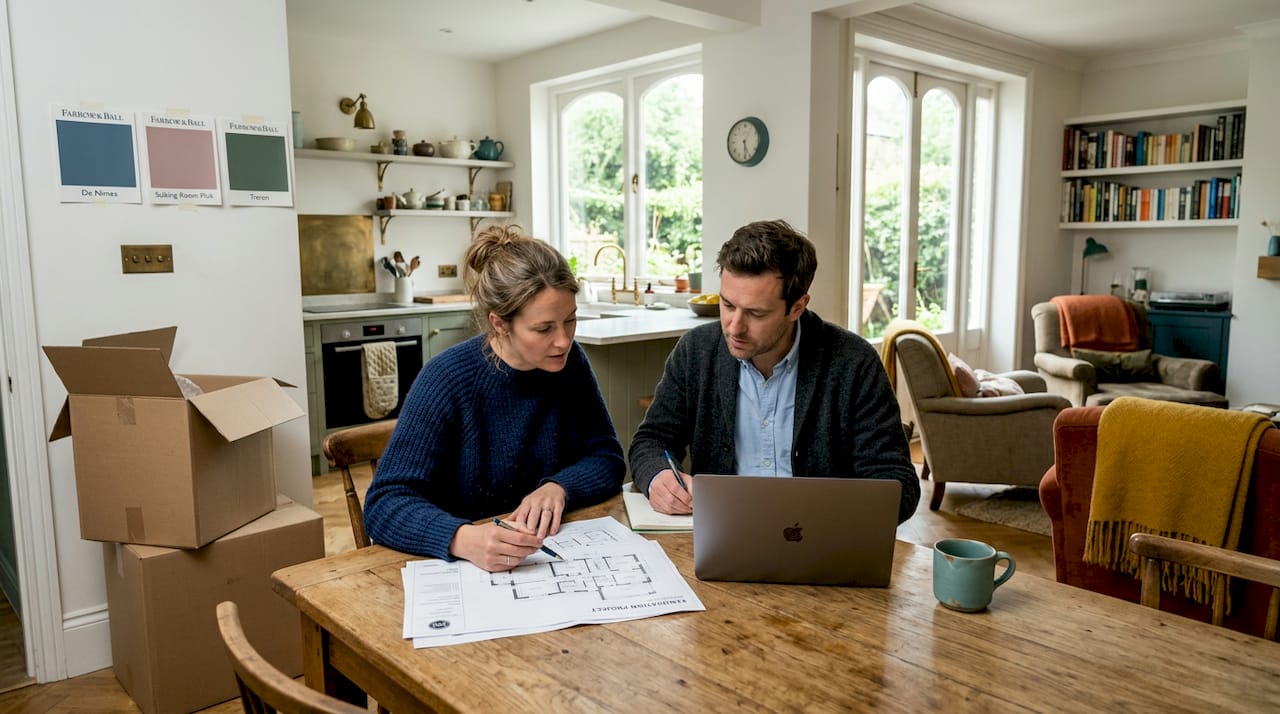
Undertaking a multi-room renovation sounds intimidating. The reality is that, approached with the right preparation, it can be one of the smartest investments you make in your home. A multi-room renovation simply means refurbishing two or more rooms as part of a single coordinated project, rather than tackling each space separately over months or years. If you are looking at an outdated kitchen, a tired bathroom, and a dull living room all at once, you are already thinking along the right lines. This guide will walk you through what the process involves, what it costs, and how to make it work for you.
Table of Contents
Key takeaways
Point | Details |
Clear definition matters | Multi-room renovation covers two or more spaces updated in one coordinated project, not separate jobs. |
Benefits stack up quickly | Cohesive design, economies of scale, and less total disruption make simultaneous renovation worthwhile. |
Planning is everything | A phased schedule with built-in buffer time is the single biggest factor in a smooth project. |
Costs vary significantly | Expect a wide range depending on room types and scope, with kitchens and bathrooms driving the highest spend. |
Expert coordination pays off | Experienced contractors managing multiple trades reduce delays, conflicts, and unexpected costs. |
What multi-room renovation actually means
The multi-room remodeling definition sounds straightforward, but there is a meaningful distinction worth understanding before you commit to a project. A multi-room renovation refers to updating the finishes, fixtures, and functional elements of two or more rooms within the same project timeline and budget framework. This might mean a new kitchen and a bathroom refresh, or a full-floor refurbishment covering a bedroom, hallway, and reception room simultaneously.
What sets it apart from single-room projects is the degree of coordination required. You are not simply repeating the same job twice. You are managing overlapping trades, shared material deliveries, and design decisions that affect every space at once.
It is also worth separating renovation from remodelling. Renovation typically means restoring or updating what is already there: new tiles, replastered walls, updated plumbing fixtures. Remodelling goes further, altering the layout or structure of a space. A multi-room project can include either or both. For example:
Renovation only: Replacing kitchen units and worktops, retiling a bathroom, repainting a bedroom
Remodelling included: Removing a wall between kitchen and dining room, converting a bedroom into an en-suite, reconfiguring a hallway
Combined approach: Updating finishes throughout while also opening up a ground floor layout to create open-plan living
Renovating multiple adjoining spaces at once creates better design harmony and often increases property value in ways that isolated projects simply cannot achieve. Understanding the scope of what you want from the outset determines everything from your budget to your contractor selection.
The real benefits of multi-room renovation
Once you understand what to include in a multi-room renovation, the advantages over a piecemeal approach become clear. This is not just about convenience. There are tangible financial and aesthetic benefits that make the case compelling.
Renovating rooms simultaneously often costs less overall than doing each project separately, thanks to economies of scale in materials, labour, and contractor time. A plasterer working across three rooms in one visit costs less than three separate call-outs. Scaffolding erected once serves every room on a floor. Skips filled and cleared once handle debris from the entire project.
Beyond cost, the benefits of multi-room renovation include:
Cohesive design throughout: When you choose materials, colours, and finishes for multiple rooms at once, you can create a visual thread that ties your home together. This is the single quality most often missing from homes updated room by room over a decade.
Reduced total disruption: One extended period of upheaval is far easier to manage than repeated short bursts of chaos spread across years. You live through the discomfort once and come out the other side with a transformed home.
Greater property value uplift: Strategic space reconfiguration adds more value than cosmetic upgrades alone, particularly in high-value markets like West and Central London where buyers look at the whole-home picture.
Better contractor relationships: Working with the same team across multiple rooms builds momentum and mutual understanding. Decisions get made faster, and quality improves as the team learns your preferences.
Pro Tip: When selecting your colour palette and materials, choose them across all rooms simultaneously rather than room by room. This single habit prevents the mismatched finishes that make multi-room refurbishments feel disjointed.
Designing for flow and visual harmony across spaces is a benefit often overlooked when homeowners think only in terms of individual rooms. The difference is striking when you walk through a home where every space feels considered together.

Challenges and pitfalls to prepare for
No honest guide on how to plan a multi-room renovation would skip the difficulties. These projects are genuinely complex, and going in with open eyes saves you considerable stress.
Renovation fatigue is real. When a project runs for weeks or months, the constant noise, dust, decision-making, and uncertainty take a toll. Knowing this in advance helps you pace yourself and build in proper recovery time. Here are the most common pitfalls homeowners face:
Underestimating the timeline. Multi-room projects almost always take longer than the initial estimate. Trades depend on each other sequentially: a tiler cannot work until plumbing is complete, and a decorator cannot start until plastering has cured.
Failing to co-ordinate contractors. Without a clear schedule shared with every trade, gaps appear where no one is on site, and costs accumulate in the interim.
Ignoring the knock-on effects. Dust and vibration from work in one room affect adjacent spaces. Protect furniture and flooring in areas not under renovation from the start.
Cutting the contingency budget. Older properties hide surprises: outdated wiring, hidden damp, non-standard wall construction. Budgeting with zero contingency turns every discovery into a crisis.
Communication breakdowns. When multiple contractors are involved, misunderstandings about responsibilities cause expensive rework.
“With proper management, multi-room renovations transform from overwhelming to genuinely rewarding experiences.” The key word is management, not luck.
Managing multiple contractors with a clear communication plan improves project flow and reduces stress considerably. Assigning one point of contact, whether that is a main contractor or a project manager, removes the confusion of multiple simultaneous conversations.
How to plan and execute successfully
Getting the steps in multi-room renovation right from the start is what separates a smooth transformation from a drawn-out ordeal. The approach below reflects what actually works on complex residential projects.
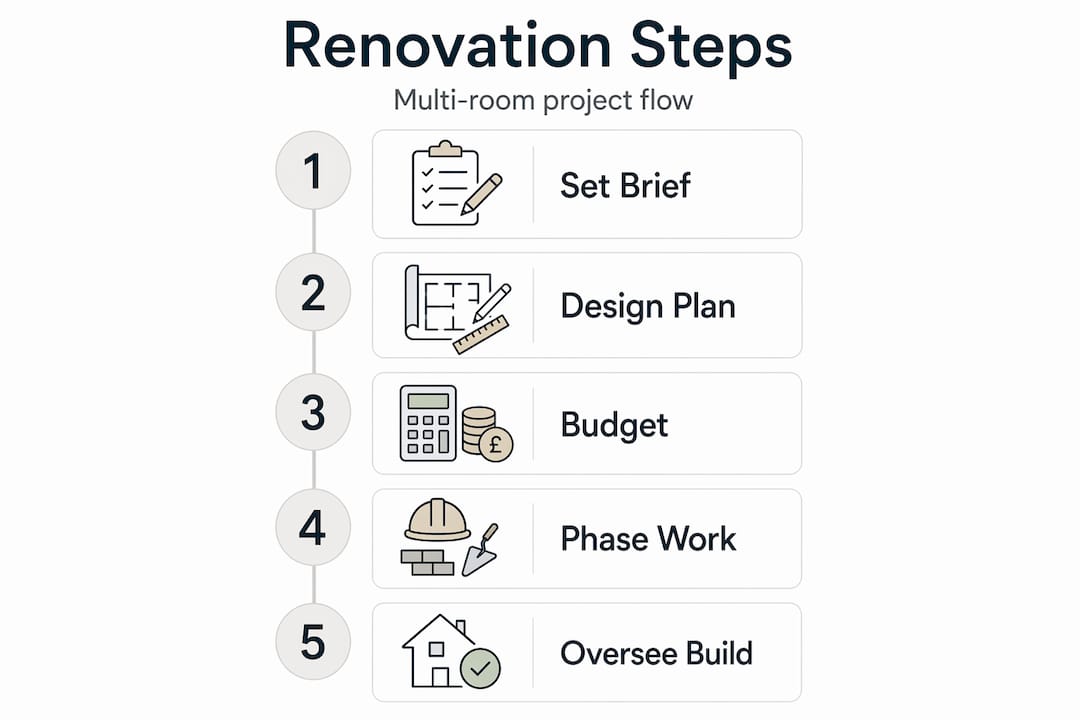
Start with a single brief
Before speaking to any contractor, write down what you want from every room. Not just aesthetics, but function. How do you use the kitchen? What storage is missing from the bedroom? This brief becomes your reference point when decisions get complicated mid-project.
Phase the work logically
Not all rooms need to be active simultaneously. Phasing work intelligently means one trade completes in one area before moving to the next, keeping the project moving without gridlock.
Approach | Best for | Trade-off |
All rooms simultaneously | Maximum speed, one disruption period | Highest cost at one time, complex logistics |
Sequential phasing by room | Easier to manage day-to-day | Longer total project duration |
Trade-led phasing | Efficient use of specialist teams | Requires strong scheduling discipline |
Zone-based phasing | Allows you to remain in part of your home | Work in occupied areas requires extra care |
Pro Tip: Build buffer days into your schedule between each phase. A week between plumbing completion and tiling, for instance, allows for inspections, materials delivery, and the inevitable small delay without pushing your entire project back.
Budget with honesty
Use a step-by-step refurbishment budget to map costs before you commit. Allocate funds by room and by trade, then add a contingency of at least 15 per cent on top. For older London properties, 20 per cent is more realistic. Track spending weekly against your budget so you see problems early.
Co-ordinate design decisions up front
Choose all tiles, sanitaryware, paint colours, and flooring before work begins. Delayed decisions are one of the leading causes of project hold-ups. Your contractor cannot progress if you have not chosen the specification.
Understanding the cost of multi-room renovation
Cost is often the first question homeowners ask, and rightly so. The honest answer is that multi-room renovation costs range widely, averaging around £40,000 to £70,000 for a typical London home, though the scope and room types drive the final figure considerably.
Room type | Typical cost range (London) | Key cost drivers |
Kitchen renovation | £12,000 to £35,000+ | Units, worktops, appliances, plumbing |
Bathroom renovation | £6,000 to £20,000 | Sanitaryware, tiling, waterproofing |
Bedroom refurbishment | £3,000 to £10,000 | Fitted furniture, flooring, decoration |
Living/reception room | £4,000 to £15,000 | Flooring, plastering, lighting |
Projects range from £10 to £150 per square foot depending on whether you are refreshing finishes or reconfiguring layouts entirely. A cosmetic bedroom update sits at the lower end. A full kitchen and bathroom remodel with structural changes sits firmly at the top.
The strategic upside is significant. Intelligent space reconfiguration yields stronger returns than finishes alone, particularly in premium London postcodes. A well-executed bathroom refurbishment, for example, consistently delivers return on investment when combined with wider renovation work. Thinking about your spend in terms of value added, not just cost incurred, changes how you make decisions throughout the project.
My honest take on multi-room renovations
I have seen enough of these projects to say this clearly: the homeowners who find them rewarding are not the ones with the biggest budgets. They are the ones who treated the project like a marathon rather than a sprint.
What I have learned is that the planning phase deserves at least as much time as the building phase. Homeowners who rush into works without a finalised specification almost always pay for it later, in delays, rework, and the kind of stress that makes the whole experience feel like punishment rather than progress. Take the time to get the brief right.
The thing I find most homeowners overlook is the importance of a single decision-maker on site. When a contractor needs to know whether to move a socket six inches to the left, having to wait two days for an answer costs money and momentum. Appoint one person to be the daily contact and empower them to make small decisions within agreed parameters.
The expert-backed renovation ideas that genuinely move the needle are almost always about layout and flow, not surface finishes. My strongest advice: before you spend a penny on tiles, ask whether the space is configured in the best possible way. Reconfiguration done well is invisible. Done badly, it is permanent.
Multi-room renovation, done properly, breathes new life into a home. It is disruptive. It is demanding. And it is absolutely worth it when you see the finished result.
— Mateja
Ready to start your multi-room renovation?
If you are weighing up a multi-room refurbishment across your London property, Tenenltd has been delivering exactly this kind of work since 2006. From kitchens and bathrooms to full-floor refurbishments and loft conversions, the team brings the co-ordination, craftsmanship, and local knowledge that complex projects demand.
Working across Fulham, Chelsea, Kensington, Chiswick, Hammersmith, and Notting Hill, Tenenltd handles every trade under one roof, which means fewer communication breakdowns and a far smoother experience for you. Whether you need a bathroom and kitchen refurbishment or a full property refurbishment across multiple floors, the team is ready to help you plan it properly from the start. Explore the full range of renovation services and take the first step towards a home that works as well as it looks.
FAQ
What is multi-room renovation?
Multi-room renovation is the process of refurbishing two or more rooms within a single coordinated project. It typically covers updating finishes, fixtures, and functional elements across multiple spaces simultaneously, rather than tackling rooms separately.
Is it cheaper to renovate multiple rooms at once?
Yes, in most cases. Renovating simultaneously reduces overall costs through shared labour, single material deliveries, and fewer contractor mobilisation fees, making it more economical than sequential individual projects.
How long does a multi-room renovation take?
Timelines vary by scope, but most multi-room projects in London take between six weeks and six months. Realistic planning with buffer periods is critical to avoiding costly overruns.
What should I include in a multi-room renovation?
Prioritise rooms that share trades, such as kitchen and bathrooms for plumbing, or adjoining living spaces for flooring and decoration. Starting with the rooms that offer the highest return on investment helps you allocate your budget where it matters most.
How do I manage renovation fatigue?
Phase the project sensibly, build in rest periods between stages, and maintain a single clear point of contact with your contractors. Good communication and a realistic schedule are the two most effective tools for keeping your energy and your project on track.
Recommended
Comments