
The homeowner's guide to rooflights in extensions
TL;DR:
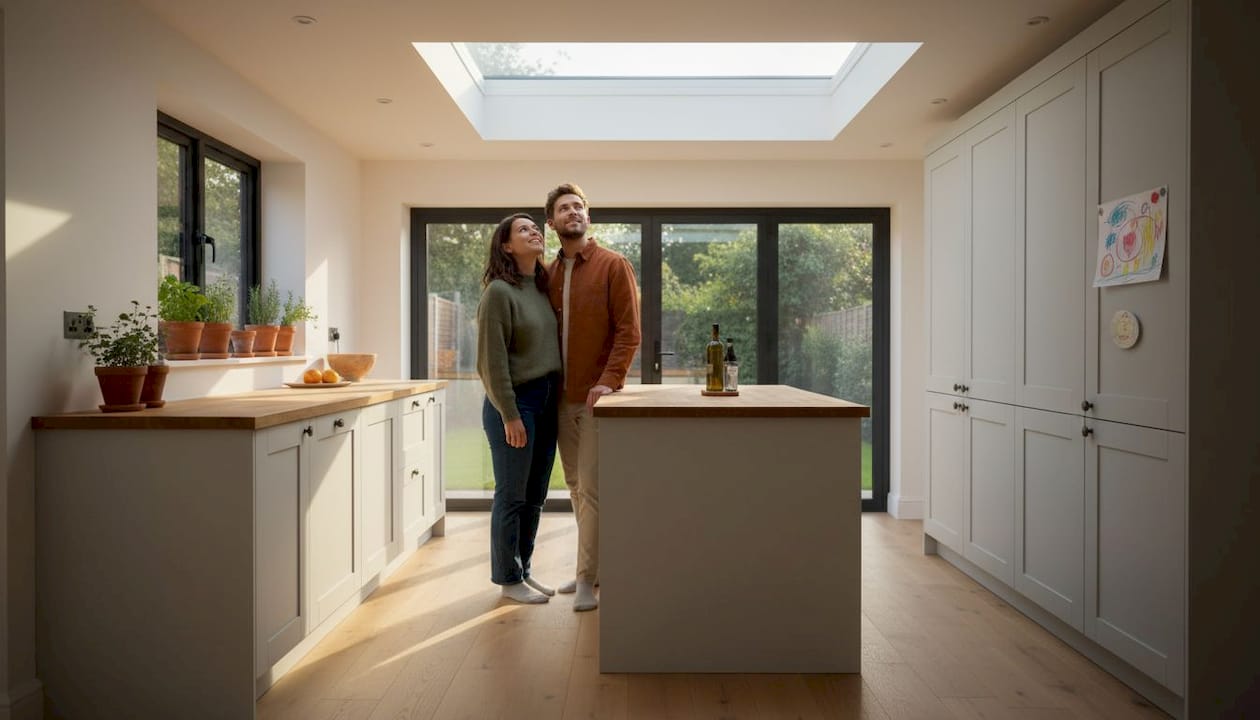
Rooflights play a vital role in extensions by enhancing natural light, ventilation, and thermal efficiency beyond their aesthetic value. Proper orientation, placement, and detailed installation are essential to optimize their performance, especially considering West London’s climate and planning regulations. Carefully selecting the right type and specification ensures your extension remains comfortable, well-lit, and compliant for years to come.
Most West London homeowners planning an extension think about rooflights in one of two ways: as a decorative touch to make the space feel modern, or as a simple afterthought once the main design is settled. Both approaches miss the point. The role of rooflights in extensions goes far beyond visual appeal. Rooflights directly shape how much natural light your new room receives, how it breathes in summer, and how efficiently it holds heat in winter. Understanding these functions early means you can design your extension to genuinely work for you, not just look good in photographs.
Table of Contents
Key Takeaways
Point | Details |
Rooflights provide natural light | They brighten extensions by letting in daylight from above, improving room ambience. |
Orientation affects light and heat | North-facing rooflights give steady light with less heat; south/west faces risk summer overheating. |
Choice of rooflight type matters | Flat rooflights offer subtle daylight; roof lanterns maximise brightness but can increase solar gain. |
Planning rules must be followed | Most rooflights fit under permitted development if within size limits and not in protected areas. |
Installation details ensure durability | Proper upstands and flashing prevent leaks and support long-lasting rooflight performance. |
Understanding rooflights: function and benefits
Rooflights do something that vertical windows simply cannot: they capture daylight from directly overhead, where the sky is brightest for the longest portion of the day. In a rear extension in Hammersmith or a side return in Kensington, vertical windows often face a boundary wall or a neighbouring property, leaving a large portion of the new room dim and reliant on artificial light. Rooflights solve this directly.
Beyond daylighting, ventilating skylights release hot air near the ceiling and enhance airflow throughout the space. This matters more than most people expect. Heat rises, and in a single-storey extension on a warm London day, that trapped heat can make the room genuinely uncomfortable. An operable rooflight placed high in the ceiling acts as a natural exhaust vent, pulling fresh air through lower openings and pushing warm air out above.
The benefits of home extensions multiply significantly when rooflights are part of the design from day one rather than added at the end. Here is what they bring to your extension:
Improved daylighting across areas that vertical glazing cannot reach
Natural ventilation through operable models that reduce reliance on mechanical systems
Reduced electricity use during daytime hours by replacing artificial lighting
A stronger sense of space as daylight from above makes rooms feel larger and less enclosed
Visual connection to the sky, which adds genuine wellbeing value to everyday living
“A well-positioned rooflight can illuminate twice the floor area that a vertical window of the same size would reach, simply because the angle of incoming light is more direct and spread evenly across surfaces.” This is why architects routinely prioritise roof glazing in deep-plan extensions where side and rear walls cannot carry sufficient window area.
Pro Tip: If your extension is wider than approximately 3 metres from front to back, you will almost certainly benefit from at least one rooflight to prevent a gloomy mid-section, regardless of how many vertical windows you include.
The choice between a fixed and an operable rooflight is worth deliberating. Fixed rooflights are simpler, slightly cheaper, and easier to maintain. Operable models cost more but contribute meaningfully to summer comfort without any running costs.
How rooflight orientation influences daylight and heat
With rooflights’ core benefits understood, considering their directional placement reveals how they shape comfort and light quality throughout the year.
North-facing rooflights deliver consistent but cool light, while south- and west-facing rooflights bring risk of unwanted summer heat gain. This distinction is not merely technical; it has a real impact on whether you end up with a comfortable room or an overheated one.
In West London’s climate, which brings a fair number of warm, sunny days between May and September, south- and west-facing glazing can cause significant overheating if not managed properly. A south-facing rooflight without solar control glazing can raise a room’s temperature by several degrees above what feels comfortable, undoing the very quality-of-life improvement you invested in.
Here is how orientation shapes your decision:
North-facing: Gentle, even, diffuse light throughout the day. No direct sun. Ideal for studies, art rooms, or anywhere consistent colour rendering matters.
East-facing: Bright morning light that softens by early afternoon. Works well for kitchen extensions used heavily in the morning.
South-facing: Strongest and longest periods of direct sunlight. Maximum heat gain. Excellent for warming spaces in winter but requires solar control glazing or external shading.
West-facing: Afternoon and evening sun. Can cause glare during late-day use. Suitable for living spaces used in the evening when paired with appropriate shading.
“Choosing orientation is not just about getting more light; it is about getting the right light at the right time while keeping the space thermally comfortable across seasons.”
Checking your roof extensions regulations early is sensible regardless of orientation, particularly in conservation areas across Chelsea or Notting Hill where any new glazing element may need approval.
Solar control coatings, low-emissivity (low-e) glass, and external blinds are all viable tools to manage heat on south- and west-facing rooflights. Do not let orientation concerns put you off a particular position; the right glazing specification resolves most of it.
Types of rooflights for home extensions
Having examined how orientation matters, it is time to compare the popular rooflight types shaping extension interiors across West London.
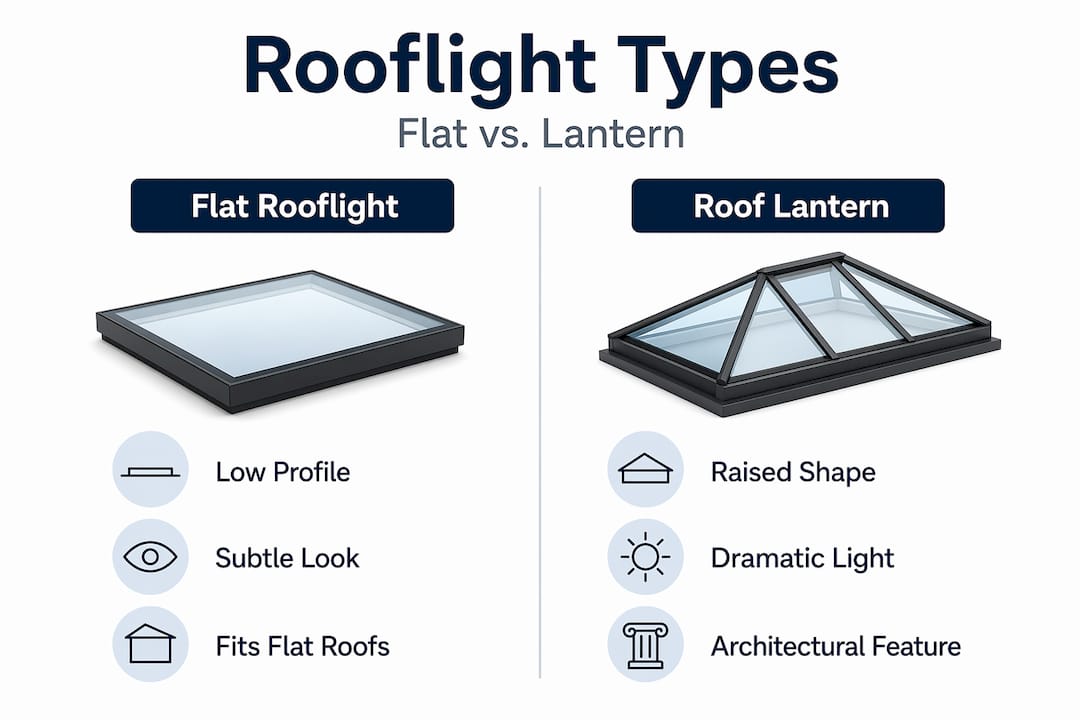
Flat rooflights have a low profile ideal for single-storey extensions, while roof lanterns create distinctive, dramatic ceiling effects that can completely transform a room. Each type suits different situations, and the wrong choice can feel visually awkward or underperform on light delivery.
Rooflight type | Best suited for | Light quality | Planning profile |
Flat rooflight | Flat or low-pitch roofs, modern extensions | Focused, directional | Low, often permitted development |
Roof lantern | Open-plan kitchens, larger rooms | Ambient, multi-directional | More visible, may require consent |
Pitched skylight | Traditional pitched roof extensions | Natural, angled light | Commonly permitted if flush |
Triple-glazed rooflight | Large glazed areas, energy-conscious projects | Even, thermally managed | Standard planning criteria apply |
Flat rooflights are the most widely used option in contemporary West London extensions. They sit close to flush with the roof surface, minimise visual disruption from the street, and deliver clean, modern daylighting. For a rear extension in Chiswick or Fulham, a series of three flat rooflights along the spine of the roof can flood the room without altering the roofline significantly.
Roof lanterns bring a different character entirely. Their angled, multi-panel glazing captures light from multiple directions, producing a brighter, more ambient result. They also create a vaulted ceiling effect that makes a kitchen or dining space feel genuinely grand. The trade-off is that roof lanterns capture light from multiple angles producing maximum brightness but may increase solar gain on south-oriented extensions.
Key considerations when selecting your rooflight type:
Roof structure: Flat rooflights need a flat or very shallow pitch. Pitched skylights suit traditional rooflines.
Room function: Studios and offices benefit from diffuse north-facing flat rooflights. Open-plan living spaces gain more from a lantern’s drama.
Energy performance: Triple-glazed units cost more upfront but reduce heat loss substantially in larger installations.
Visual style: A contemporary rear extension in Kensington calls for minimal flat glass; a traditional family home might suit a lantern’s period character.
Pro Tip: If you are planning a series of extension type ideas across a single-storey build, consider evenly spacing rooflights to avoid bright spots and shadows. Consistent spacing at roughly 1.5 to 2 times the ceiling height apart typically produces the most even light distribution.
Planning permission and building regulations for rooflights in west London
Legal and technical rules complete the practical picture, ensuring your rooflight installation complies and lasts long after the build is finished.
The good news is that most standard rooflight installations fall under permitted development rights, meaning you will not need a full planning application. But the thresholds are specific. Rooflights projecting more than 150mm or above the ridge line usually require planning permission, and side-facing rooflights may also require privacy glazing to protect neighbouring properties.
Key rules to check before your installation:
Projection limit: The rooflight must not protrude more than 150mm above the existing roof plane.
Ridge height: The rooflight must sit below the highest point of the roof.
Side-facing positions: Any rooflight on a side elevation facing a neighbouring property must use obscure glazing.
Conservation areas and listed buildings: Standard permitted development rights are reduced or removed entirely. You will need to consult your local planning authority before proceeding.
Building regulations: Separate from planning permission, these govern structural safety, waterproofing, and thermal performance. All rooflights must meet minimum U-value standards (typically 1.6 W/m²K or better for new extensions).
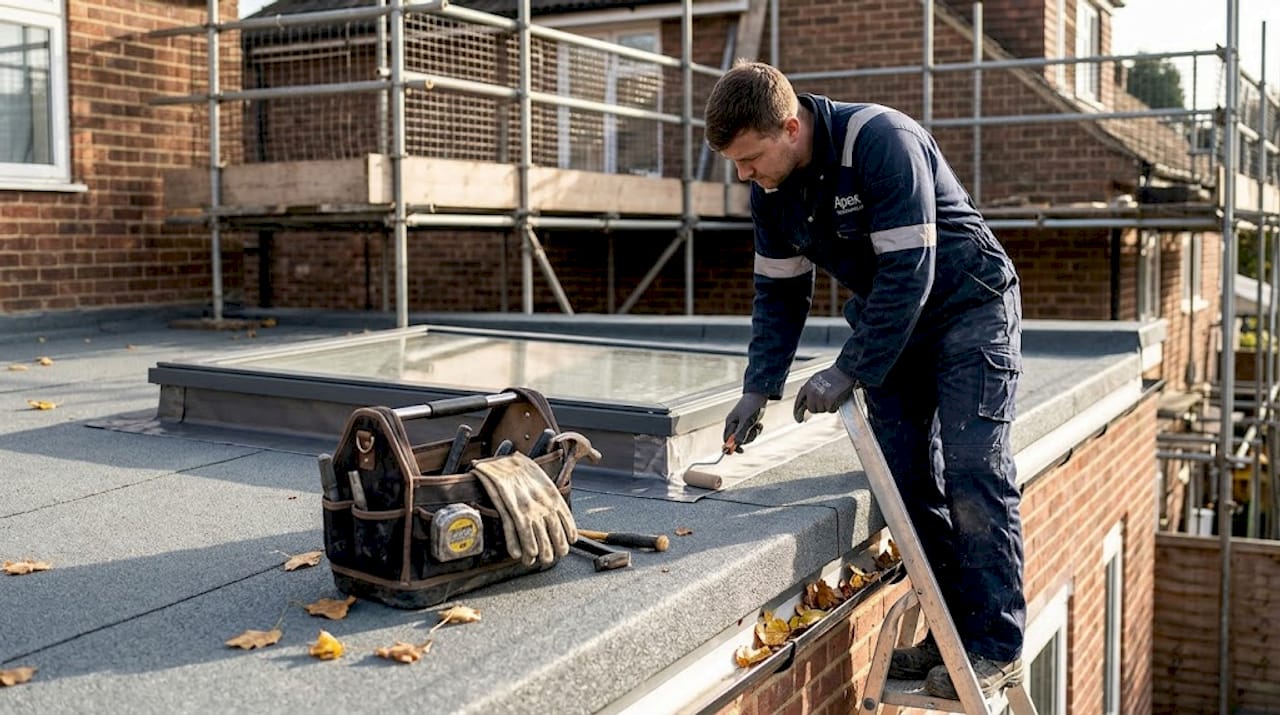
On the technical side, flat rooflights require a minimum upstand of 150mm and must meet thermal performance standards under the building regulations. An upstand is the vertical kerb that raises the rooflight above the roof surface, keeping water away from the junction. Getting this detail right is non-negotiable.
Further roof extensions planning rules for West London include borough-specific conditions in areas such as the Royal Borough of Kensington and Chelsea, where conservation area coverage is extensive.
Pro Tip: Always confirm permitted development eligibility with your local planning authority or a qualified designer before ordering rooflights. It takes a short email to confirm and could save you from an enforcement notice later.
Maximising natural light with rooflights: practical tips and common pitfalls
With planning and design foundations laid, practical tips ensure your rooflights deliver lasting, comfortable light to your new space.
The single most effective strategy is placement. Put your rooflights above the darkest zone of the extension, typically the area furthest from any vertical windows. This broadens the reach of natural light and reduces the contrast between bright and dim areas. A rooflight positioned near an existing window adds little; the same unit placed 3 metres into the room where daylight previously faded transforms the space.
More roof glazing area does not always mean greater comfort. Pairing size with suitable glazing and shading is crucial. Oversized rooflights without solar control measures can make a room feel like a greenhouse by July, pushing you to close blinds all day and defeating the purpose entirely.
Practical tips for effective rooflight design:
Avoid clustering rooflights near existing vertical windows, as the daylight overlap creates diminishing returns
Use low-e coatings on all south- and west-facing units to reduce heat gain without sacrificing visible light transmission
Consider external or internal blinds as a flexible solution for managing seasonal variation in light intensity
Plant deciduous trees or install pergolas to shade rooflights in summer while allowing winter sun through
Check all waterproofing details including upstands, flashing, and junction seals before the build is signed off
Connecting your home extension ideas to a thoughtful rooflight strategy early in the design process pays dividends. The cost of upgrading glazing specification at design stage is a fraction of what it costs to retrofit shading or replace underperforming units after completion.
Pro Tip: Ask your contractor to confirm the upstand height and flashing specification in writing before work begins. These two details account for the vast majority of rooflight failures in the years after installation.
Rethinking rooflights: what most homeowners overlook
Understanding the practical realities rounds out this guide with insights many homeowners miss but must grasp before committing to a design.
The most common mistake we see is treating rooflight selection as a cosmetic decision made at the end of the design process. Homeowners spend months choosing kitchen worktops and wall finishes, then spend ten minutes picking a rooflight from a catalogue without considering orientation, glazing specification, or waterproofing details. The result can be a beautiful-looking extension that overheats in summer, loses heat in winter, or develops a leak within two years.
Many installation failures originate from inadequate upstand and flashing design, not from poor glazing choice. This surprises people. They assume that buying a quality rooflight unit is the hard part, but the junction between the unit and the roof membrane is where problems begin. A modest unit with excellent installation detailing will outperform a premium unit fitted carelessly.
Permitted development limits are worth taking seriously rather than treating as bureaucratic formalities. The 150mm projection threshold and ridge height rule exist because rooflights beyond those limits genuinely affect the character and privacy of neighbouring properties. Ignoring them does not just risk enforcement action; it can complicate a future sale if your conveyancing solicitor asks for evidence of compliance.
Our rooflight installation advice consistently points to one overriding principle: the best rooflight is not the largest or the most expensive. It is the one that is correctly positioned, appropriately glazed for its orientation, and properly detailed at every junction. Getting those three things right delivers a space that feels genuinely transformed, not just temporarily impressive.
How Tenen Ltd supports your rooflight and extension journey
Having explored all aspects of rooflights, here is how Tenen Ltd can help make your extension project a success.
At Tenen Ltd, we have been building and refurbishing homes across West and Central London since 2006. Our team understands the specific planning landscape in areas like Chelsea, Notting Hill, and Hammersmith, and we bring that knowledge to every rooflight and extension project we undertake.
From initial consultation through to planning permission support and final installation, we manage every stage of your extension with care and precision. Whether you are exploring our construction services, considering a loft conversion with integrated skylights, or looking at a full property refurbishment that includes a rear extension, we bring the expertise to specify rooflights that perform beautifully for years. We work with high-performance glazing products, advise on building regulation compliance, and ensure your installation is detailed correctly from upstand to frame. Your home deserves that level of care.
Frequently asked questions
Do rooflights always need planning permission in West London?
Most rooflights fall under permitted development rights and do not require planning permission if they meet specific projection and height limits, but exceptions apply in conservation areas and listed buildings across West London.
What is the best rooflight orientation to avoid overheating?
North-facing skylights offer fairly constant but cool illumination with minimal overheating risk, while south- and west-facing rooflights need solar control glazing or shading to stay comfortable through summer.
Are roof lanterns better than flat rooflights for extensions?
Roof lanterns bring more light and dramatic visual effect but have higher solar gain; flat rooflights offer a low-profile modern look and often sit more comfortably within permitted development limits.
How can I ensure my rooflight installation is waterproof and durable?
Secure roof upstands, robust flashing details, and compliance with building regulations are essential. Failures often arise from poor upstand and flashing design rather than the quality of the glazing unit itself.
What types of glazing improve thermal efficiency in rooflights?
Triple glazing, low-e coatings, heat-absorbing tints, and insulated glazing units all reduce heat loss and limit unwanted solar gain, keeping your extension comfortable across every season.
Recommended
Comments