
What is a basement conversion: your complete guide

TL;DR:
Basement conversions are complex projects involving structural, waterproofing, and regulatory work to transform underused spaces into habitable rooms. Proper planning, professional guidance, and adherence to building regulations are essential to avoid costly mistakes and maximize property value. When executed correctly, they provide valuable living space and lifestyle benefits, especially in space-constrained areas like London.
Most homeowners glance at their basement and see storage space. What they are actually looking at is potentially the most cost-effective way to gain a new bedroom, home office, or leisure room without building outwards or moving house. But what is a basement conversion, really? It is far more than clearing clutter and painting concrete. It involves structural engineering, waterproofing, legal compliance, and deliberate design. Get it right, and you transform one of your property’s most underused assets into something genuinely liveable. Get it wrong, and the costs multiply fast.
Table of Contents
Key takeaways
Point | Details |
Complexity is real | Basement conversions involve structural, waterproofing, and regulatory work far beyond basic decorating. |
Regulations matter | Minimum ceiling height, egress windows, and building permits are legally required for habitable basement space. |
Value uplift is possible | A well-finished conversion can recover around 67% of its cost at resale, depending on quality and lighting. |
Sequencing is critical | Inspections for electrical and plumbing rough-ins must happen before walls are closed or costly rework follows. |
Professional guidance pays | Engaging specialists early for structural and waterproofing work protects your investment and ensures compliance. |
What is a basement conversion?
A basement conversion is the process of transforming an unfinished, storage-only, or underused lower level of a property into proper, habitable living space. It is not simply tidying up a dark room and adding a sofa. A true conversion addresses the structural integrity of the space, controls moisture, meets building regulations, and creates an environment that is comfortable, safe, and functional for everyday use.
The scope of what you can do with a converted basement is genuinely broad. Homeowners across London and beyond are using these spaces for a growing range of purposes, reflecting a wider shift in how people value their lower floors.
Common basement conversion types include:
Bedroom or guest suite. One of the most popular choices, though it triggers specific requirements around egress windows and ventilation.
Home office. Particularly desirable for remote workers wanting a defined, quiet workspace away from the main household.
Gym or wellness room. Below-ground spaces are naturally insulated from noise, making them well-suited to exercise or relaxation.
Children’s playroom or family leisure room. A dedicated space that keeps activity away from upstairs living areas.
Kitchen or utility extension. Less common but achievable in larger footprints with the right drainage infrastructure.
There is also a meaningful distinction between a simple finishing project and a structural conversion. Finishing a basement means adding insulation, drywall, flooring, and lighting to an already adequately sized, dry space. A structural conversion may involve lowering the floor slab to increase head height, removing internal walls, underpinning foundations, and installing new drainage. Both qualify as basement conversions, but the second category demands a very different level of professional involvement and budget.
Technical and legal requirements
This is where many homeowners are caught off guard. A basement conversion in the UK must comply with building regulations, and in some cases may require planning permission. Understanding the baseline requirements before you begin protects you from expensive surprises mid-project.
The most fundamental requirement is ceiling height. Building codes require a minimum of approximately 2.13 metres for a basement space to be classified as habitable. Many older UK properties fall short of this, which is why floor lowering or underpinning becomes necessary.
Egress is equally non-negotiable for certain uses. If you are creating a bedroom, there must be an emergency exit route. This typically means installing an egress window of sufficient size, combined with a light well that meets minimum dimensions. These are not optional extras. They are safety requirements that also feed directly into the habitability classification of the space.
Other technical requirements include:
Waterproofing. Moisture control is arguably the single most important technical challenge in any basement conversion. Over 60% of homes experience basement moisture issues, making professional waterproofing a mandatory first step rather than an afterthought.
Ventilation. Habitable rooms require adequate fresh air supply, which may involve mechanical ventilation in the absence of sufficient natural airflow.
Fire safety. Fire doors, detection systems, and escape routes must meet current standards.
Structural sign-off. Any removal of walls or alteration to the load-bearing structure requires a structural engineer’s input and building control approval.
Party Wall Act. If your property is terraced or semi-detached, excavation work near a shared boundary triggers obligations under the Party Wall Act 1996.
Pro Tip: Book a pre-application conversation with your local building control office before finalising your design. They will identify compliance gaps early, saving you the cost of redesigning work that has already been priced or partially started.
Structural and design challenges
The structural dimension of a basement conversion is where projects most commonly stall or exceed budget. Understanding the key challenges helps you plan realistically and choose the right professionals.
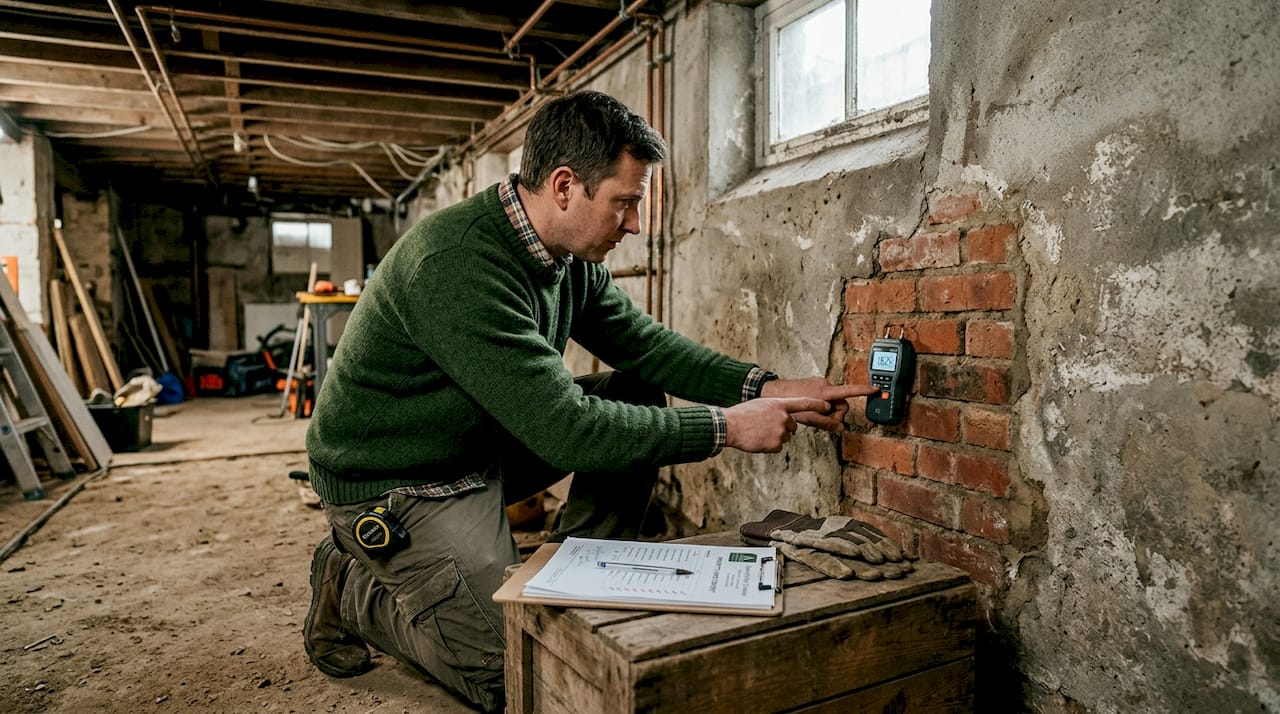
Head height is the first obstacle in many older properties. When the existing floor-to-ceiling measurement falls short of the required 2.13 metres, the only solution is to lower the structural floor. Digging down risks undermining foundations, particularly in terraced London properties where footings may be shallow and neighbouring structures sit in close proximity. Underpinning involves progressively deepening the foundations in sections, and it requires specialist contractors with both the technical skill and the insurance to undertake the work safely.
Removing internal walls to create open-plan basement living space adds another layer of complexity. Structural support with steel beams is required whenever a load-bearing wall comes down, and propping must be in place throughout the works. This is not a task for a general builder working from instinct.
Natural light is one of the most underestimated design challenges. Below-ground spaces have limited access to daylight by definition, and good daylight access usually requires costly modifications such as enlarging existing windows, adding new light wells, or installing sun tunnels. These are not merely cosmetic decisions. The amount of natural light in a converted basement directly affects both its liveability and, critically, how appraisers assess its value.
Here is a useful comparison of conversion approaches for different scenarios:
Scenario | Key challenge | Typical approach |
Adequate head height, dry basement | Insulation, finishing | Standard fit-out |
Low ceiling, good moisture control | Head height below code | Floor lowering or underpinning |
Open-plan requirement | Load-bearing walls present | Steel beam installation with engineer |
Limited natural light | Below-ground limitation | Light wells, sun tunnels, enlarged windows |
Active water ingress | Moisture management | Cavity drain membrane or tanking system |
Pro Tip: Do not design your basement layout until after a moisture survey has been completed. The waterproofing strategy you choose will affect wall thicknesses, floor build-up heights, and the final internal dimensions of every room.
Benefits and limitations
The appeal of a basement conversion is real, and so are the caveats. Here is an honest look at both sides.
On the positive side, converting your basement into a basement living space gives you additional square footage without the disruption of moving or the planning battles that above-ground extensions often trigger. For London homeowners in particular, where space is at a premium, the value of gaining a usable room is significant. You are also improving your home’s functionality in ways that benefit daily life immediately, not just at resale.
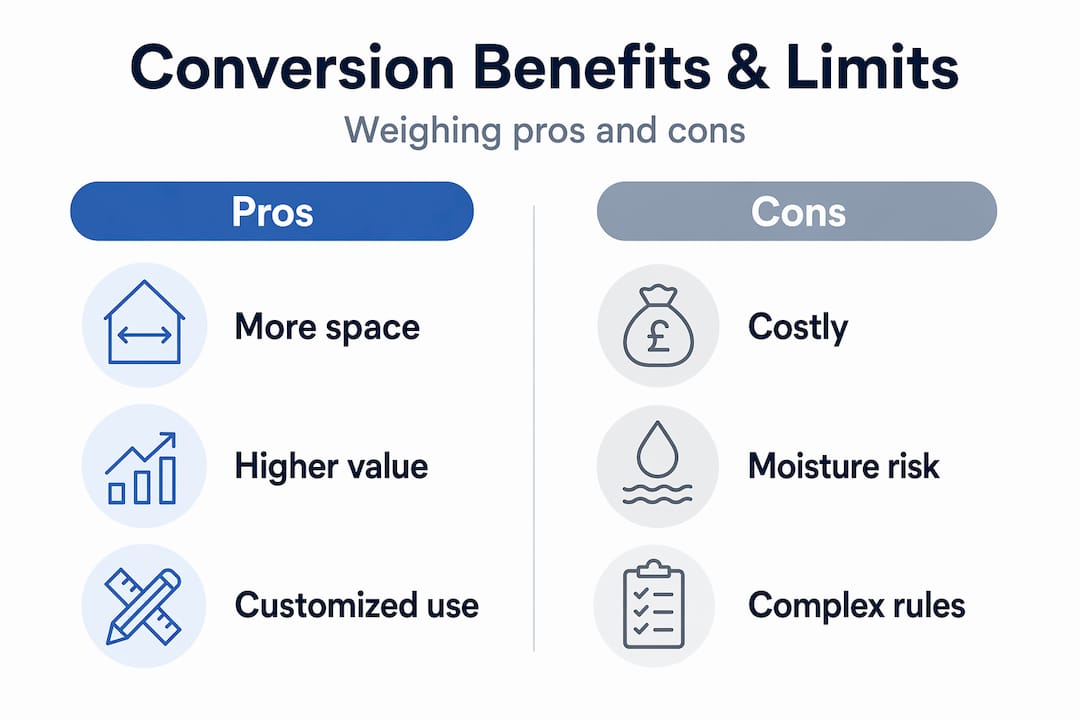
Regarding property value, the picture is nuanced. A basement conversion can recover approximately 67% of its cost at resale, which is a meaningful return. However, below-ground space is typically appraised lower than above-ground space by surveyors, which means the uplift rarely reaches pound-for-pound equivalence with the investment.
The factors that most influence resale value from a basement conversion include:
Quality of natural light access
Code compliance and valid building control sign-off
Standard of finish relative to the rest of the property
Practicality of the converted use for the target buyer
Lifestyle benefits, on the other hand, are harder to measure but equally real. A well-designed home gym, guest suite, or home office can genuinely transform how you use and enjoy your property. These are gains you experience every day, not just when a surveyor visits.
For guidance on how renovation choices affect long-term property value, the expert-backed renovation insights at Tenenltd offer a useful reference point.
How to convert a basement: the process
Understanding the sequence of a basement conversion helps you ask the right questions and avoid costly missteps. Here is how a well-managed project typically unfolds.
Initial inspection and feasibility. A structural engineer or specialist contractor assesses the existing space, including ceiling height, moisture levels, foundation type, and drainage. This determines what is achievable and at what cost.
Design and planning. Once feasibility is established, an architect or designer creates drawings that satisfy building regulations. If planning permission is needed, this is submitted before any work begins.
Waterproofing assessment. Waterproofing strategies must be selected based on the type and severity of moisture present, ranging from interior cavity drain membranes to exterior tanking systems applied to the outside of the foundation walls.
Structural works. Underpinning, floor lowering, and steel beam installation take place before any finishing work begins.
Rough-in inspections. Plumbing and electrical work is installed and inspected before walls are closed. Failure to follow inspection sequence can force you to tear out completed work at significant cost. This is one of the most common and avoidable mistakes in basement projects.
Egress windows and light wells. These are installed, sealed, and waterproofed as part of the structural phase.
Insulation, framing, and first-fix. Internal walls are framed, insulation is fitted, and mechanical systems are completed before boarding begins.
Finishing works. Drywall, flooring, tiling, painting, joinery, and lighting are installed in sequence, followed by snagging and final building control sign-off.
Pro Tip: Agree on a clear inspection schedule with your contractor before work starts. Each stage should have a defined hold point where sign-off is required before the next phase begins. This protects you legally and financially throughout the project.
My honest take on basement conversions
I have worked alongside many homeowners embarking on basement projects, and the pattern I see most often is an underestimation of complexity at the start. Not carelessness, just the natural tendency to focus on the exciting finish rather than the unglamorous groundwork.
The projects I have seen go wrong almost always share the same flaw: waterproofing was treated as optional, or inspection sequencing was ignored to save time. Both decisions tend to double the cost before the project is done. The homeowners who get it right are the ones who invest in proper surveys upfront and hire specialists for the technical phases, even if they handle cosmetic finishing themselves.
A hybrid approach of professional specialist contractors handling structural and regulatory work, combined with owner input on finishing choices, can reduce overall costs significantly while keeping the critical elements compliant and safe.
My strongest advice: do not let enthusiasm for the end result rush you past the planning stages. A basement conversion done properly is a genuinely transformative project. It adds space, comfort, and real value to your home. But it rewards patience and professional input far more than it rewards speed.
— Mateja
Ready to transform your basement?
If you are considering a basement conversion and want to understand what it would take for your specific property, Tenenltd is well placed to help. Since 2006, the team has been delivering high-quality refurbishments and conversions across West and Central London, including Fulham, Chelsea, Kensington, Chiswick, and Notting Hill.
From structural assessments and waterproofing to full project management through to final finish, Tenenltd handles every stage with the detail and care that a project of this complexity demands. Whether you are planning a full property refurbishment or focusing specifically on your basement, the team offers personalised consultations to help you plan with confidence. Explore the full range of home renovation services and get in touch to discuss your project.
FAQ
What is a basement conversion?
A basement conversion is the process of transforming an unfinished or storage-only basement into habitable living space, meeting building regulations for ceiling height, moisture control, egress, and ventilation.
Do I need planning permission for a basement conversion?
Most basement conversions fall under permitted development, but planning permission may be required if your property is listed, in a conservation area, or if the conversion involves significant external changes such as new light wells.
How much does a basement conversion cost in the UK?
Costs vary widely depending on the scope of work, but a structural conversion involving underpinning and waterproofing typically starts from £30,000, with more complex projects exceeding £100,000 in London.
Is a basement conversion worth it?
For most homeowners, yes. A well-executed conversion adds usable space immediately and can recover around 67% of its cost at resale, with additional lifestyle benefits that make daily living more comfortable.
How long does a basement conversion take?
A straightforward finishing project may take six to ten weeks. A full structural conversion, including underpinning and waterproofing, typically takes three to six months depending on the complexity and size of the space.
Recommended
Comments