
Transform your home: What is a home office conversion?
TL;DR:
Many underused spaces in West London homes, such as garages, lofts, and alcoves, can be converted into functional home offices. Proper planning, including storage, insulation, natural light, and tech infrastructure, ensures productivity and comfort. These conversions add value and appeal, providing versatile workspaces adapted to each homeowner’s needs.
Most homeowners in West London assume that creating a home office means clearing out a spare bedroom and adding a desk. But that thinking leaves a lot of potential untapped. Your neglected garage, underused loft, or that oddly shaped room at the end of the hallway could become a beautifully designed, fully functional workspace. A home office conversion is the renovation of an existing part of a home into a dedicated workspace for remote working, and it’s one of the most rewarding transformations you can make to a West London property right now.
Table of Contents
Key Takeaways
Point | Details |
Flexible conversion spaces | Garages, lofts and spare rooms can all be reimagined as productive home offices. |
Critical design features | Soundproofing, connectivity, lighting, and heating are essential for a comfortable workspace. |
Professional process guidance | A structured, step-by-step approach ensures your project is efficient and adds long-term value. |
Expert advice pays off | Investing in early planning and specialist support helps avoid costly mistakes. |
Understanding home office conversions
At its core, a home office conversion means taking a space that isn’t currently serving you well and turning it into somewhere you can actually get work done. That might sound straightforward, but the process involves considerably more thought than rearranging furniture.
According to expert guidance, a home office conversion is the renovation of an existing part of a home, or an underused space, into a dedicated, functional workspace for working from home. The key word there is functional. It’s not just about aesthetics. It’s about creating an environment that supports concentration, professionalism, and day-to-day comfort.
There’s a persistent misconception that home office conversions are only worthwhile if you have a large, dedicated room to sacrifice. That simply isn’t true. Many West London homes, particularly the period terraces in Fulham, Kensington, and Chiswick, have awkward spaces that feel like wasted square footage. A well-planned conversion breathes new life into those areas.
Here are the most common spaces that lend themselves to conversion:
Loft spaces: Often underused, lofts offer excellent potential for quiet, private offices above the noise of the household.
Garages: A single or double garage can be fully insulated and refurbished into a professional-grade workspace.
Spare bedrooms: The most obvious choice, though often approached with less design thought than they deserve.
Garden rooms or outbuildings: Increasingly popular in properties with outdoor space, though these involve a separate build process.
Under-stair areas and alcoves: With clever carpentry and storage solutions, even compact areas can become productive micro-offices.
“An underused space doesn’t have to stay underused. With the right construction approach for home offices, even the most overlooked corner of your home can become your most valued room.”
The lifestyle benefits are tangible. A designated workspace reduces the mental blurring between work and home life, which is something many remote workers in West London genuinely struggle with. And from a property perspective, a well-executed conversion adds real, measurable appeal to your home when it comes time to sell.
Which spaces work best for home offices?
Choosing the right space is arguably the most important decision in the entire process. Get it right and everything else flows more smoothly. Get it wrong and you may find yourself with a beautifully finished room that simply doesn’t work for how you actually want to use it.
Converting loft space and garage space into dedicated home offices are among the most popular and practical routes available. Here’s how those options compare, alongside spare room conversions:
Space | Key benefits | Challenges |
Loft | Private, quiet, separate from living areas | May need structural work, natural light planning |
Garage | Ground-floor access, good size, separate entry | Insulation and heating often needed, damp proofing |
Spare bedroom | Minimal structural work, already habitable | Shared walls, less separation from household activity |
Garden outbuilding | Maximum separation from home life | Planning permission more likely, separate utility runs |
West London homes come with their own particular layout challenges. Many properties in Hammersmith or Notting Hill are Victorian or Edwardian terraces, which means tight floor plans and lofts that may have limited headroom without modification. However, they also tend to have surprisingly spacious garages or rear returns that are genuinely underused.
When assessing any space, consider these factors carefully:
Natural light: Working in a poorly lit space affects both mood and productivity. South or west-facing rooms or skylights in loft conversions make a significant difference.
Privacy and acoustics: Can you take a video call without background noise intruding? Sound insulation is easy to overlook during planning but expensive to fix afterwards.
Structural considerations: Lofts may need floor reinforcement. Garages may need damp-proof membranes and full insulation before they become comfortable year-round.
Accessibility: Think about how you’ll actually reach the space each day. A loft accessed by a narrow staircase may feel charming at first but frustrating over time.
Pro Tip: If you’re planning to sell within five to ten years, consider designing your office so it can easily revert to a bedroom or hobby room. A loft conversion for a home office with an en-suite facility, for example, gives you the flexibility of a fifth bedroom if your circumstances change. Versatility increases resale appeal significantly in West London’s competitive property market.
It’s also worth exploring whether a home extension option in West London could create dedicated office space without compromising any existing room in the house, which is worth serious consideration if your current layout feels genuinely constrained.
Must-have features for a practical home office
Designing a productive home office goes well beyond paint colours and desk placement. The features that truly make a workspace function day after day are often the unglamorous ones: insulation, wiring, ventilation, and storage.
Expert advice confirms that key design considerations for a home office conversion centre on heating, access, natural light, Wi-Fi and tech infrastructure, soundproofing, acoustics, and storage. Each of these deserves real budget and planning attention.
Here’s a breakdown of the essential features and what they deliver:
Feature | Why it matters |
Insulation and heating | Keeps the space comfortable year-round, essential for garages and lofts |
Soundproofing | Reduces distraction and ensures call privacy |
Natural light or quality artificial lighting | Reduces eye strain and supports alertness during long working days |
Reliable internet (wired or strong Wi-Fi) | Non-negotiable for remote working, streaming calls, or file transfers |
Ventilation | Prevents stuffiness and keeps the air fresh, particularly in converted lofts |
Purpose-built storage | Keeps the workspace clear and organised without relying on household areas |
Adequate electrical sockets and USB points | Reduces cable clutter and supports multiple devices |
To avoid the most common mistakes, follow these steps before committing to a design:
Map your technology needs first. Count your devices, consider where your router or network switch will sit, and plan cable routes before any walls are finished.
Plan lighting in layers. Task lighting at the desk, ambient lighting for the room, and natural light where possible. A dormer loft design can significantly increase the amount of daylight in a converted loft office.
Build in more storage than you think you need. Most people underestimate storage requirements by around 30%. Bespoke built-in shelving and cabinetry makes a real difference to how tidy and calm the space feels.
Don’t skip the acoustics. Even in a spare bedroom, acoustic plasterboard or insulated stud walls can transform how quiet and professional the space feels.
Check regulations early. Some conversions, particularly loft conversions involving structural changes, may require building regulations approval even if full planning permission isn’t needed.
Pro Tip: When specifying your electrical installation, always ask your contractor to fit more sockets than you currently need. Adding sockets after the walls are plastered and decorated costs significantly more than doing it correctly during the conversion.
Step-by-step: The home office conversion process
Understanding the process from start to finish helps you approach the project with confidence rather than anxiety. Every conversion is different, but the core journey follows a clear sequence.
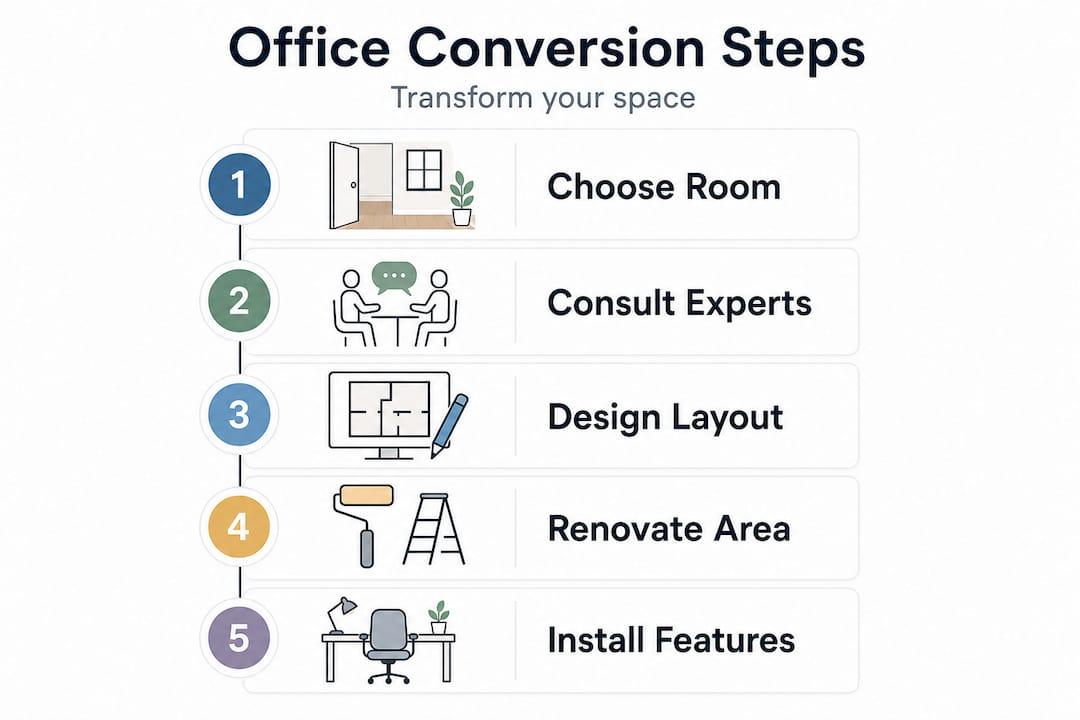
Initial assessment. A professional contractor visits the space and evaluates its potential. This includes checking structural integrity, existing insulation, damp levels, and headroom. Understanding what home office conversions involve at this early stage helps set realistic expectations.
Design and specification. Working with a designer or contractor, you develop the layout, agree on materials, and specify all features including lighting, electrics, and joinery. This is where your vision becomes a detailed plan.
Permissions and approvals. Most internal conversions don’t require full planning permission, but structural changes, loft modifications with external alterations, or garage conversions that affect the building’s appearance may require consent. Your contractor should advise clearly on this.
The build phase. This covers all structural work, insulation, plastering, electrical first fix, plumbing if needed, and finishing. A standard spare room conversion may take two to three weeks, while a loft or garage conversion often takes four to eight weeks.
Second fix and fit-out. Electrics are completed, joinery is installed, flooring is laid, and decorating is finished. This is where the room starts to feel like an office rather than a building site.
Final setup. Furniture, technology, and accessories are brought in, and any snagging issues are resolved before you start using the space.
Getting professional advice early, particularly when planning a West London loft office, can save you significant time and money. Experienced contractors know where problems typically arise and can anticipate them before they become expensive.
Pro Tip: Future-proof your conversion by fitting conduit runs (plastic tubing inside walls) during the build phase. If you ever want to upgrade your internet cabling or add extra data points later, it can be done without opening up the walls again.
Why most home office conversions fall short (and how to avoid it)
After working on hundreds of projects across West London, we’ve noticed a clear pattern in conversions that disappoint homeowners versus those that genuinely enhance their lives. The gap is almost never about the quality of the build itself. It’s about the thinking that happened before the first tool was lifted.
The most common mistake is treating the office as the lowest-priority room in the project. Homeowners invest heavily in kitchens and bathrooms because those spaces have obvious emotional and financial returns. But a poorly designed home office affects your day, every single day. Skimping on acoustic insulation to save a few hundred pounds means you’ll spend years taking calls from your kitchen instead.
The second pattern we see is underinvestment in design relative to build. Many people spend 90% of their thinking time on materials and finishes, and almost no time on how they’ll actually use the space. Where will you video call from? Where does natural light fall at 2pm? Is there a wall behind you that looks professional on screen? These are the details that determine whether the office works for you in practice.
The contrarian truth is this: the unglamorous elements, acoustics, lighting quality, cable management, and storage, deliver more daily value than expensive desks or premium flooring. Invest there first, and the in-depth project outcomes will speak for themselves.
Our advice to every West London homeowner considering a conversion is to spend as much time planning the intangible elements as the visible ones. A space that feels calm, sounds quiet, and keeps you connected reliably will repay that investment in focus and productivity every single working day.
Ready to transform your West London space?
Turning an underused part of your home into a productive, beautifully finished office is one of the most practical upgrades you can make right now. Whether you’re considering a loft, garage, or spare room, the right professional guidance makes all the difference between a space that merely exists and one you genuinely look forward to working in.
At Tenen Ltd, we’ve been helping West London homeowners transform their properties since 2006. You can book a consultation for a loft or garage office conversion to discuss your specific space and goals, or explore our property refurbishment services to see how a wider renovation could complement your new workspace. When you’re ready to see the full range of conversion solutions we offer, we’re here to help you move from idea to reality with confidence.
Frequently asked questions
Do I need planning permission for a home office conversion?
Most internal conversions don’t require planning permission, but changes to the structure or external appearance of your home, such as a loft dormer, may need approval. It’s always worth checking with your contractor before work begins.
What rooms can be converted into a home office?
Loft space and garage space are popular choices, alongside spare bedrooms, outbuildings, and even large alcoves or under-stair areas, each with its own advantages depending on your layout and needs.
How long does a typical home office conversion take?
Most standard conversions are completed in three to eight weeks, with simpler spare room conversions at the shorter end and more complex loft or garage projects taking longer.
What are the top features to include in a home office conversion?
The most important elements are natural light, soundproofing, reliable internet infrastructure, adequate heating, and purpose-built storage, as these are the key design considerations that most directly affect daily productivity.
Does a home office conversion add value to my property?
Yes. A well-designed, versatile home office conversion can meaningfully increase your property’s appeal and market value, particularly in West London where demand for flexible living and working spaces remains strong among buyers.
Recommended
Comments