
Avoid the Biggest Mistake When Soundproofing a London Flat
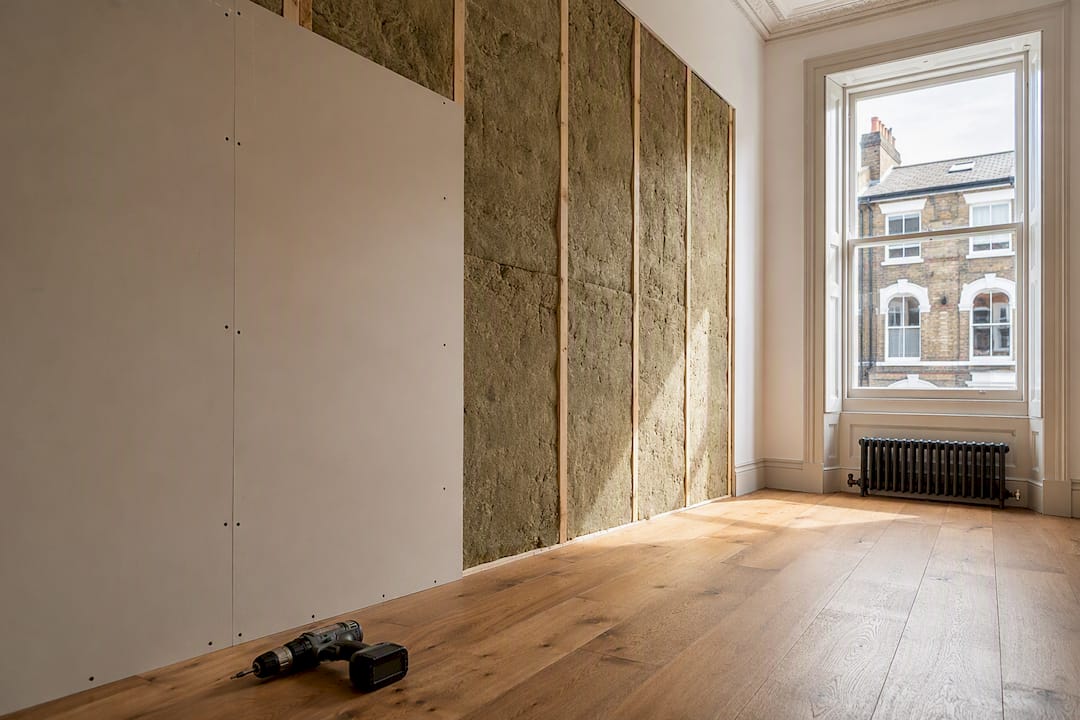
Start by working out whether the noise is airborne (voices, television, music) or impact (footsteps, dragged furniture), because that decision drives everything else. Seal gaps and soften surfaces today for quick relief, but hold off on ceilings, floors or walls until you know the transmission path. Before anything structural, check your lease and get written landlord or freeholder consent, and rule out asbestos in older buildings.
TL;DR:
Sealing gaps around skirting boards, sockets, and installing heavy curtains can provide immediate sound relief without structural work.
Impact noise from above is best addressed with floating floors or acoustic underlay, while airborne noise requires sealing flanking routes and adding mass to walls.
Ceiling treatments such as resilient bars or insulated suspended ceilings reduce airborne and impact noise but may significantly decrease room height.
Formal permissions, landlord consent, asbestos checks, and compliance with Building Regulations are essential before undertaking structural soundproofing work.
Engaging a professional contractor for diagnosis and project management typically results in better outcomes than DIY fixes alone.
Table of Contents
How do you diagnose the noise and its transmission path?
Airborne noise (speech, music, a barking dog) travels through air gaps and thin partitions. Impact noise (footsteps, dropped objects, dragged chairs) travels through the structure itself, often bypassing walls entirely and re-emerging as sound in the room below or beside it. Confusing the two is the single most expensive mistake flat owners make, because a treatment that stops one does almost nothing for the other.
A practical diagnosis follows a simple sequence:
Keep a noise diary for a week, logging time, duration, type of sound and which room it’s loudest in.
Map the source by walking your flat with a phone recorder, noting where the sound is sharpest against a wall, floor or ceiling.
Check flanking routes — sockets, skirting boards, shared pipework and service risers often carry sound around a wall rather than through it.
Escalate to your council if the noise is persistent and unreasonable; they investigate under statutory nuisance rules rather than applying a fixed decibel threshold.
A structured diary and source map, backed by an inspection, tends to identify the real problem far more reliably than jumping straight to a product purchase based on a marketing decibel figure.
Pro Tip: Record a short video, not just audio, whenever the noise happens. Timestamped video with sound is far more persuasive to a landlord, freeholder or council officer than a description written the next morning.
What cheap fixes can you try today?
Before booking any contractor, work through the low-cost options. None of them will silence a determined upstairs neighbour, but they narrow the problem and often bring real, immediate relief.
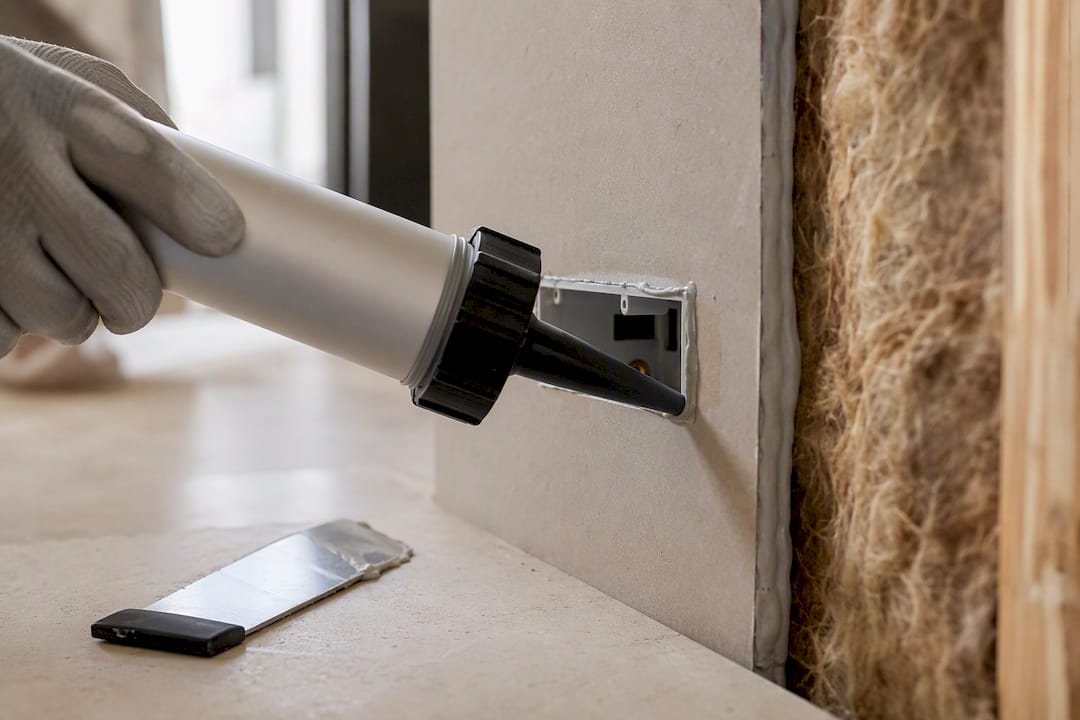
Seal gaps around skirting boards, socket backs and pipe penetrations with acoustic sealant rather than standard decorator’s caulk.
Draughtproof doors and windows; a poorly sealed front door is a surprisingly common airborne noise route from communal corridors.
Hang heavy, lined curtains and position bookcases or wardrobes against a party wall to add mass without construction work.
Lay thick rugs with a proper underlay over hard flooring to dampen your own footfall, which helps neighbours below even before you tackle your own noise problem.
Upgrade internal doors to solid-core units with better perimeter seals, an approach covered well by One Day Doors & Closets’ guide to noise-reducing doors.
Foam acoustic panels are worth mentioning only to rule them out: they reduce echo inside a room but do almost nothing to stop sound crossing into a neighbour’s flat, because they don’t add mass or break the transmission path.
Pro Tip: If the noise is coming from upstairs, a polite conversation often achieves more than any product. Offer to co-ordinate works, perhaps sharing the cost of underlay if they’re relaying flooring anyway.
Which ceiling treatments help with noise from upstairs?
When the disturbance comes from the flat above, you have two options: treat your ceiling, or persuade your neighbour to treat their floor. Ceiling work is usually the fallback when you can’t get access above, and it comes with real trade-offs.
Resilient bars or clips decouple a new plasterboard layer from the joists, reducing airborne transmission noticeably and impact noise to a lesser degree.
Insulated suspended ceilings add mass and an air gap, which helps with both noise types but costs you ceiling height, typically 75 to 150mm.
Expect reduced headroom, disrupted access to any services running in the void, and the need to maintain fire-stopping and ventilation paths once the new ceiling is closed up.
In flats built before the early 2000s, ask for an asbestos check before anyone touches the existing ceiling structure.
Treat any marketing dB rating with caution. Laboratory figures apply to a specific tested build-up, not your particular joists, service penetrations and workmanship, so ask a contractor for a proper acoustic design rather than a product spec sheet.
What floor solutions stop impact noise from your own flat?
If you control the floor causing the problem, whether it’s your own flat or one you’re renovating for a tenant, this is the highest-value intervention available. Treating the source floor beats treating the ceiling below almost every time, because it stops impact energy entering the structure in the first place.
Floating floor systems sit on a resilient layer that isolates the finished floor from the structural deck, cutting footfall transmission substantially.
Acoustic underlays under carpet or engineered timber are a lower-disruption option, and many leasehold policies specifically require carpet with underlay over hard flooring for exactly this reason.
Carpet alone, without a proper acoustic underlay, rarely satisfies lease conditions or delivers a meaningful reduction.
Expect threshold and door clearance issues once you add build-up height, and budget for door trimming or new thresholds throughout.
Phasing is possible: treat the noisiest rooms (bedrooms, living rooms) first if a whole-flat re-floor isn’t affordable in one go.
Always check your lease before replacing flooring. Many leasehold alterations policies restrict hard flooring specifically to control footfall noise for the flat below, and ignoring that condition can lead to an enforcement notice or a removal order.
How do you treat party walls for airborne noise?
Speech, television and music crossing a party wall respond to two principles: mass and decoupling. A thicker wall alone helps a little; a wall that’s both heavier and structurally separated from the original leaf helps far more.
Independent resilient stud linings, built in timber or metal and packed with mineral wool, decouple the new leaf from the original wall and cut airborne transmission significantly.
Mass-loaded linings add density without much extra thickness, useful where you can’t afford to lose floor area to a full stud build-up.
Cavity insulation in masonry party walls closes air gaps that otherwise carry sound with surprising efficiency.
Seal every flanking point: socket backs, skirting junctions and perimeter gaps are where a well-built lining quietly fails.
Decorative acoustic panels marketed for home offices or studios almost never solve a neighbour speech or television problem, because they lack the mass to block transmission through a shared structure. For a deeper look at how flanking transmission undermines otherwise good wall builds, see our guide to Part E soundproofing in terraced houses, which applies equally to flats sharing a party wall.
Pro Tip: Ask your contractor to airtightness-test the finished lining, not just install it. A single unsealed socket cut-out can undo a large share of an otherwise well-specified wall build-up.
What permissions and Building Regulations checks come first?
Approved Document E sets minimum acoustic performance for separating walls and floors in new-build and materially altered dwellings, and it has applied since 1 July 2003. It is not retrospective, so an existing flat built decades ago doesn’t automatically fall foul of it, but any material change of use or new construction work does need to meet it. Reasonable resistance doesn’t mean silence, and testing between a flat and a shared corridor or stairwell isn’t required under the FAQ guidance.
Before booking structural work:
Get written landlord or freeholder consent for any alteration, even where the work sits entirely within your own flat.
Check party wall obligations, since notice periods and neighbour responses can add weeks to a schedule; our guide to party wall agreement timelines explains what to expect.
Arrange an asbestos survey for pre‑2000 buildings before disturbing ceilings, floors or wall linings.
Confirm permitted working hours with your management company, particularly for shared-structure work; see our London construction hours guide.
Flag Building Control involvement early where the works count as material alteration, since pre-completion testing may apply.
Councils and freeholders commonly list these conditions together on their property alterations pages, so check your specific local authority before committing to a schedule.
What should you include in a contractor’s brief?
A quality brief starts with the evidence you’ve already gathered: your noise diary, source map and any recordings. Hand that to whoever surveys the property rather than describing the problem from memory.
Ask for a site inspection before any quote, not a remote estimate based on room dimensions alone.
Request junction detailing: how sockets, skirtings and pipe penetrations will be sealed, not just what goes on the main wall or ceiling area.
Confirm the fire-stopping and ventilation plan for any void that gets closed up, since blocking a vent to chase sound reduction is a genuine building-safety risk, not a shortcut.
Ask whether an asbestos check has been scoped into the price, particularly for pre‑2000 flats.
Request an itemised quotation, broken down by element, rather than a single lump figure.
Pro Tip: Treat a guaranteed decibel reduction with real scepticism if it’s offered before anyone has seen the property. Realised performance depends on site conditions and workmanship far more than any product spec sheet.
What do costs and timelines typically look like?
Costs split roughly into three bands. DIY sealing, curtains and rugs cost little and can be done in a weekend. Mid-range work, such as an acoustic underlay and floating floor in one or two rooms, or a resilient ceiling in a single room, is a proper build project measured in days rather than hours. Structural interventions across a whole flat, involving stud linings, ceiling replacement and floor builds together, sit at the top end and can extend into weeks once consents are factored in.
Asbestos surveys, party wall agreements and restricted access to service risers all push costs and timelines up.
Single-element jobs (one ceiling, one floor) generally move faster than whole-flat projects once permissions are in place.
Consent delays, particularly landlord sign-off and party wall notice periods, are the most common cause of a schedule slipping.
Use the cheap fixes as temporary mitigation while you wait for permissions or a contractor slot, rather than living with the noise untreated.
What does Tenen Ltd bring to a soundproofing project?
A refurbishment and building fabric contractor with experience in London, operating since 2006. On a soundproofing job, that means checking for asbestos, confirming access to service risers, and reviewing fire and ventilation implications before pricing anything.
Every quote is itemised after a site survey, and oversight on disruptive work helps ensure quality and attention to detail.
When should you attempt this yourself?
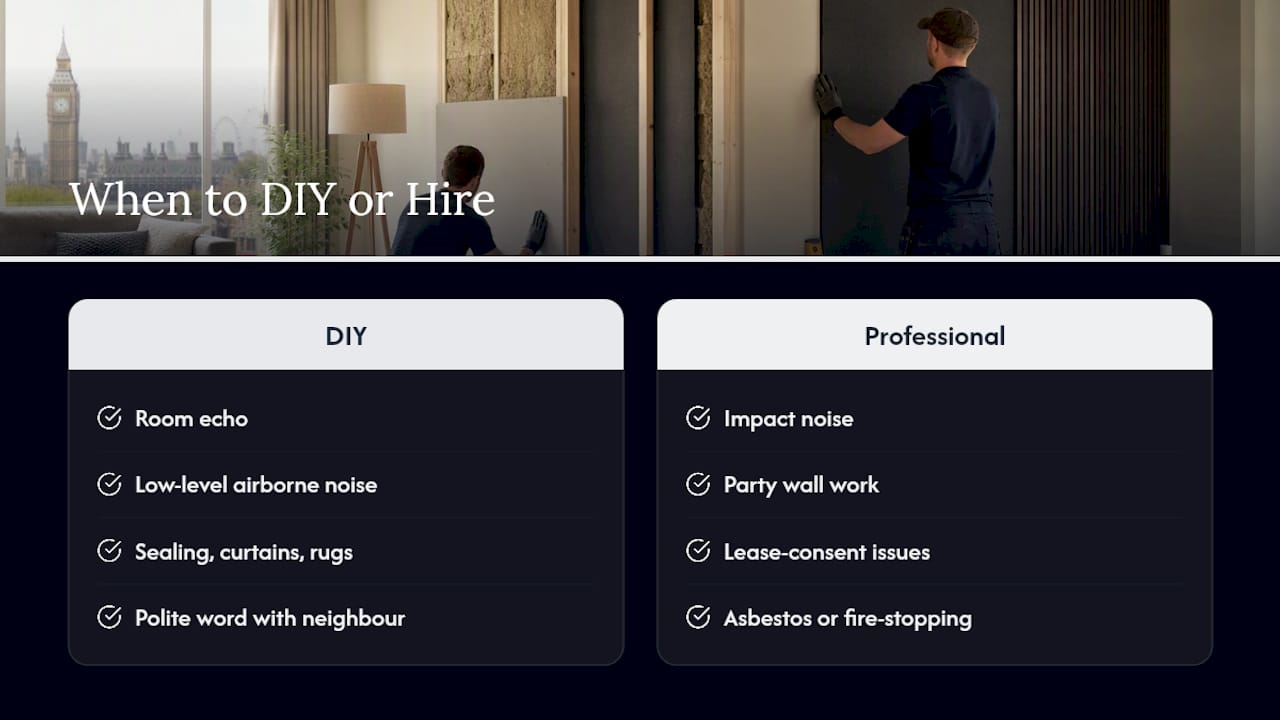
Try the DIY route for room echo and low-level airborne annoyance: sealing, curtains, rugs and a polite word with a neighbour solve a real share of complaints without touching the structure. Impact noise, party wall work, or anything involving lease consent, asbestos or fire-stopping needs a professional survey from the outset.
Bringing a contractor in early, even just for the diagnosis, tends to save money overall by avoiding rework on a treatment aimed at the wrong transmission path. Whatever you choose, prioritise the intervention that addresses how the sound is actually travelling, not the one that’s cheapest to buy.
— Mateja
Ready for a survey and a tailored quotation?
If the diagnosis points to structural work, a competent contractor changes the outcome more than any single product choice. Tenen Ltd carries out on-site inspections, itemised quotations, asbestos and fire checks, and full project management, so consents, testing and warranties are handled alongside the physical build rather than left for you to chase separately.

A contractor-managed job also means someone is accountable for the junction detailing and airtightness that make or break a wall or ceiling lining, not just the headline material. If you’re weighing up a ceiling, floor or party wall project in a West or Central London flat, request a survey through our Full Property Refurbishment page and get an itemised quotation before committing to any works.
Sources
FAQ
How can I soundproof my flat without hearing my neighbours?
Start by diagnosing whether the noise is airborne or impact, since the fix differs for each. Seal gaps, add heavy curtains and rugs for immediate relief, then move to a resilient ceiling, floating floor, or party wall lining depending on the transmission route you’ve identified.
What are the legal soundproofing requirements for flats?
Approved Document E sets minimum sound resistance for new-build and materially altered dwellings but doesn’t apply retrospectively to existing flats. Any alteration still needs written landlord or freeholder consent and a lease check before work starts.
How do I stop sound travelling through my apartment walls?
Independent resilient stud linings with mineral wool, or mass-loaded linings for masonry walls, reduce airborne transmission by adding mass and decoupling the new leaf from the original structure. Sealing flanking routes, particularly sockets and skirting junctions, is just as important as the wall build-up itself.
How do I stop noise from the flat upstairs?
If you can influence the floor above, a floating floor system or acoustic underlay under carpet is the highest-value fix for footsteps and impact noise. Where you only control your own ceiling, resilient bars and an insulated suspended ceiling help, though expect reduced headroom and disrupted service access.
Does Tenen Ltd handle soundproofing projects in London flats?
Soundproofing work for ceilings, floors and party walls is included as part of refurbishment services, with asbestos and fire checks alongside itemised quotations. Current pricing depends on the survey findings and is available through the Full Property Refurbishment page.
Recommended
Comments