
£745–£1,740: London homeowners' scaffolding costs, licences & access
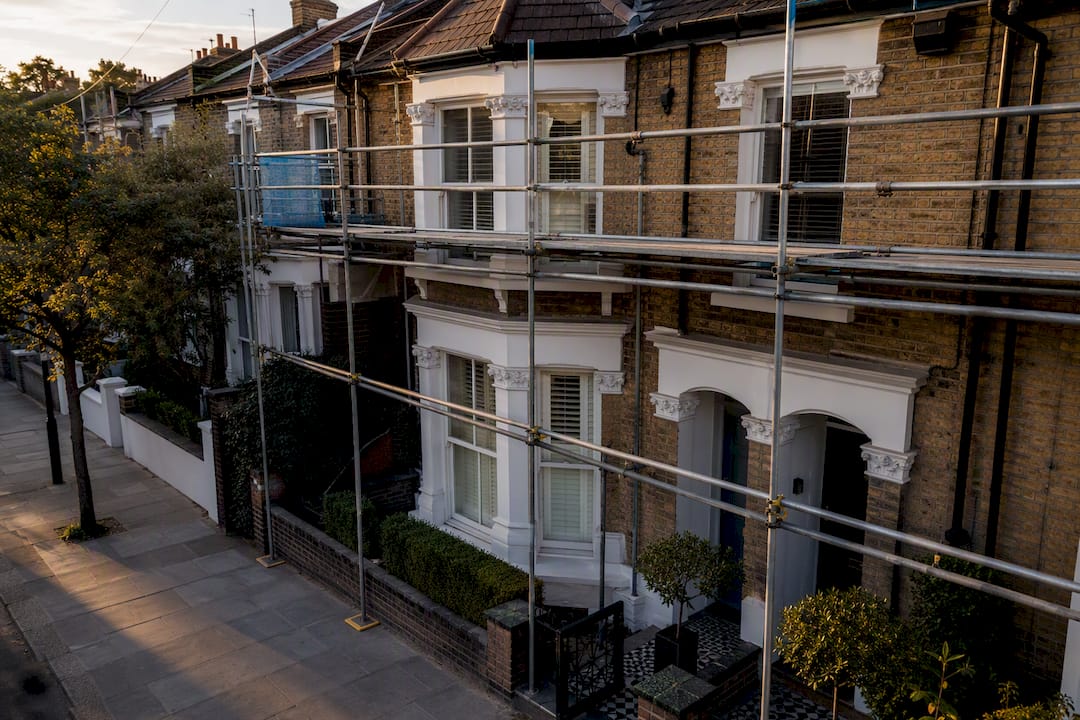
Expect to pay around one thousand one hundred pounds for a single two-storey house scaffold in London, with most jobs falling between seven hundred and forty-five to one thousand seven hundred and forty pounds depending on hire length and access. London prices run roughly a quarter above the national average. The figure that changes fastest on a quote is hire duration, closely followed by access complexity and whether a pavement licence is needed.
TL;DR:
London scaffold costs for a two-storey house typically range from £745 to £1,740, with a benchmark of around £1,120 for standard builds.
Access complexity, scope, and property features like narrow frontages, bay windows, or conservatories significantly increase the price.
Additional London-specific charges include congestion, ULEZ, parking suspensions, and weather delay contingencies, which should be itemised on quotes.
Permits and licences for public pavement or highway access can cost between £80 and several hundred pounds, often overlooked by homeowners.
Coordinating trades, fixing prices upfront, and ensuring detailed quotes with design and insurance documentation can reduce overall scaffold expenses.
Table of Contents
How much does scaffolding cost in London?
If you want a working budget before you ring around for quotes, the current London benchmark for a standard two-storey semi or terrace scaffold sits at roughly £1,120, with a realistic range of £745 to £1,740. That range already builds in the premium London commands over the rest of the country, so treat a quote sitting well outside it as a signal to ask more questions rather than automatically assuming it is the cheaper option.
Most scaffolders price per elevation, then apply a minimum hire period of 4 to 8 weeks before switching to a weekly rate. That minimum period matters more than the headline price. A job that only needs three weeks of access still gets billed for the full minimum term, which is why coordinating trades before scaffold hire starts can save real money later in this guide.
Typical London price bands look like this:
Job type | Typical London range | Notes |
Single elevation (front or rear) | £700–£1,100 | Common for guttering, rendering, or painting |
Full wrap-around | £1,800–£3,500 | Needed for re-roofing or full external refurbishment |
Chimney-only access | £450–£800 | Independent tower, shorter erect time |
Roof access with temporary roof | £2,000–£4,500+ | Adds weatherproofing and extra design work |
A few figures worth keeping in your back pocket when comparing quotes:
Per-m² benchmarks used by UK trade guides typically land between £20 and £30 per square metre of scaffold, though London access costs push this toward the top end.
Weekly hire rates after the minimum period commonly run 10% to 20% of the original erect cost.
Erect and dismantle (strike) charges are usually bundled into the headline figure, not charged separately, so ask if they are not.
These numbers give you a baseline. What actually pushes your quote up or down comes down to the specifics of your property and your street.
What affects scaffolding cost in London
Access is the single biggest swing factor on any London quote. A terraced house with a narrow frontage, a bay window, or a conservatory bridging the ground floor forces scaffolders to design around obstacles rather than build a straightforward run, and that extra design time gets priced in. Corner plots and houses with rear-garden access via a side alley often cost less than you’d expect, simply because materials can be moved without going over the pavement at all.
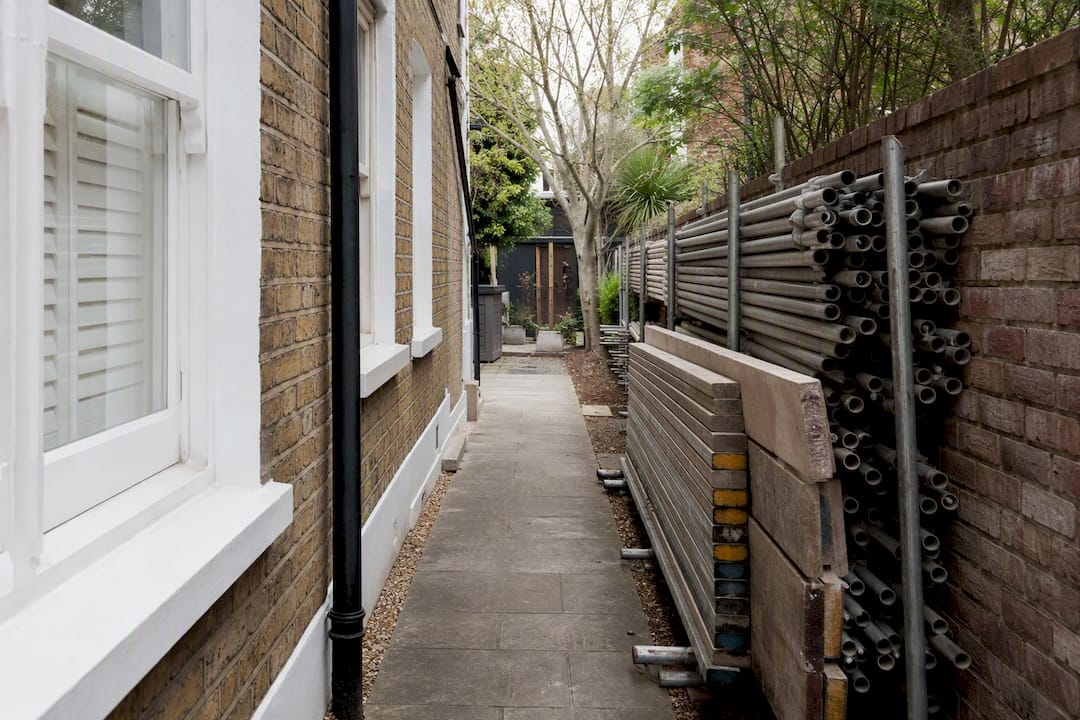
Scope changes the maths just as much as access does. A single elevation for repainting is a different job entirely from a full wrap-around needed for re-roofing, and a scaffold that has to bridge a single-storey conservatory extension to reach an upper floor adds both labour and material.
London-specific costs stack on top of the basic build:
Labour premium: London scaffolders typically charge more per day than crews outside the M25, reflecting both wage rates and travel time between jobs.
Congestion Charge and ULEZ: vehicles delivering and collecting scaffold material into central London boroughs often incur daily charges that get passed on.
Parking suspensions: some boroughs require a paid parking bay suspension for the delivery lorry, which can add £100 to £300 to central London jobs.
Weather delay risk: scaffolders sometimes build a small contingency into quotes for winter jobs, where wind speeds can halt erection for a day or two.
Pro Tip: Ask your scaffolder to itemise congestion, ULEZ, and parking charges separately on the quote rather than folding them into a single lump sum. It makes comparing two quotes far easier, and it flags whether a supplier has actually accounted for your borough’s rules at all.
Scaffolding cost by project type in London
Matching your project to a realistic price band saves you from either under-budgeting or being oversold on a design more elaborate than you need.
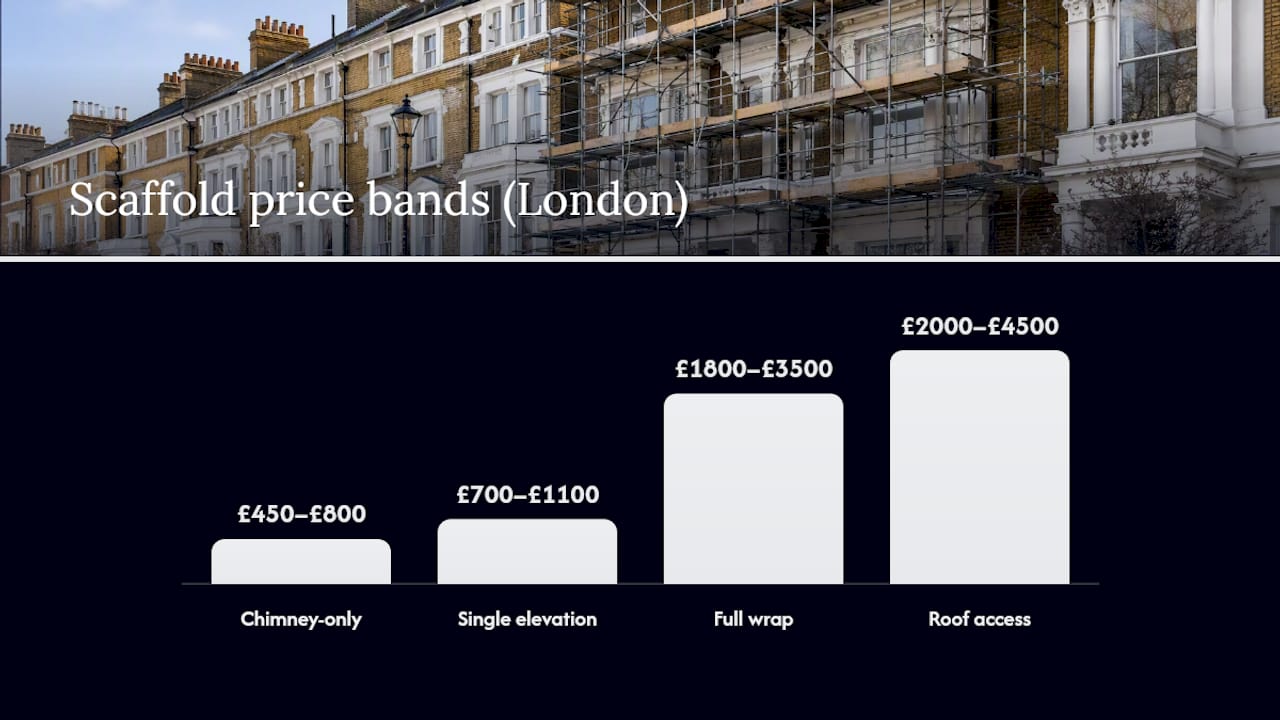
Single elevation scaffolds cover the most common domestic job: gutter clearing, rendering repairs, window replacement, or exterior painting on one face of the house. Expect £700 to £1,100 in London, with the lower end applying to ground-plus-one properties with clear pavement access and the upper end applying where a bay window or porch complicates the run.
Full wrap-around scaffolds are needed when work covers the whole building, most often for re-roofing, full render replacement, or a substantial extension that touches every elevation. These typically run £1,800 to £3,500, and the range widens further for detached or semi-detached properties with more total elevation length than a standard terrace.
Chimney-only and roof-access scaffolds sit at opposite ends of the complexity scale. A chimney repair or rebuild often only needs an independent tower reaching one section of roof, priced from around £450 to £800. Full roof access for a loft conversion or major roof works, by contrast, frequently needs a temporary roof structure over the scaffold to keep the property weatherproof during the works, which pushes the range up to £2,000 to £4,500 or more.
Scaffold towers, trestles, and temporary structures cover smaller jobs that don’t need a full scaffold at all:
Mobile scaffold towers for short-duration work (gutter clearing, minor pointing) typically hire for £80 to £150 per week.
Trestle and staging setups suit low-level, short-duration jobs and cost considerably less than a full scaffold, though they are limited to lower working heights.
Temporary roof additions, when required for weatherproofing during re-roofing, are usually quoted as an add-on to the base scaffold price rather than a separate structure.
Permits, licences and safety checks that matter in London
Scaffolding that stands on or over a public pavement or highway needs a licence from the local authority, and this catches out more homeowners than any other cost item on this list. Borough fees vary considerably. Royal Greenwich’s licence page, used here as a representative example, shows fees that can range from roughly £80 up to several hundred pounds depending on the type of structure and duration, with councils sometimes adding weekly charges if the scaffold overruns its licensed period.
Licence fees of £80 to £600 or more are routinely missed by homeowners who receive a quote that excludes licence handling entirely, only to be billed separately once work is under way.
Beyond the licence itself, three things are worth checking before you sign anything:
HSE work-at-height duties: the Work at Height Regulations place clear legal responsibility on whoever organises or carries out the work to ensure competent design and safe erection.
TG20:21 design compliance: this is the industry design guidance for standard scaffold configurations, and a reputable supplier should be able to reference it or provide a bespoke design for anything unusual.
CISRS-qualified labour and insurance proof: ask for certificate numbers, not just a verbal assurance, and check they cover the specific scope of your job.
Cheaper, informal quotes often skip TG20:21 design work and CISRS-qualified crews altogether, and that gap is exactly where safety and insurance problems tend to surface.
How to get accurate, comparable scaffolding quotes
Getting quotes that actually compare like for like takes a bit more than asking three companies for “a price.” Work through these steps before you commit:
Insist on a written, fixed-price quote following a site survey. A phone estimate without someone seeing your property is a guess, not a quote.
Confirm licence handling is included. Ask directly whether the pavement or highway licence application, and its fee, sits inside the price or gets billed separately.
Clarify the included hire period and the weekly overrun rate. You want the exact number of weeks covered and the exact figure charged per week after that.
Ask for TG20:21 reference and CISRS certificate numbers. A supplier confident in their compliance will produce these without hesitation.
Check ULEZ, congestion, and parking charges are itemised. If a central London job’s quote has none of these listed, ask why.
Pro Tip: Get at least three quotes based on the same site survey brief, not three different verbal descriptions of your job over the phone. Scaffolders price wildly differently when they’re working from your own description versus their own measurements.
Watch for red flags: quotes with no mention of hire duration at all, verbal-only pricing with no follow-up in writing, and suppliers who can’t name their design standard or produce insurance documentation on request. Any of these should push you toward a different supplier, however competitive the initial number looks.
Cutting your scaffolding bill without cutting corners
The cheapest scaffold quote on paper is rarely the cheapest project once hidden extras and delays are factored in. A few tactics genuinely reduce cost while keeping the job compliant:
Coordinate trades tightly so the scaffold goes up once and comes down once, rather than sitting idle between visits from different contractors.
Agree fixed erect and strike fees upfront, and get licence handling written into the same fixed price rather than left as a variable.
Consider a scaffold tower or partial elevation where the job genuinely only needs limited access, rather than a full wrap-around “just in case.”
Negotiate the weekly-hire threshold before signing, particularly on longer jobs where even a small reduction in the overrun rate compounds over several weeks.
Get every term in writing, including who applies for the licence and who’s liable for any overrun charges the council applies.
Timing your hire around the actual sequence of works, rather than booking scaffolding for the whole project duration by default, is usually where the biggest saving sits.
How Tenen Ltd manages scaffold costs on London projects
On projects across Chelsea and the rest of West and Central London, we carry out a site survey before scaffold hire is agreed, then coordinate the scaffold schedule with the wider build programme so it goes up once and comes down once. We ask for TG20:21-compliant designs and CISRS-qualified teams wherever a job calls for them, and we build licence handling and clear hire-period terms into the written quote itself, not as an afterthought once work has started.
— Mateja
Get a fixed-price scaffolding quote as part of your London project
This service offers an alternative to managing a separate scaffolder, extension builder, and licence application alone. One site survey and one written quote cover the scaffold, the licence handling, and the build itself, helping to avoid missed costs between separate suppliers.
If you’re planning a rear, side, or full wrap-around extension that will need scaffold access, or a loft conversion requiring roof access, we fold the scaffold cost, licence application, and hire period directly into your fixed-price quote so you see one number rather than a stack of separate invoices later. Larger projects sometimes also benefit from a proper topographic survey before design work starts, particularly where access or levels are tight. Get in touch to arrange a site survey, and we’ll talk you through exactly what your written estimate will include before any scaffold goes up.
Sources
Recommended
Comments