
Rear extensions: unlock more space and value at home
TL;DR:
Expanding your home with a rear extension in West London can significantly increase space, value, and lifestyle quality.
Most projects qualify for permitted development rights, but planning permissions are required for conservation areas and listed buildings.
Many West London homeowners are surprised to discover that expanding their living space can be simpler, less disruptive, and more rewarding than they ever imagined. A rear extension can transform a cramped kitchen into a generous open-plan family space, bring the garden indoors, and add real, measurable value to your property. Yet a great many homeowners remain uncertain about what a rear extension actually involves, what the planning rules say, and whether the investment truly pays off. This guide covers everything you need to know, from definitions and permissions to costs, lifestyle benefits, and the decisions that genuinely shape your outcome.
Table of Contents
Key Takeaways
Point | Details |
Rear extension definition | A rear extension is an addition at the back of your home, expanding living space towards the garden. |
Planning rules matter | Rules differ by property and area; check if permitted development or full planning permission applies. |
Maximise value and space | A well-planned rear extension can boost property value, lifestyle, and comfort significantly. |
Consider every step | Plan budget, consult neighbours, and engage a quality professional to avoid common pitfalls. |
What is a rear extension?
A rear extension is a structure added to the back of your existing home, typically extending into the garden. It is one of the most popular home improvements across West London, and for good reason. Whether you live in Fulham, Chiswick, or Notting Hill, the rear of most terraced and semi-detached houses offers the most practical opportunity for meaningful additional space.
Rear extensions typically take one of three forms. A single-storey rear extension is the most common, adding a new room or enlarging an existing one at ground level. A double-storey rear extension adds space across two floors simultaneously, usually creating a larger kitchen or living area below and an extra bedroom or bathroom above. An infill extension fills in an existing gap or recess at the rear of the house, often where an original outbuilding or lean-to once stood.
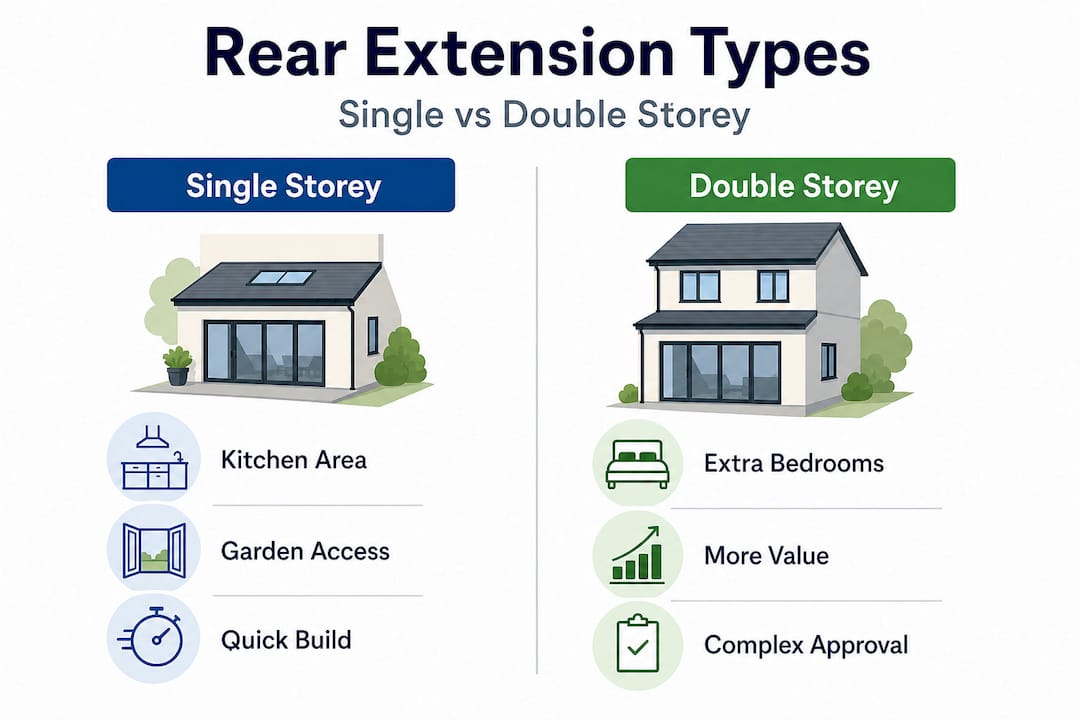
The rear extensions process differs from other extension types in several important ways. Understanding these differences helps you make the right choice for your property and your lifestyle.
Extension type | Location | Typical use | Impact on garden |
Rear extension | Back of house | Kitchen, living, family room | Reduces garden depth |
Side return extension | Narrow side passage | Widens kitchen, adds utility | Minimal garden impact |
Wraparound extension | Rear and side combined | Maximum ground-floor space | Larger garden reduction |
As the Haringey Council guidance on rear extensions explains, each extension type suits different property layouts and ambitions, and the right choice depends on your specific site, budget, and planning context. Side return extensions are particularly popular in Victorian terraces where a narrow side passage can be brought into the main living footprint, but they do not deliver the same depth of rear space.
Homeowners most commonly choose a rear extension for one or more of these reasons:
To create an open-plan kitchen and dining area with direct garden access
To add a generous family or living room separate from the front reception
To improve natural light and indoor-outdoor flow
To increase the property’s market value ahead of a potential sale
To future-proof the home for a growing family without the cost of moving
Do rear extensions need planning permission?
Now that you know what a rear extension is, it is vital to understand what the rules say about getting your project approved. The good news is that many rear extensions can go ahead without a formal planning application, thanks to a system called permitted development (PD) rights.
Under permitted development rules, most single-storey rear extensions that fall within specified size limits can be built without full planning permission. The key permitted development limits include restrictions on depth, height, and how much of the rear garden the extension may cover. Whether your extension qualifies for PD depends on the size of the structure, your property type, and where you live.
However, not every property in West London enjoys full PD rights. Conservation areas, such as parts of Kensington, Chelsea, and Notting Hill, significantly restrict or entirely remove them. Listed buildings carry no PD rights at all, so any extension requires a full planning application and, in most cases, listed building consent as well.
Scenario | Permission required? |
Single-storey, within PD limits, standard house | No (PD rights apply) |
Single-storey, exceeds depth limits | Yes (formal application) |
Property in a conservation area | Likely yes |
Listed building, any extension type | Yes, plus listed building consent |
Double-storey rear extension | Almost always yes |
Pro Tip: Before you appoint a designer or builder, spend thirty minutes checking your local council’s planning portal. A simple postcode search will confirm whether your property sits in a conservation area or carries any planning restrictions that could affect your project timeline.
Understanding planning permission for rear extensions in detail can save you considerable time and money. It is also worth noting that even PD schemes require a Prior Approval check with the council for extensions beyond certain depths, so a brief conversation with your local planning department before work starts is always a sensible move. You can read more about how extension rules in conservation areas may affect your specific property, because the rules vary more than most homeowners realise.
Key considerations when planning your rear extension
With planning rules in mind, what should you actually do to make your rear extension a success? The decisions you make at the planning stage have a direct bearing on how smoothly the build goes and how much value you ultimately add. Here is a clear sequence to follow:
Set a realistic budget. Rear extension costs in West London vary considerably based on size, specification, and existing site conditions. Factor in design fees, structural engineering, building control, party wall matters if relevant, and a contingency fund of at least 10 to 15 per cent.
Establish your timeline. A single-storey rear extension typically takes eight to fourteen weeks to build once work begins, but the planning and design phase can add several months before a spade goes in the ground.
Appoint an architect or architectural designer. Good design is not just about aesthetics. A skilled architect will maximise your space, manage light, and ensure the structure meets building regulations from day one.
Consult your neighbours early. Even if your project sits within PD rights, letting adjoining neighbours know your plans before work starts builds goodwill and can prevent formal objections or party wall disputes.
Engage a building control body. All rear extensions require building regulations approval regardless of whether planning permission is needed. Your builder or architect can manage this on your behalf.
“Thorough preparation before starting work on a rear extension, including checking permitted development rules, site conditions, and neighbour considerations, is the single most effective way to protect your investment and avoid costly delays.” Treating the planning stage as seriously as the build itself is what separates successful projects from stressful ones.
A common pitfall among West London homeowners is underestimating cost. Ground conditions beneath Victorian and Edwardian terraces can throw up surprises, including old drainage runs, shallow foundations, or tree roots that require specialist attention. These are manageable challenges with the right team, but they can inflate costs if they are not identified early.
Some single-storey rear extensions are achievable without planning permission, subject to depth, impact, and use checks, but this does not mean they are regulation-free. Building control sign-off remains mandatory and protects both you and future buyers.
Pro Tip: Speak to your neighbours before submitting any planning application or starting works. Sharing your plans early and addressing any concerns they have can prevent formal objections that delay your project by weeks or even months.
For a thorough walkthrough of the decision-making process, our step-by-step home extension planning guide covers each stage from initial concept to completion in practical detail.
Is a rear extension worth it? Cost, value, and lifestyle
Let’s weigh up whether the impact of a rear extension matches the investment for London homeowners. The short answer is yes, when it is planned and executed well. Here is why.
In West London, a well-specified single-storey rear extension typically represents a significant but justifiable investment. Costs vary depending on size and finish, but the uplift in property value and quality of life tends to make the return compelling. A well-designed rear extension can add meaningful living space and increase your property value, particularly in sought-after areas like Fulham, Hammersmith, and Chelsea where buyers actively seek generous ground-floor footprints.
The key value drivers include:
Enlarged kitchen and family space. Open-plan kitchen and dining areas remain among the most desirable features for buyers and renters in West London. A rear extension that creates this layout is almost always well-received by the market.
Improved resale value. Extensions that are well integrated with the original house, using complementary materials and proportions, consistently outperform bolt-on or poorly finished additions when it comes to sale price.
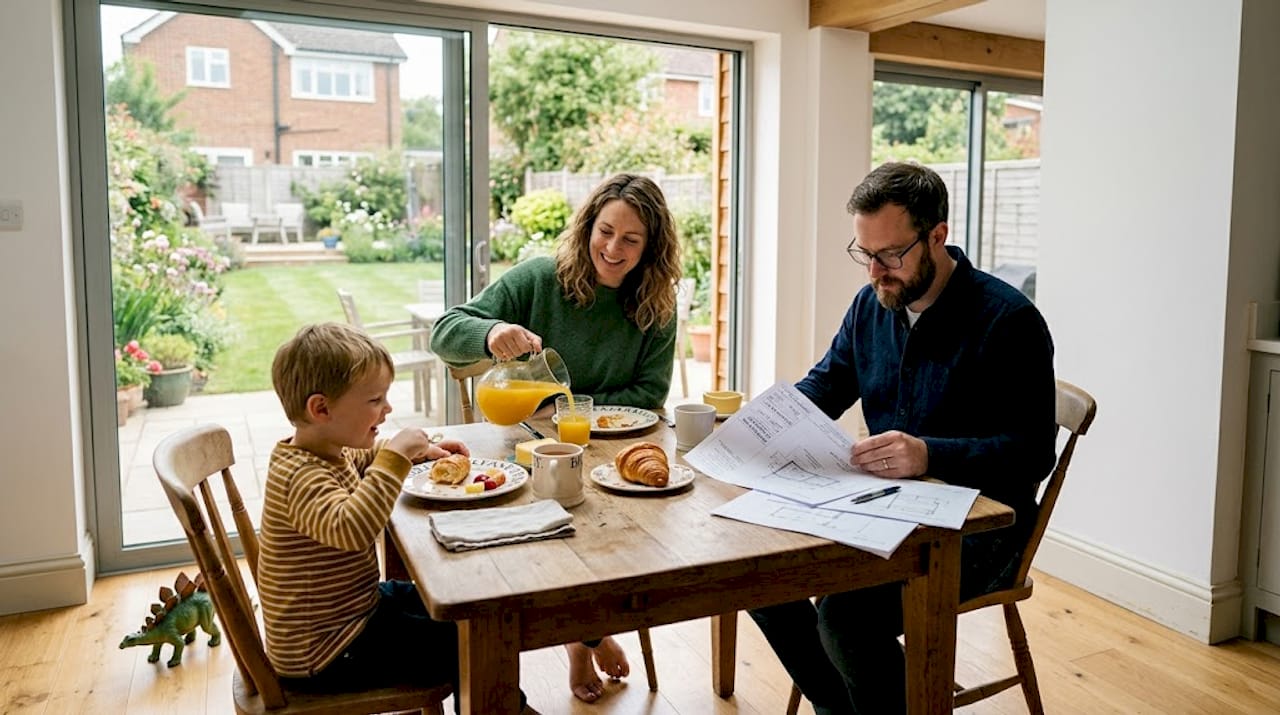
Lifestyle transformation. There is something genuinely life-changing about moving from a dark, cramped kitchen to a light-filled open space that flows directly onto the garden. It changes how you use your home every single day.
Best return on investment. Extensions that add functional living space, particularly kitchens and family rooms, tend to deliver the strongest return. Loft conversions and rear extensions regularly top the list of improvements with the highest ROI in London’s property market.
Explore extension options in Fulham and see how thoughtful rear extensions have transformed homes just like yours. You can also browse extension ideas for London homes for inspiration on layouts, materials, and design approaches that work well in West London’s architectural context.
What most homeowners miss about rear extensions
Before you take the next step, consider what rarely gets discussed around rear extensions. After nearly two decades of working with homeowners across West and Central London, we have noticed a consistent pattern: the projects that disappoint are almost never the ones with planning complications. They are the ones where the design was treated as an afterthought.
Conventional wisdom focuses almost entirely on size and cost. How many square metres can we add? How cheaply can we do it? These are reasonable questions, but they miss the factors that actually determine whether an extension enhances your home for the long term. Aesthetic integration matters enormously. An extension that looks like it was bolted on, using mismatched materials or awkward proportions, can actually reduce your property’s appeal rather than enhance it, regardless of the square footage added.
Daylight is another area that receives far too little attention at the planning stage. A rear extension that blocks light from the main house, or that creates a gloomy rear room because the roof pitch is wrong, is a significant problem that is very expensive to fix after the fact. Roof lanterns, full-width glazing, and carefully positioned skylights are not luxury features. They are practical tools that make the difference between a space you love and one you merely tolerate.
Garden connection is the third overlooked dimension. The most successful rear extensions we work on create a genuine dialogue between the inside and outside, using sliding or folding doors, consistent floor levels, and complementary materials. This approach, sometimes called biophilic design, is proven to improve wellbeing and make spaces feel larger than they are.
Our view is that roof extension insights and glazing decisions deserve as much thought as the structural footprint itself.
Pro Tip: Invest in quality materials and a professional finish from the outset. Cutting corners on brickwork, glazing, or internal finishes rarely saves money in the long run because remedial work always costs more than getting it right the first time.
Explore expert rear extension services in West London
If you are looking for guidance or ready to begin your rear extension project, here is how our team can help.
At Tenen Ltd, we have been helping West London homeowners transform their properties since 2006. Our team manages every stage of the process, from initial design and planning through to build and final finish, so you can focus on the exciting part: imagining how your new space will look and feel. Whether you are exploring options or have a clear brief already, our rear extension experts are ready to advise. We also offer side return extension specialists for properties where a combined approach delivers the most space. Browse our full range of complete home improvement services to discover everything we can offer your home.
Frequently asked questions
Can I build a rear extension if my property is a listed building?
Listed buildings have no permitted development rights, so you will need full planning permission and additional listed building consent before any work can begin.
How deep can a rear extension be without needing planning permission?
Depth limits for single-storey extensions typically range from three to six metres depending on whether your home is detached or attached, and whether you apply for Prior Approval.
Do I need my neighbour’s approval to build a rear extension?
You may need to consult or formally notify neighbours, particularly if party walls or shared boundaries are involved, under the Party Wall Act 1996.
Is a rear extension disruptive during construction?
Most rear extensions involve some disruption to daily routines, but professional project management keeps this to a minimum and ensures the build progresses efficiently to a clear timeline.
Recommended
Comments