
Loft conversions: transform your West London home in 2026
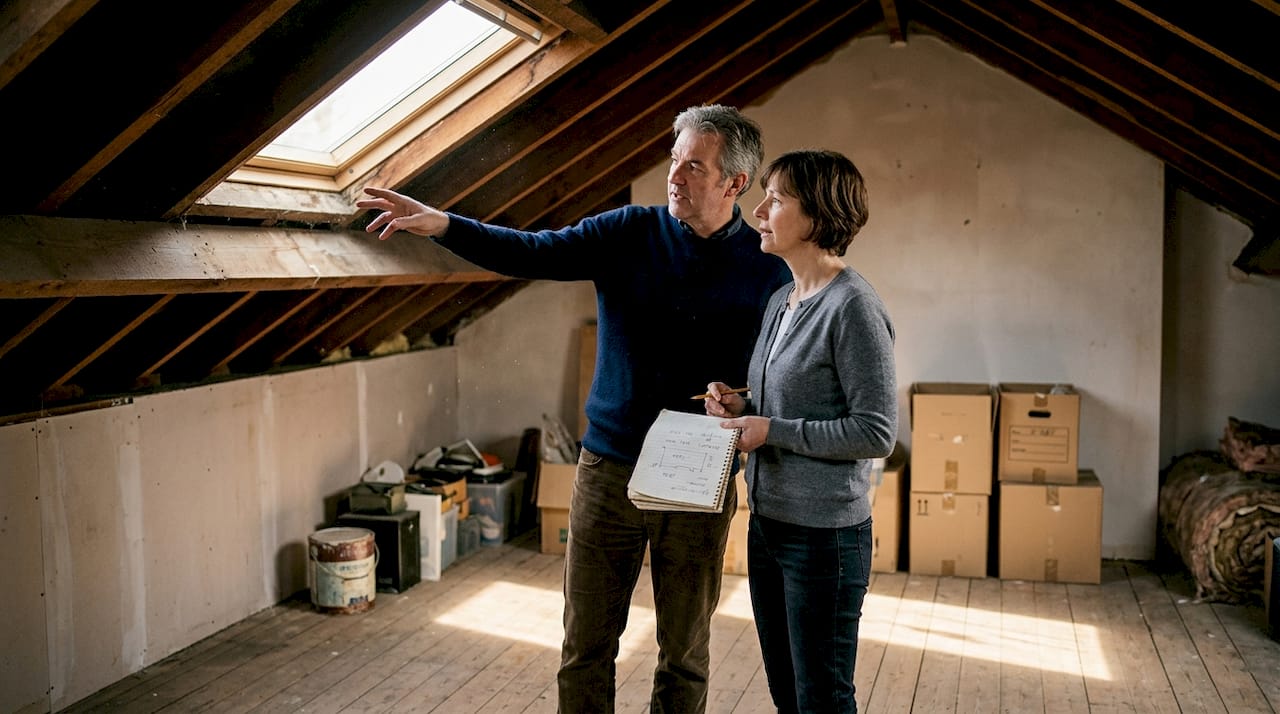
Most homeowners in West London are sitting on untapped potential, quite literally. The space above your ceiling could become a master bedroom, a home office, or a self-contained suite, yet many people assume a loft conversion is either too disruptive or too expensive to be worthwhile. That assumption costs them both comfort and money. Turning unused attic space into a fully habitable room is one of the most practical investments a homeowner can make. This guide covers everything: what a loft conversion actually is, how the process works, what the regulations require, which pitfalls to sidestep, and how to maximise your return.
Table of Contents
Key Takeaways
Point | Details |
Loft conversion defined | A loft conversion turns empty roof space into a functional living area, boosting space and potential value. |
Core process steps | Check your loft’s suitability, plan carefully, follow building regulations, and use specialists for best results. |
Legal and planning essentials | Most lofts use permitted development but always confirm permissions and regulations, especially in sensitive areas. |
Avoid classic pitfalls | Budget for extras, prioritise design and ventilation, and always use qualified builders to prevent costly mistakes. |
Property value boost | A well-executed loft conversion can notably increase your West London home’s market value and comfort. |
What is a loft conversion?
A loft conversion transforms unused attic or roof space into a fully habitable living area. It is not a loft boarding job or a tidy-up. It is a structural project that results in a room you can sleep, work, or live in, complete with insulation, lighting, ventilation, and a proper staircase.
For West London homes, particularly the Victorian and Edwardian terraces common across Fulham, Chiswick, and Hammersmith, the roof structure often lends itself well to conversion. These properties typically have pitched roofs with enough volume to work with, making them strong candidates for a straightforward project.
The most popular uses for a converted loft include:
Master bedroom with en suite — the most common choice and the one that adds the most resale value
Home office — increasingly popular since remote working became the norm
Children’s bedroom or playroom — frees up space on lower floors
Guest suite — ideal for families who regularly host visitors
Rental room — a potential income stream, subject to local rules
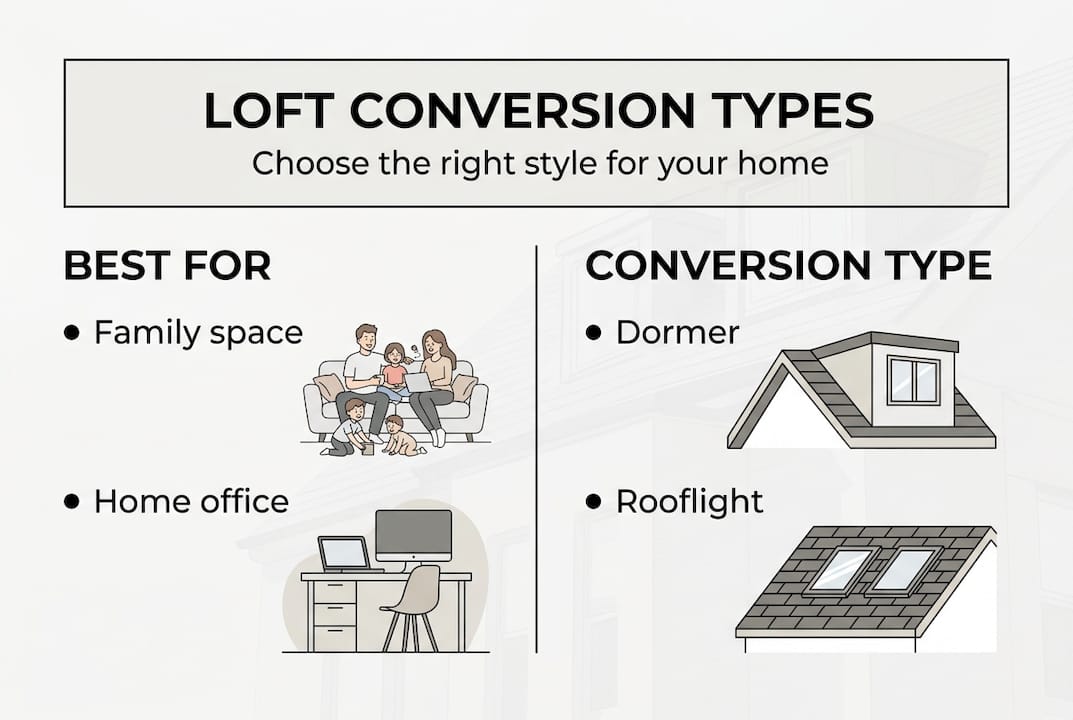
Here is a quick comparison of the most common loft conversion types:
Conversion type | Best suited to | Typical cost range | Planning permission usually needed? |
Roof light (Velux) | Most pitched roofs | £20,000 to £30,000 | No |
Dormer | Victorian terraces | £35,000 to £60,000 | Often no |
Hip-to-gable | Semi-detached homes | £40,000 to £65,000 | Sometimes |
Mansard | Period properties | £50,000 to £75,000 | Usually yes |
Exploring London loft conversions in detail will help you identify which type suits your specific roof structure. The right choice depends on your head height, roof pitch, and what you want the finished room to do. Browsing home improvement services can also give you a broader sense of how a loft conversion fits within a wider refurbishment plan.
How the loft conversion process works
Once you know what a loft conversion is, it is crucial to understand exactly how the process unfolds from first inspection to final touches. Rushing into the build without a clear roadmap is one of the most common reasons projects overrun on time and budget.
Here is a step-by-step breakdown of the typical process:
Initial survey — A specialist checks minimum 2.2m head height, roof structure, and staircase feasibility
Design and planning — Architectural drawings are produced; planning applications submitted if required
Structural engineering — Calculations are prepared for joist reinforcement and load-bearing changes
Building regulations submission — Drawings and specifications are submitted to your local authority
Main construction — Joists reinforced, dormer or roof lights installed, staircase fitted
First fix utilities — Electrical wiring, plumbing, and any heating pipework installed before walls are closed
Insulation and boarding — Walls, floor, and roof insulated to current standards
Second fix and finishing — Sockets, radiators, plastering, flooring, and decoration
Final inspection — Building control signs off the work and issues a completion certificate
Here is a realistic timeline for a standard West London loft conversion:
Stage | Typical duration |
Survey and feasibility | 1 to 2 weeks |
Design and planning | 4 to 8 weeks |
Building regulations approval | 5 to 8 weeks |
Main construction | 6 to 10 weeks |
Finishing and snagging | 1 to 2 weeks |
The essential utilities stage is often underestimated. If you want a bathroom in your loft, the plumbing routes need to be planned early, not as an afterthought. Similarly, design integration with the rest of your home matters more than most people expect. A loft that feels disconnected from the floors below rarely adds the value it should.
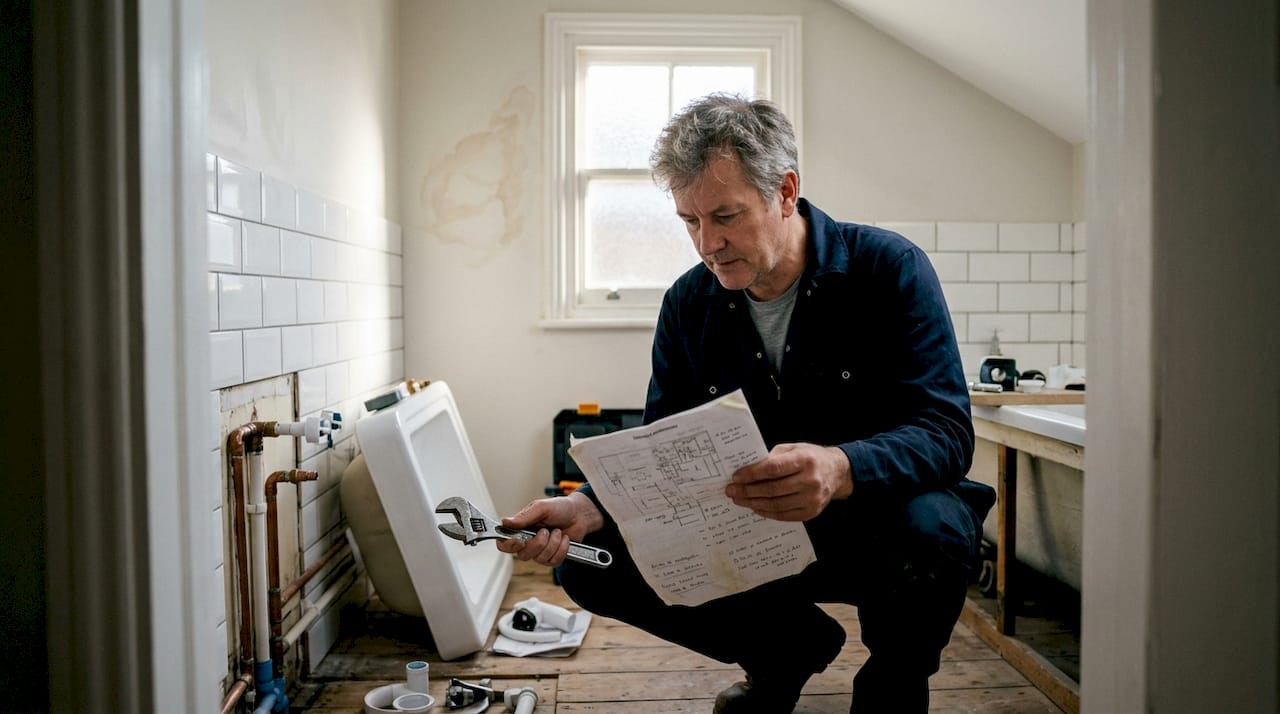
Pro Tip: Add two to three weeks of buffer to your expected timeline. Structural surprises, such as discovering inadequate joists or unexpected roof timbers, are common in older West London properties and can delay the programme by weeks if you have not planned for them. Read more loft conversion tips on the Tenen blog.
Planning permission and building regulations
Understanding the construction process leads you to the next major hurdle: dealing with regulations, permissions, and compliance. This is where many homeowners feel overwhelmed, but the rules are actually quite straightforward once you break them down.
Building regulations apply to virtually every loft conversion without exception. They cover structural safety, fire escape routes, insulation standards, staircase dimensions, and electrical safety. You cannot legally skip this step. Building regulations approval is mandatory for structure, fire safety, insulation, and stairs regardless of the conversion type.
Planning permission is a separate matter. Many loft conversions fall under permitted development rights, meaning you do not need to apply for planning permission at all. The key conditions include:
The added volume must not exceed 40 to 50 cubic metres depending on property type
No side-facing windows that overlook neighbouring properties
The extension must not be higher than the existing roof ridge
Materials should match the existing property where visible
However, there are important local exceptions. If your home sits within a conservation area, such as parts of Kensington, Notting Hill, or Chelsea, permitted development rights may be restricted or removed entirely. Listed buildings require separate listed building consent on top of planning permission.
Always check with your local planning authority before starting work. What applies in one West London borough may not apply in the next, and getting this wrong can result in costly enforcement action.
A quick checklist for West London homeowners before starting:
Confirm your property is not in a conservation area or Article 4 direction zone
Check whether your home is a leasehold property (you may need freeholder consent)
Notify your buildings insurer before work begins
Inform your mortgage lender if the works significantly alter the property value
Ensure your builder obtains building approvals and does not rely on you to chase them
Common challenges and pitfalls to avoid
Mastering permissions does not guarantee a flawless project. There are common pitfalls West Londoners should actively avoid, and most of them come down to planning, budget, and builder selection.
The most frequent mistakes include:
Under-budgeting — Always add a 15% contingency on top of your quoted price. Structural surprises are common in Victorian stock
Poor natural light — A loft with one small Velux window will feel dark and cramped. Plan for generous glazing from the outset
No built-in storage — Lofts have awkward eaves spaces. If you do not design storage into them, you waste the most useful parts of the room
Unqualified builders — Using a contractor without the right experience for structural work is a serious risk to both safety and resale value
Ignoring future-proofing — Design the room so it can serve multiple purposes over time, not just the one you need today
Bat surveys skipped — In some West London areas, bats roost in roof spaces. Disturbing a bat roost without a licence is a criminal offence. A survey costs very little compared to the fines
Pro Tip: Ask any builder you consider for references from loft conversions specifically, not just general refurbishment work. Loft conversions involve structural engineering, building regulations sign-off, and specialist trades. A builder who is excellent at kitchen fitting may not have the right experience for this type of project. Reviewing home improvement mistakes can help you spot warning signs early.
“The difference between a loft conversion that adds value and one that causes problems almost always comes down to the quality of the team you choose and the thoroughness of the planning stage.”
Cost overruns are the single biggest source of stress on these projects. Reviewing budgeting for extensions before you commit to a budget will give you a realistic baseline. Understanding property upgrade challenges specific to London properties is equally useful. A solid renovation project management approach from the start prevents most of these issues from arising at all.
Maximising property value with a loft conversion
Avoiding pitfalls sets a strong foundation. Now consider how a well-executed loft conversion can genuinely boost your property’s worth in the West London market.
Loft conversions add usable living space and are a proven strategy for increasing both day-to-day comfort and resale value. In West London, where property prices are high and moving costs are significant, adding a bedroom through a loft conversion is often far more cost-effective than upsizing to a larger home.
The types of conversion that tend to add the most value are:
Master bedroom with en suite — adds a bedroom and a bathroom in one project, which directly affects the number of bedrooms a property is marketed with
Home office with separate access — increasingly attractive to buyers who work from home and want a clear separation between work and living space
Self-contained letting room — can generate rental income while you live in the property, though you should check planning and licensing rules with your local council
To maximise your return on investment:
Use materials and finishes that match the quality of the rest of your home
Ensure the staircase feels integrated, not bolted on as an afterthought
Commission an energy-efficient insulation package to improve your EPC rating
Obtain the building regulations completion certificate before you sell, as buyers and their solicitors will ask for it
Work with West London loft conversion specialists who understand the local market and what buyers in your area expect
A poorly finished loft can actually reduce buyer confidence rather than increase it. Quality workmanship, full compliance, and thoughtful design are what separate a value-adding conversion from one that causes problems at the point of sale.
Next steps: get expert help with your loft conversion in West London
Choosing the right team is the single most important decision you will make on this project. A specialist who understands West London’s building stock, local planning rules, and the expectations of discerning buyers will save you time, money, and stress from day one.
Tenen Ltd has been delivering high-quality loft conversions and home refurbishments across West and Central London since 2006. From initial feasibility checks through to final sign-off, the team manages every stage with precision. Whether you need a straightforward roof light conversion or a full mansard with an en suite, Tenen’s London loft conversion experts can guide you through the process. You can also explore property refurbishment services if you are considering a wider programme of works alongside your loft. For a full overview of what Tenen offers, visit the full home improvement solutions page and get in touch to arrange a site survey.
Frequently asked questions
How much head height do I need for a loft conversion?
You need at least 2.2 metres of head height at the ridge for a standard loft conversion. Anything less makes the project very difficult to achieve without significant structural alterations.
Do I need planning permission for a loft conversion in West London?
Most loft conversions fall under permitted development rights and do not require planning permission, but local exceptions apply, particularly in conservation areas across Kensington, Chelsea, and Notting Hill.
How long does a typical loft conversion take?
A standard loft conversion in West London usually takes between six and ten weeks for the main construction phase, with the full process from survey to completion typically running four to six months.
What pitfalls should I avoid with a loft conversion?
The most important ones are under-budgeting, poor lighting, using unqualified builders, and failing to design in adequate storage. Each of these can significantly reduce the value and usability of the finished room.
Can I convert my loft if I live in a conservation area?
You can, but you will likely need full planning permission rather than relying on permitted development rights. Listed buildings require additional listed building consent, and the design will need to respect the character of the area.
Recommended
Comments