
Kitchen renovation cost London: what to budget in 2026

If you’re planning a kitchen renovation in London, expect to pay somewhere between £8,000 for a cosmetic refresh and £150,000 or more for a bespoke, architect-led scheme. Most homeowners land in the mid-range band, and a typical mid-range managed kitchen in London costs £15,000 to £50,000, with a realistic working figure for a full renovation in a standard three-bedroom terrace or flat being in the mid-range band.
Always check whether a quote includes VAT. Before you sign anything, confirm the VAT position in writing.
The single most important budgeting decision you’ll make isn’t the tile or the tap. It’s the contingency.
Cosmetic refresh: £8,000–£15,000
Mid-range full renovation: £20,000–£40,000
Full reconfiguration: £40,000–£75,000+
Bespoke or luxury: £50,000–£150,000+
Industry guidance consistently points to this range as the buffer needed to absorb common on-site discoveries in older London properties, particularly around wiring and pipework.*
TL;DR:
Most mid-range kitchen renovations in London cost between £15,000 and £50,000, with contingency funds of 10-15% essential for unforeseen issues.
Structural changes like wall removal can raise costs above £75,000, especially when dealing with older properties requiring rewiring or pipework repairs.
Labour rates in London are typically 20-35% higher than the national average, adding to both timeframes and overall expenses.
Accurate quotes require itemised documentation, with a typical range spread of 15-25% between contractors, so comparison must be thorough.
Sustainable upgrades, such as energy-efficient appliances and water-saving fittings, often cost more upfront but reduce long-term utility bills.
Table of Contents
Kitchen renovation cost London: pricing by project tier
Not every kitchen renovation is the same job wearing a different price tag. The scope changes dramatically between tiers, and understanding where your project sits helps you set expectations before a single tradesperson walks through your door.
A cosmetic refresh keeps the existing layout, plumbing, and electrics largely untouched. You’re repainting or replacing cabinet fronts, swapping worktops, updating handles and lighting, and perhaps laying new flooring. It’s the fastest way to breathe new life into a tired kitchen without touching the bones of the room.
A mid-range full renovation is where most London homeowners actually spend their money. This typically involves new units throughout, mid-range appliances, updated worktops, and some electrical and plumbing work, though usually not a full structural change. Most mid-range renovations in London commonly fall within a broad range that can vary depending on kitchen size and finish level, depending on kitchen size and finish level.

A full reconfiguration moves walls, relocates plumbing, or knocks through to create open-plan living. This tier brings in structural work, possibly a party wall agreement if you share a boundary, and a longer build programme.
Bespoke or luxury kitchens involve architect-designed layouts, handmade cabinetry, natural stone worktops, and integrated high-end appliances. Bespoke schemes commonly start at £50,000 and can run past £150,000 for larger properties in Kensington, Chelsea, or Notting Hill.
Tier | London price range | Typical scope |
Cosmetic refresh | £8,000–£15,000 | New fronts, worktops, flooring, existing layout retained |
Mid-range renovation | £20,000–£40,000 | New units, appliances, minor services work |
Full reconfiguration | £40,000–£75,000+ | Structural changes, wall removal, full replumbing |
Bespoke or luxury | £50,000–£150,000+ | Architect-designed, handmade cabinetry, natural stone |
If you want a per-square-metre sense check, London kitchens typically cost several thousand pounds per square metre depending on specification, with smaller kitchens often costing more per square metre because labour and fixed setup costs don’t scale proportionally depending on specification. Smaller kitchens often cost more per square metre because labour and fixed setup costs don’t shrink proportionally with the room.
What drives the cost of a London kitchen renovation?
Cabinetry and worktops dominate most budgets, but the split between components tells you where your choices actually matter.
On a £30,000 project, that means cabinetry alone could easily run to £10,000–£13,500, with labour costing £6,000–£9,000.
Cabinetry: £9,000–£13,500 (mid-range units, custom fronts push this higher)
Labour and fitting: £6,000–£9,000
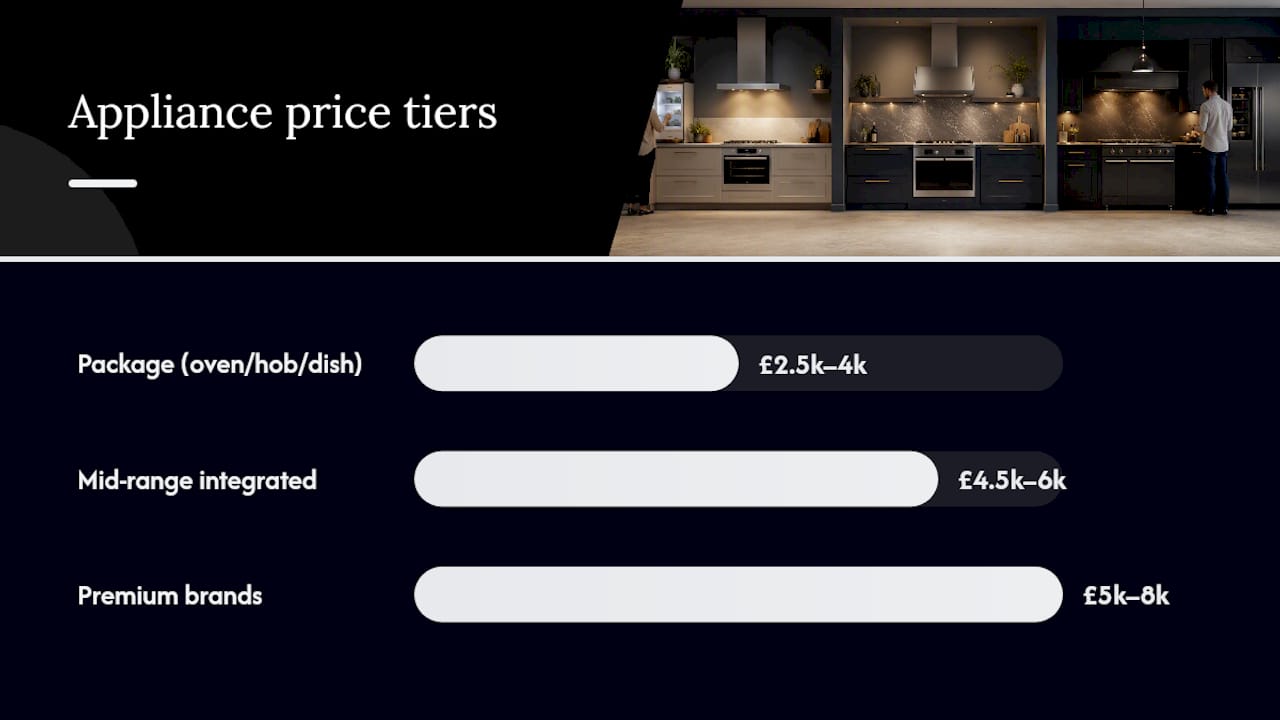
Appliances: £4,500–£6,000 for a mid-range integrated set
Worktops, flooring, and finishes: remaining balance
Worktop choice alone can swing your budget by thousands. Laminate worktops start around £30–£60 per linear metre installed, while quartz composite typically runs £250–£450 per linear metre, and natural stone like granite or marble can exceed £500 per linear metre once templating and installation are included. For a standard run of 5 to 6 linear metres, that’s the difference between a £300 worktop and a £3,000 one.
Pro Tip: Modelled London labour figures put the average full kitchen installation at around £6,215, so if a quote comes in dramatically under that for a comparable scope, ask what’s been left out rather than assuming you’ve found a bargain.
Appliances follow a similar logic: a mid-range integrated oven, hob, and dishwasher package might cost £2,500–£4,000, while premium brands with features like induction hobs and built-in coffee machines can double that figure. The lesson holds across every component. You’re rarely choosing between “cheap” and “expensive.” You’re choosing between durability, warranty length, and finish quality.
Why does a kitchen renovation cost more in London?
London’s premium isn’t imaginary, and it isn’t just about property prices. It comes down to labour, logistics, and the physical constraints of the city itself.
London day rates run notably higher than the national average for kitchen fitting work, and some borough and property-type combinations push that uplift to 20–35% higher than typical UK figures. Add parking restrictions, congestion charges, and narrow Victorian terrace access, and you understand why a job that would take four days in Milton Keynes might take five in Fulham.
Several extras tend to surface only after the initial quote:
Rewiring to bring old circuits up to current standard, especially common in pre-1960s properties
Degraded pipework discovered once units are stripped out
Skip hire and waste removal, often £300–£600 depending on job size
Congestion or ULEZ-related delivery charges for contractors and suppliers
Freeholder or management company consent for leasehold flats, which can delay starts by weeks
Provisional sums for items priced only once further inspection happens
It’s the mechanism that stops a discovered wiring fault from becoming a mid-build argument about who pays.* Older London housing stock often hides wiring and pipework issues that only become visible once the work begins that only become visible once the strip-out begins.
How long does a kitchen renovation take?
Timeframes vary sharply by tier, and the biggest delays usually come from services work and lead times rather than the fitting itself.
Cosmetic refresh: 2–4 weeks. Straightforward once materials arrive; most delay comes from worktop templating and cutting.
Mid-range renovation: 6–12 weeks. Strip-out and first-fix electrics and plumbing take longer than most homeowners expect, often a third of the total programme.
Full reconfiguration or bespoke: 12+ weeks. Structural work, party wall processes, and bespoke cabinetry lead times (sometimes 8–10 weeks alone) stack up before fitting even starts.
London access constraints and delivery lead times often extend renovation timelines., particularly for bespoke or imported materials. Ordering long-lead items early, or choosing semi-custom cabinetry over fully bespoke, reduces the risk of paying a premium to expedite a delayed delivery.
How to get accurate kitchen renovation quotes in London
A vague quote is the single biggest cause of budget disputes once work starts. Insist on documentation that leaves nothing to interpretation.
Ask for an itemised written quotation that separates labour, materials, VAT, and any provisional sums.
Confirm the contract type. Supply and fit means the contractor sources materials and appliances; labour-only means you source them and carry the sourcing risk and lead-time responsibility yourself.
Clarify who guarantees delivery windows for appliances and bespoke cabinetry, and what happens if a supplier slips.
Get three comparable quotes and expect a spread of 15–25% between the highest and lowest, mainly (5. continued below)
Investigate any quote that’s dramatically lower than the others rather than celebrating it.
Before signing, check these points with any contractor:
Public liability insurance and trade certifications
References from recent, comparable London projects
A clear payment schedule tied to project milestones, not large upfront deposits
Building control sign-off arrangements for any structural or services work
Who is responsible for Building Regulations compliance where structural changes or significant electrical and gas work are involved
Flat-pack units cost less to buy but take longer to assemble on-site, which can quietly erode the saving through added labour hours. Rigid, pre-assembled units cost more upfront but reduce fitting time and scheduling risk, an example of Tenen Ltd’s essential kitchen renovation guide for West London homes worth reading before you finalise a contract type. For a broader checklist on vetting trades, see this homeowner’s guide to hiring contractors.
Where to save on a kitchen renovation without cutting corners
Smart savings preserve the things you can’t easily fix later and trim the things you can.
Keep your existing layout. Moving plumbing and gas connections is one of the most expensive line items in any renovation.
Refurbish existing cabinet carcasses and only replace doors and worktops if the boxes are structurally sound.
Choose laminate or quartz-effect worktops over natural stone if budget is tight; the visual difference at a glance is smaller than the price difference.
Buy appliances during January or Black Friday sales windows, where discounts of 20–30% on mid-range brands are common.
Pro Tip: Never cut corners on electrical or plumbing safety work, and never skip building control sign-off to save money. Both are false economies that surface at resale, when a buyer’s solicitor asks for certificates you don’t have.
Phasing the work, or mixing stock cabinetry with one or two bespoke feature pieces, smooths cashflow without sacrificing the finished look.
What Tenen Ltd sees on the ground in West and Central London
Since 2006, Tenen Ltd has managed kitchen renovations across Fulham, Chelsea, Kensington, Chiswick, Hammersmith, and Notting Hill, and the surprises tend to repeat themselves.
Victorian and Edwardian properties almost always hide wiring and pipework that need attention once walls open up. Leasehold consent can add weeks if it isn’t requested early, and parking or access restrictions on narrow streets shape both timeline and cost. Managing provisional sums tightly, and agreeing scope changes in writing before work proceeds, is what keeps a project on budget.
What sustainability adds to your kitchen renovation budget
Eco-conscious choices in a London kitchen renovation carry a mixed cost picture. Some genuinely add expense; others pay for themselves within a few years.
Recycled or reclaimed worktop materials, such as recycled glass composite, can sit close to quartz pricing, so the environmental benefit doesn’t always come with a cost penalty.
Where sustainability tends to save money is energy efficiency. A-rated appliances cost more upfront, sometimes £200–£400 above standard-rated equivalents, but reduce running costs meaningfully over a typical 10 to 15 year appliance lifespan. Induction hobs, heat pump tumble dryers, and LED under-cabinet lighting all fall into this category: higher purchase price, lower lifetime cost.

Water-saving taps and fittings add little to the initial quote and reduce utility bills immediately. If you’re extending or reconfiguring services anyway, specifying these at the plumbing stage costs far less than retrofitting later.
The honest picture is that sustainable choices rarely blow a budget on their own. They shift where the money goes, from ongoing bills towards upfront specification, which is a trade worth discussing with your contractor before finalising your appliance and materials list.
A note on budgeting regrets, from three renovations that went sideways
The renovations that overspend rarely fail on one big decision. They drift, through a dozen small “while we’re at it” additions that never make it into a formal change order.
If there’s one lesson worth repeating: build your contingency in from day one, get everything itemised in writing, and if your project involves structural changes or multiple trades, hire a project manager rather than coordinating it yourself.
— Mateja
Get a site survey and itemised quote from Tenen Ltd
Tenen Ltd offers managed kitchen refurbishment for homeowners across West and Central London, from cosmetic updates to full reconfigurations with structural and services work included. Unlike piecing a project together across separate trades yourself, you get one point of accountability from first design conversation to final handover.

A Tenen Ltd site survey gives you an itemised quotation that separates labour, materials, and VAT clearly, along with honest contingency advice based on your property’s age and condition, not a generic percentage pulled from a template. If your kitchen is in a Victorian terrace, a period conversion, or a leasehold flat needing freeholder consent, that survey flags the likely complications before you commit a budget, not after the strip-out begins. Visit the kitchen refurbishment service page to see the full scope of what’s covered, or explore London property refurbishment services if your kitchen project is part of a wider renovation. Book a site survey to get a written, itemised quote for your specific property.
Key Takeaways
Point | Details |
Set your tier first | Confirm whether your project is cosmetic, mid-range, full reconfiguration, or bespoke before requesting quotes. |
Build in contingency | Set aside 10–15% of total budget upfront to absorb wiring, pipework, or structural surprises. |
Understand the London premium | Expect labour rates roughly 20–35% above national averages due to access, parking, and demand. |
Compare quotes properly | Request itemised written quotes with VAT and provisional sums shown separately, and expect a 15–25% spread across three bids. |
Get a managed site survey | Tenen Ltd provides itemised, transparent quotations and contingency guidance for West and Central London kitchen projects. |
Sources
Recommended
Comments