
Home improvement trends 2026: what to do first
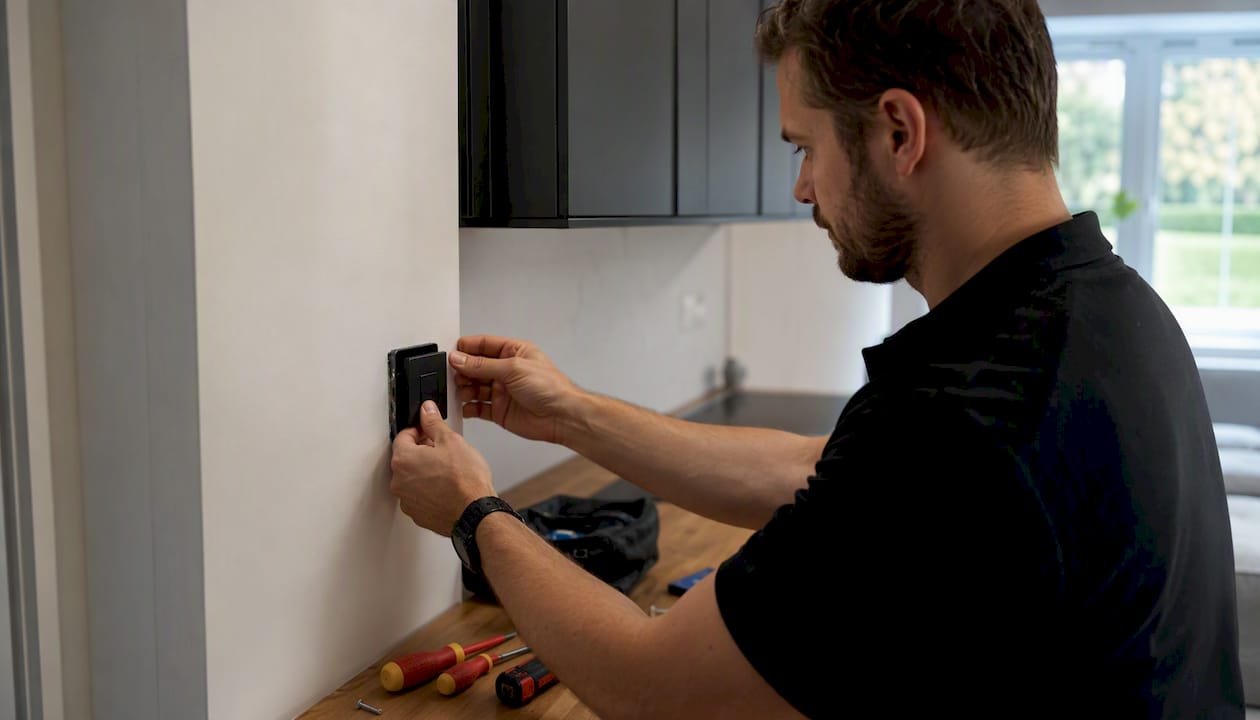
The top home improvement trends for 2026 centre on ten priorities that genuinely add value and comfort: smart technology integration, energy efficiency and sustainability, biophilic and natural materials, comfort-forward interiors, kitchen and bathroom upgrades, flexible multiuse layouts, strategic use of colour and finishes, quality craftsmanship, outdoor living improvements, and wellness features. If you are planning a project this year, shortlist two to start: one high-ROI external upgrade (a new front door, garage door, or improved kerb appeal) and one comfort or utility upgrade inside.
Immediate priorities by budget:
Under £5,000: Draught-proofing, a smart thermostat, fresh paint in a warm earthy palette, and improved outdoor lighting.
£5,000–£30,000: Bathroom refit, minor kitchen refurbishment, loft insulation, or a garden room conversion.
£30,000+: Rear extension, loft conversion, full refurbishment, or a heat-pump installation paired with upgraded insulation.
For a practical starting point on exterior upgrades that boost value, even a modest budget can deliver a meaningful return.
Key takeaways
The single most important principle for 2026 home improvements is to prioritise durable, high-value projects over cosmetic quick fixes, sequencing energy measures before mechanical upgrades and exterior works before interior decoration.
Point | Details |
Start with energy and fabric | Insulation and draught-proofing deliver the best cost-per-pound return and improve EPC before any mechanical upgrade. |
Exterior works first for ROI | Door and garage upgrades consistently return strong resale value; address kerb appeal before interior decoration. |
Kitchens and bathrooms lead interior ROI | Targeted refurbishments outperform full replacements; specify quality joinery and proper waterproofing. |
Budget a 15–20% contingency | On any project over £10,000, hold back a contingency reserve before committing the full budget to specification. |
Tenenltd for London projects | Tenenltd delivers extensions, loft conversions, and full refurbishments across West and Central London with director oversight and a named project manager. |
Table of Contents
2. Energy efficiency and sustainability upgrades worth prioritising
4. Comfort-forward interiors that you actually want to spend time in
5. Why kitchens and bathrooms remain your best investment in 2026
6. Flexible layouts: how to create multiuse spaces without losing light
9. How to plan your 2026 renovation: timelines, costs, and contractor questions
Tenenltd: delivering 2026 renovations across West and Central London
1. Smart technology that adds lasting value to your home
Smart home technology in 2026 has moved well past novelty. The upgrades worth doing are the ones you stop noticing because they simply work: connected lighting that responds to occupancy, smart thermostats that learn your schedule, discreet security cameras integrated into the fabric of the building, and hidden USB-C and wireless charging points built into joinery.
The distinction between pre-wire and retrofit matters here. If you are already opening walls for a refurbishment or extension, specifying electrical and data infrastructure at the design stage costs a fraction of what it costs to add later. A single Cat6 cable run during a kitchen refit, for instance, can support a whole-home audio system, a connected security panel, or future EV charging control without any further disruption.
High-value, low-fuss upgrades to consider:
Smart thermostats (Hive, Nest, or Tado) with zone control for multi-storey homes.
Occupancy-sensing lighting in hallways, utility rooms, and bathrooms.
Video doorbells and integrated access control, wired rather than battery-operated where possible.
Concealed charging stations built into kitchen islands or bedside cabinetry.
Pre-wired conduit runs for future solar battery storage or EV charging.
Veranda’s expert roundup highlights AI-driven climate control as one of the standout 2026 renovation themes, with homeowners increasingly specifying systems that adapt automatically to occupancy patterns and seasonal changes.
Pro Tip: Ask your contractor at the design stage: “Can we run conduit for future smart systems even if we are not installing them now?” A £200 conduit run today avoids a £2,000 retrofit in three years.
2. Energy efficiency and sustainability upgrades worth prioritising
Insulation, draught-proofing, heat-pump planning, solar panels, and airtightness improvements top the list for measurable returns in 2026. These are not just ethical choices; they directly affect your Energy Performance Certificate (EPC) rating, your running costs, and your property’s resale appeal as mortgage lenders increasingly factor energy ratings into valuations.
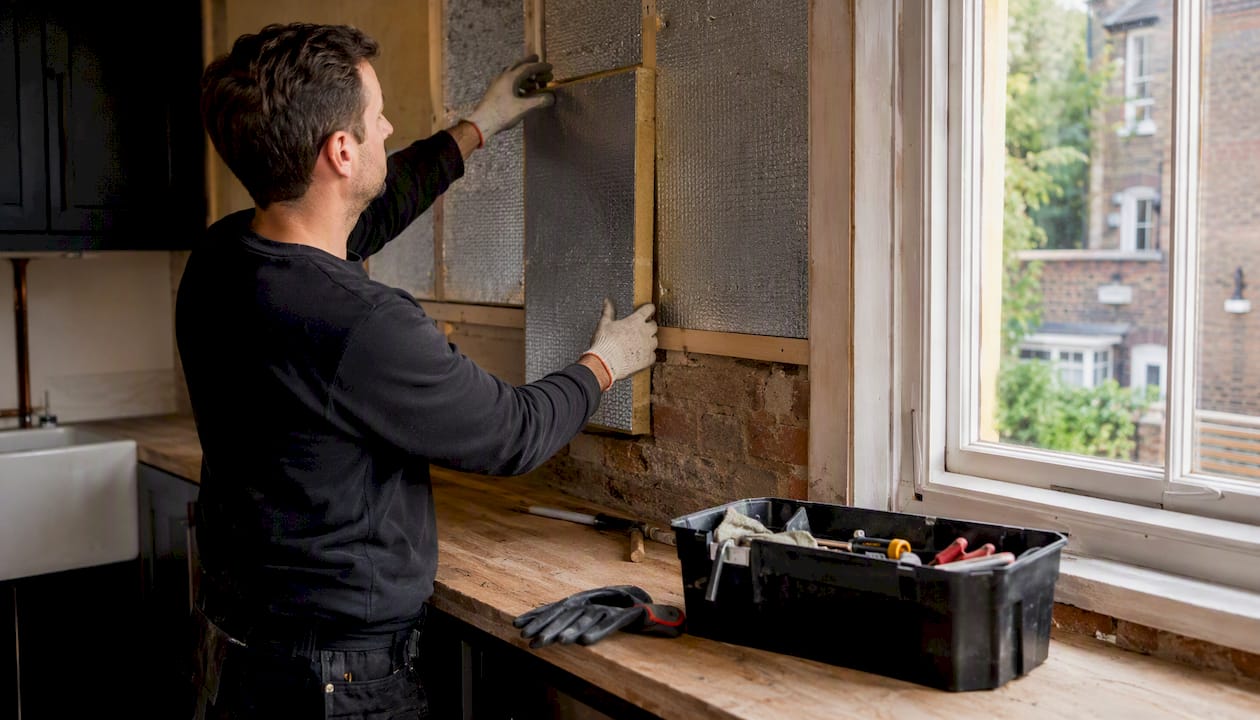
The most important principle is sequencing. ENERGY STAR’s guidance on building fabric improvements consistently shows that insulation and airtightness must come before mechanical upgrades. Installing a heat pump in a poorly insulated house is like fitting a high-efficiency boiler in a sieve. Get the fabric right first, then size the heat pump to the improved heat loss figure.
Practical cost and impact signposts for UK projects:
Loft insulation (top-up to 270mm): typically £300–£600 for a standard semi-detached; can improve EPC by one full band.
Cavity wall insulation: £500–£1,500 depending on property size; often grant-assisted through the Great British Insulation Scheme.
Air-source heat pump: £8,000–£15,000 installed; the Boiler Upgrade Scheme currently offers a £7,500 grant, reducing net cost significantly.
Solar PV (4kWp system): £6,000–£9,000 installed; payback periods of 8–12 years are typical in the UK, shorter with battery storage.
Insulation and heat-pump sizing should always be designed together by a qualified assessor. Draught-proofing windows, doors, and loft hatches is the cheapest intervention and often overlooked. For a full framework on budgeting a refurbishment that includes energy measures, a step-by-step guide helps you sequence spending correctly.
Statistic callout: The Boiler Upgrade Scheme grant of £7,500 for air-source heat pumps is available to eligible UK homeowners replacing fossil-fuel heating systems. Check current eligibility with the scheme’s official guidance before budgeting.
3. Bringing nature inside with materials that age well
Redfin’s market reporting confirms what many designers have been saying for two years: homeowners in 2026 are choosing warm, earthy palettes and natural materials that develop character over time rather than surfaces that look perfect on day one and dated by year three.
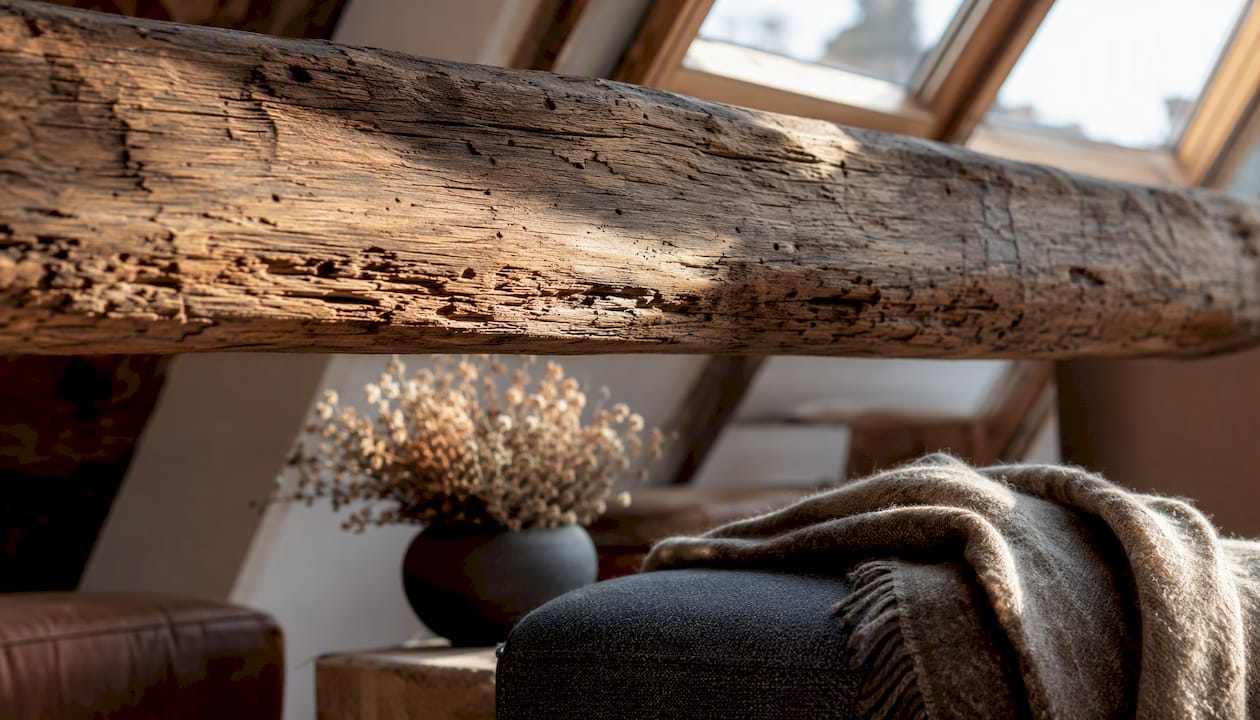
Stone, solid timber, woven fibres, rattan, and reclaimed finishes are the materials of the moment, and they work precisely because they are honest. A reclaimed oak floor does not need to be perfect; its grain and patina are the point. Linen curtains soften with every wash. Honed limestone develops a gentle sheen underfoot.
Practical sourcing tips for UK homeowners:
Reclaimed timber: suppliers such as Retrouvius and Lassco in London stock architectural salvage with provenance.
Certified stone: look for CE-marked natural stone with a clear chain of custody; avoid composite alternatives that mimic stone but off-gas plasticisers.
Low-VOC finishes: Farrow & Ball, Little Greene, and Edward Bulmer Natural Paint all offer water-based, low-VOC ranges suitable for period properties.
Indoor planting: large-format specimens (fiddle-leaf fig, olive tree, Monstera deliciosa) placed near glazing create an indoor-outdoor feeling without structural work.
For guidance on choosing renovation materials that balance aesthetics with durability, the principle is simple: if it looks better in ten years than it does today, it belongs in your home.
4. Comfort-forward interiors that you actually want to spend time in
House Beautiful’s reporting on 2026 interior design trends describes a clear shift toward ‘soulful’ and ‘collected’ rooms: spaces that feel lived-in, layered, and emotionally resonant rather than curated for a photoshoot. The all-white, minimalist aesthetic that dominated the 2010s is giving way to something warmer and more personal.
This does not require a full redesign. The moves are often small: a curved sofa instead of a boxy one, a vintage side table alongside a contemporary lamp, a wool throw over a linen armchair. Textile layering, mixed-era furniture, and thoughtful lighting do more for a room’s atmosphere than a new paint colour alone.
Where this works particularly well:
Living rooms: deep, curved seating with varied cushion textures; a mix of floor, table, and wall lighting rather than a single overhead pendant.
Bedrooms: layered bedding in natural fibres, a reading chair, and blackout lining behind sheer curtains for light control without sacrificing softness.
Home offices and recovery spaces: acoustic panels in fabric-wrapped frames, warm-toned task lighting, and a plant or two to reduce the clinical feel of a work setup.
Country Living’s roundup of 100 designers points to a revival of wood finishes and whimsical, individual details as a direct counterpoint to the previous decade’s restraint. The message is consistent: your home should feel like yours, not like a showroom.
5. Why kitchens and bathrooms remain your best investment in 2026
Targeted kitchen refurbishments and boutique bathroom upgrades continue to deliver the best balance of everyday benefit and resale return.
Features worth prioritising in kitchens:
Specialist storage: deep pan drawers, pull-out larder units, and integrated waste sorting.
Scullery or utility annexe: a secondary prep and washing space that keeps the main kitchen presentable.
High-quality joinery: solid-wood or MDF-core painted doors outlast foil-wrapped alternatives by a decade or more.
Warm metal finishes: brushed brass, unlacquered bronze, and aged nickel are replacing chrome and matte black as the finishes of choice.
Bathroom priorities for 2026:
Barrier-free wet rooms or walk-in showers, which suit all ages and add appeal for future buyers.
Freestanding baths as a focal point in larger bathrooms, paired with a separate shower enclosure.
Heated towel rails and underfloor heating as standard, not optional extras.
Natural stone or large-format porcelain tiles in warm, veined tones.
ROI note: DIYTalk’s 2026 trend analysis cites Amerisave’s ROI data showing garage door replacement leading exterior projects at approximately 268% ROI. For interior projects, minor kitchen refurbishments and bathroom refits consistently rank among the highest-returning works.
For kitchen and bathroom refurbishment services in London, Tenenltd’s kitchen and bathroom team can advise on scope and specification.
6. Flexible layouts: how to create multiuse spaces without losing light
Wholesale open-plan living is no longer the default. House Beautiful’s 2026 trend reporting highlights a clear return to defined rooms and the use of soft partitions, portières, and glazed screens to create separation without sacrificing light or flow. This suits multi-generational households and remote workers equally well.
The practical options range from fabric to glass. A ceiling-mounted curtain track with a heavy linen or velvet portière can divide a large reception room into a sitting area and a home office in under a day, at a fraction of the cost of a stud wall. Glazed internal screens, by contrast, maintain visual connection while providing acoustic separation.
Tactical solutions for common situations:
Remote work: a glazed screen or bookcase divider creates a visual boundary without blocking light; acoustic panels on the work side reduce echo.
Multi-generational living: a ground-floor bedroom with an adjacent wet room, separated from the main living space by a solid door rather than an open archway.
Children’s play zones: a portière or sliding panel that can be opened for supervision and closed for adult evenings.
When acoustic performance matters, specify a fabric track with an acoustic backing layer and a ceiling-mounted rail rather than a floor-standing screen. Structural reconfiguration is rarely necessary for these outcomes, which makes them accessible even on tighter budgets.
7. Colour and finishes as architectural tools in 2026
Earthy, warm palettes lead 2026 choices across every design report. Redfin’s homeowner trend data and House Beautiful’s designer roundup both point to the same direction: rich ochres, terracotta, warm taupes, deep sage, and tobacco browns are replacing the cool greys and stark whites of the previous decade. Paint is being used not just to colour walls but to define architectural features, with ceilings, trims, and joinery all brought into a single tonal family.
Colour-drenching, where walls, ceiling, and woodwork are painted in the same or closely related tones, creates a sense of depth and enclosure that feels considered rather than overwhelming. It works particularly well in smaller rooms, where a single strong colour can make the space feel intentional rather than cramped.
Practical guidance for UK interiors:
Test colours under your actual lighting conditions. UK homes receive less direct sunlight than US or Mediterranean properties, so a colour that reads warm in a showroom can appear cool and flat in a north-facing London room.
Use warm-toned bulbs (2700K–3000K) alongside deep colours to prevent them from looking muddy in the evening.
Start with a single room or alcove before committing to a whole-floor colour scheme.
Decorating tips for London homes offer locally relevant guidance on palette choices that work with period features and the particular quality of London light.
Paint authorities predict that nature-inspired tones will shape architectural features like ceilings and trims throughout 2026, with warm whites and off-whites replacing stark brilliant white as the default for woodwork.
8. Craftsmanship and long-term value: spend where it lasts
Homeowners planning to stay in a property for five years or more should favour craft, proper materials, and structural upgrades over cosmetic, fast fixes. A well-made solid-oak internal door, properly hung and finished, will outlast three generations of hollow-core alternatives. A quality bathroom suite, correctly waterproofed and tiled, will serve for twenty years without remedial work.
Durable choices that pay back over time:
Hardwood or solid-timber joinery for internal doors, fitted wardrobes, and kitchen cabinetry.
External doors in steel or solid timber with multi-point locking and a ten-year guarantee. Interior and exterior door upgrades can add measurable value when specified correctly.
Roofing: natural slate or clay tiles over concrete alternatives where the structure allows.
Bathrooms: full tanking behind tiled areas, not just a waterproof membrane on the floor.
Contractor checklist for verifying workmanship standards:
Ask to see a completed project of similar scope, ideally in person.
Request references from clients whose projects finished at least two years ago.
Confirm the contractor carries public liability insurance of at least £2 million and employers’ liability cover.
Check that all electrical and plumbing work will be signed off by a registered professional (NICEIC or Gas Safe).
Ask who will be on site daily and whether a named project manager is assigned.
9. How to plan your 2026 renovation: timelines, costs, and contractor questions
A compact planning matrix helps you match ambition to reality before you commit. Houzz’s 2026 renovation study shows renovation activity remains resilient but more cautious in scope and spend, with homeowners increasingly valuing professional project management on larger jobs.
Cost ranges are indicative for London and the South East. Figures vary by specification, access, and site conditions.
Questions to ask every contractor before signing:
Will you carry out a full site survey before providing a fixed or itemised quote?
Who is the named project manager, and how often will they be on site?
What warranties do you provide on labour and materials?
Are you insured for public liability and employers’ liability?
What is your payment schedule, and do you require a deposit of more than 10–15%?
Red flags to watch:
Requests for large upfront cash payments.
No written contract or specification document.
Unwillingness to provide references from completed projects.
Vague timelines with no milestone dates.
No evidence of relevant trade memberships (FMB, NICEIC, Gas Safe).
Pro Tip: Build a contingency of 15–20% into every renovation budget. On a £50,000 project, that means holding £7,500–£10,000 in reserve. Unexpected structural issues, material lead times, and specification changes are normal, not exceptional.
For guidance on avoiding renovation delays and managing a project from survey to sign-off, a clear timeline agreed in writing before work starts is the single most effective safeguard.
What the trends actually mean for your home
Most trend articles present 2026 as a year of wholesale reinvention. The reality, from working with homeowners across West and Central London, is more measured and more useful. The strongest signal across every design report and renovation study this year is not about a specific colour or material; it is about permanence. Homeowners are tired of spending money on things that look dated in three years. They want kitchens that work for a decade, bathrooms that feel like a considered investment, and interiors that reflect who they actually are rather than what was on a mood board in 2023.
The biophilic materials trend, the comfort-forward interiors movement, and the return to defined rooms are all expressions of the same underlying shift: people want homes that feel genuinely good to live in, not just good to photograph. That is a healthy correction, and it aligns well with the kind of work that holds its value. Energy efficiency measures, quality joinery, and well-executed extensions are not fashion. They are infrastructure. The colour on the wall can change; the structure underneath it should not need to.
The one area where I would urge caution is technology. Smart home systems are genuinely useful when they are integrated at the design stage and specified for longevity. Retrofitted gadgets that depend on a single app or a proprietary hub are a different matter. Specify open-protocol systems where possible, and always ask your contractor whether the infrastructure will support a different device in five years.
Tenenltd: delivering 2026 renovations across West and Central London
Tenenltd has been delivering high-quality refurbishments, extensions, and renovations across West and Central London since 2006. Whether you are planning a loft conversion, a rear extension, a full property refurbishment, or a kitchen and bathroom upgrade, every project is managed with director oversight and a named project manager on site.
The services most relevant to the 2026 trends covered here include home extensions, loft conversions, full refurbishments, bathroom and kitchen renovations, painting and decorating, electrical, plumbing, and carpentry. Tenenltd serves homeowners in Fulham, Chelsea, Kensington, Chiswick, Hammersmith, Notting Hill, and the surrounding areas. If you are ready to move from planning to building, request a site survey and itemised quote by contacting the team directly at Tenenltd.
Sources
Recommended
Comments