
Full property renovation: your 2026 homeowner's guide

TL;DR:
A full property renovation involves overhauling a home’s structure, systems, and finishes in planned phases to enhance safety and value. Proper budgeting, sequencing of work, securing permits early, and choosing reliable contractors are crucial for a successful project. Addressing structural and systems work first prevents costly rework and ensures long-term property performance.
A full property renovation is a complete overhaul of a home’s structure, systems, and finishes, carried out in planned phases to improve safety, functionality, and value. In the industry, this process is also called a full refurbishment or whole-house remodel. It covers everything from roofing and foundations to electrical rewiring, plumbing, and final decoration. A typical project spans 14–28 weeks depending on scope and structural complexity. Getting it right means understanding budgeting, Building Warrant requirements, contractor selection, and the correct order of works before a single wall comes down.
How to budget and schedule your full property renovation

Budgeting is the single most important step in any complete home renovation, and most homeowners underestimate it. In London, full house refurbishment costs £800–£3,500 per m² in 2026, depending on materials and the extent of structural work. A 100 m² terraced house in Fulham or Kensington could therefore cost anywhere from £80,000 to £350,000. That range is wide, which is exactly why a phased, itemised budget matters from day one.
Build your budget in phases
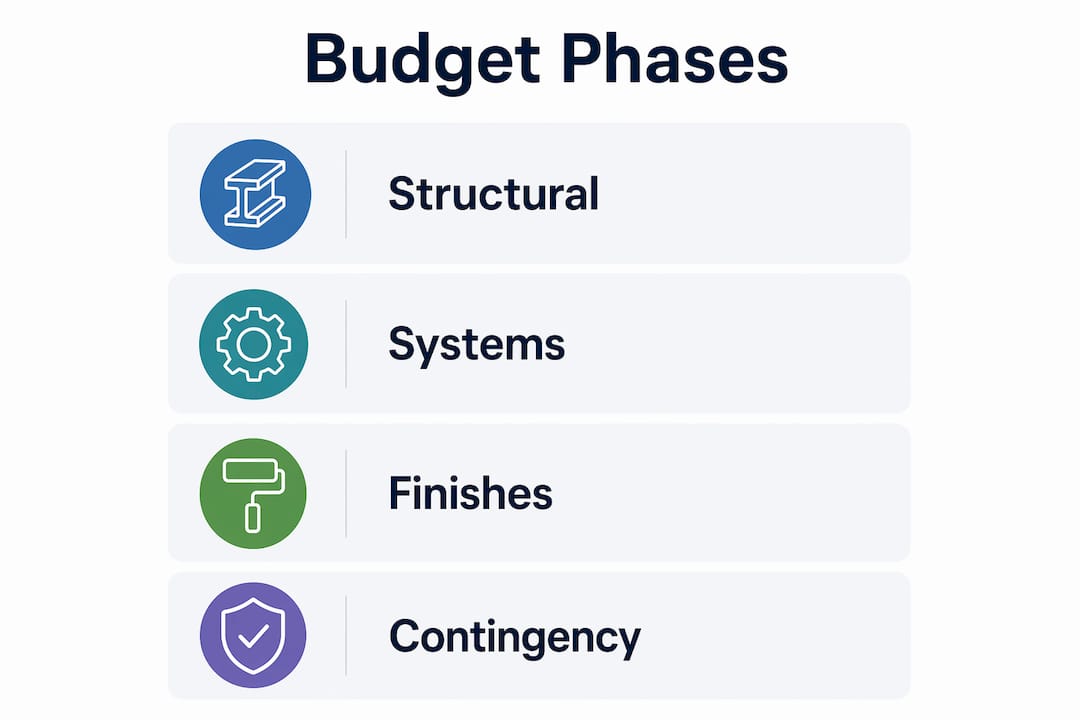
A phased budget breaks the project into distinct stages: structural works, mechanical and electrical systems, plastering and insulation, then finishes and decoration. Each phase has its own cost envelope and timeline. This approach prevents you from overspending on kitchen tiles before you know what the rewiring will cost. Use a step-by-step budgeting guide to map each phase before you commit to any contractor.
Here is a practical sequence to follow:
Get structural surveys done first. A structural engineer’s report reveals hidden issues before you price the job.
Price mechanical and electrical works separately. These are the highest-risk cost items in any total renovation project.
Obtain at least three contractor quotes per phase. Quotes vary significantly, and comparison protects you.
Add a contingency fund of 1–4% of total budget. Hidden structural repair costs are common, especially in older London properties built before 1970.
Include permit and Building Warrant fees in your opening budget. These are fixed costs, not optional extras.
Pro Tip: Double your initial time estimate and add a two-week buffer at the end of each phase. Disciplined scheduling prevents the pressure that leads to rushed decisions and costly mistakes.
The contingency fund deserves special attention. Older properties regularly reveal damp, asbestos, or outdated wiring once walls open up. A 1–4% reserve means you absorb those surprises without derailing the whole project.
Budget Category | Typical Cost Share |
Structural and groundworks | 20–30% |
Mechanical, electrical, and plumbing | 20–25% |
Plastering, insulation, and internal walls | 10–15% |
Kitchen and bathroom fit-out | 20–25% |
Decoration, flooring, and finishes | 15–20% |
Why structural upgrades must come before cosmetic work
Prioritising core systems before cosmetic upgrades is the single most effective way to protect your budget and your property’s long-term value. The logic is straightforward: if you tile a bathroom before replacing corroded pipework, you will rip out those tiles within three years. The same applies to new flooring laid over a failing subfloor, or fresh plaster applied to a damp wall.
The right order of works
The industry-standard sequence for a full house remodel puts structural and systems work first, cosmetic work last. Roofing and weatherproofing come before anything internal. Foundations and damp-proofing are addressed before new walls go up. Electrical rewiring and plumbing replacement happen before plastering. HVAC installation follows. Only then do you move to insulation, plastering, and finally decoration.
Priority Work | Why It Comes First |
Roofing and weatherproofing | Protects all subsequent interior work from water damage |
Foundations and damp-proofing | Prevents structural movement and moisture ingress |
Electrical rewiring | Must be done before walls are closed |
Plumbing replacement | Pipe access requires open walls and floors |
HVAC installation | Ductwork and pipework run through structural voids |
Plastering and insulation | Seals completed systems before finishes begin |
Decoration and finishes | Applied only to a stable, dry, completed shell |
Rushing aesthetic changes without a clear plan leads directly to rework and unnecessary costs. This is one of the most common mistakes Tenenltd sees in properties where previous owners attempted a property makeover without professional guidance. The cosmetic work looks fine on the surface, but the systems underneath are failing.
Pro Tip: Before committing to any paint colour, tile, or flooring, test samples under multiple lighting conditions across different times of day. What looks perfect in a showroom can read entirely differently in your actual space.
A phased renovation approach also delivers greater homeowner satisfaction. You make decisions with full information at each stage, rather than locking in aesthetic choices before you know the structural constraints.
What permits and building regulations do you need?
Building regulations and permits are non-negotiable elements of any how-to-renovate-a-property plan. In England and Wales, works that affect structure, fire safety, drainage, or electrical systems require Building Regulations approval. In Scotland, a Building Warrant is required for similar works. Building Warrant fees range from £500 to £2,500 depending on project scale and complexity.
Works that typically trigger mandatory approval include:
Load-bearing wall removal. Any structural alteration requires both Building Regulations approval and often a structural engineer’s calculation.
Full electrical rewiring. Notifiable work under Part P of the Building Regulations in England.
New or relocated plumbing. Drainage alterations require approval under Part H.
Extensions and loft conversions. These require both Planning Permission (in most cases) and Building Regulations approval.
Change of use. Converting a garage or loft to habitable space triggers full compliance requirements.
Non-compliance carries serious consequences. Selling a property with unapproved structural works is legally problematic, and mortgage lenders routinely request completion certificates. Budget for permit fees from the outset. Your renovation project checklist should include permit applications as a first-week task, not an afterthought.
Experienced contractors manage permit processes far more efficiently than homeowners working alone. They know which inspections are required at which stages, and they maintain relationships with local authority building control officers. This reduces delays and administrative burden considerably.
How to choose and work with renovation contractors
Contractor selection determines whether your full renovation project runs smoothly or becomes a source of prolonged stress. The right contractor brings technical skill, project management experience, and transparent communication. The wrong one brings delays, cost overruns, and substandard work that costs more to fix than it did to install.
Vetting contractors effectively
Start with referrals from homeowners who have completed similar projects in your area. West and Central London have a strong network of experienced refurbishment specialists. Check membership of trade bodies such as the Federation of Master Builders or the Chartered Institute of Building. Ask for a portfolio of completed projects and speak directly to previous clients.
Key criteria to assess before signing any contract:
Fixed-price contracts with detailed scope. Fixed-price agreements prevent budget overrun and establish clear accountability for both parties.
Written variation procedures. Any change to scope should be priced and approved in writing before work begins.
Insurance and liability cover. Confirm public liability insurance and employer’s liability insurance are current.
Payment schedule tied to milestones. Never pay large sums upfront. Payments should align with completed, inspected phases.
Clear communication protocols. Agree on a weekly progress meeting and a single point of contact on the contractor’s team.
Pro Tip: Hiring a refurbishment specialist rather than a general builder adds measurable value. Specialists carry trade knowledge across electrical, plumbing, structural, and decorative disciplines, which reduces the coordination burden on you.
Living arrangements during a renovation also affect project timing. Phased renovations allow you to remain in the property but extend the timeline. Vacating the property entirely allows faster, uninterrupted progress but requires temporary accommodation costs. Discuss both options with your contractor before the project begins, and factor the decision into your overall budget.
Avoid the frugality trap. Investing in quality materials pays off over a 10–20 year horizon. Cheap fittings in bathrooms and kitchens fail faster, cost more to replace, and reduce the property’s appeal to future buyers.
Key takeaways
A successful full property renovation depends on phased planning, accurate budgeting, correct sequencing of works, and a contractor you trust completely.
Point | Details |
Budget in phases | Break costs into structural, systems, and finishes to avoid early overspending. |
Reserve a contingency fund | Set aside 1–4% of total budget to cover hidden structural issues in older properties. |
Sequence works correctly | Complete roofing, electrical, and plumbing before any cosmetic or decorative work begins. |
Secure permits early | Include Building Regulations fees and applications in your first-week project checklist. |
Use fixed-price contracts | Detailed scope agreements protect your budget and define contractor accountability clearly. |
What most renovation guides won’t tell you
The part of a full refurbishment that catches most homeowners off guard is not the cost or the timeline. It is the decision fatigue. By week six of a major project, you will be asked to choose between 40 tile options, three boiler specifications, and two staircase profiles, all in the same afternoon. The homeowners who come out of this process feeling good are the ones who made those decisions before the build started, not during it.
My strongest advice is to spend twice as long on the design and specification stage as you think you need to. Walk through every room with your contractor and agree on materials, finishes, and fittings before a single wall comes down. Visualise your choices under different lighting conditions. Order physical samples and live with them for a week. This sounds slow, but it saves weeks of rework and thousands of pounds.
The other thing most guides understate is the emotional weight of living through a renovation. If you are staying on-site during the works, protect one room as a clean, functional retreat. Keep it off-limits to contractors. Your mental clarity during the project depends on having somewhere that feels like home, even when the rest of the house does not.
Finally, do not treat the contingency fund as money you hope to keep. Treat it as money you expect to spend. Properties in London, particularly Victorian and Edwardian terraces in areas like Chiswick, Hammersmith, and Notting Hill, almost always reveal something unexpected once the walls open. The homeowners who plan for that reality finish their projects calmly. The ones who do not finish them stressed and over budget.
— Mateja
Transform your home with Tenenltd
Tenenltd has been delivering full property refurbishments across West and Central London since 2006. Whether you are planning a complete property refurbishment, a loft conversion, or a kitchen and bathroom renovation, Tenenltd manages every phase under one fixed-price contract. That means no surprise invoices and no coordination headaches between trades.

Tenenltd serves homeowners in Fulham, Chelsea, Kensington, Chiswick, Hammersmith, and Notting Hill. The team handles structural works, electrical, plumbing, carpentry, and decoration, all with the attention to detail that discerning homeowners expect. Visit Tenenltd’s services page to explore the full range of offerings and request a personalised consultation.
FAQ
How long does a full property renovation take?
A full property renovation typically takes 14–28 weeks, with standard refurbishments at the lower end and complex structural projects at the upper end.
What does a full house refurbishment cost in london?
Costs range from £800 to £3,500 per m² in London in 2026, depending on materials, structural complexity, and the extent of systems replacement.
Do i need planning permission for a full renovation?
Most internal works require Building Regulations approval rather than planning permission. Extensions, loft conversions, and changes of use typically require both. Building Warrant fees range from £500 to £2,500 depending on project scale.
What should i prioritise first in a renovation?
Structural works, roofing, damp-proofing, electrical rewiring, and plumbing replacement must come before any cosmetic or decorative work. Completing systems first prevents costly rework later.
How do i avoid going over budget on a renovation?
Use a phased budget, reserve a 1–4% contingency fund for hidden issues, and agree a fixed-price contract with your contractor before works begin. Detailed scope definitions are the most effective protection against cost overruns.
Recommended
Comments