
Design and build services explained: streamline your London renovation
- luka bursac
- 3 hours ago
- 8 min read
TL;DR:
A design and build service offers a single company responsible for both design and construction.
This approach reduces project delays, miscommunication, and provides fixed costs and accountability.
It suits London projects with multiple trades, complex planning needs, and homeowners seeking a streamlined process.
Planning a home renovation in London can feel like juggling too many moving parts at once. You need an architect, a builder, a project manager, and somehow you are expected to keep them all aligned. Many homeowners assume this fragmented approach is simply how things work. But there is a smarter way to manage your project, and it starts with understanding what a design and build service actually offers. This article explains exactly what design and build means, how the process works from start to finish, and when it makes the most sense for your home in West or Central London.
Table of Contents
Key Takeaways
Point | Details |
All-in-one solution | Design and build offers one team managing your project for less stress and greater accountability. |
Faster, simpler process | Most projects run faster and avoid disputes by uniting design and construction in one contract. |
Best for complex London sites | Homes in London often benefit from one provider handling planning, permissions, and local requirements. |
Know when it’s ideal | Design and build is perfect for extensions, lofts, and full renovations, especially when time and simplicity matter. |
What is a design and build service?
A design and build service is exactly what it sounds like: one company takes responsibility for both the design and the physical construction of your project. Rather than hiring an architect separately and then tendering the work to a builder, you work with a single integrated team from day one. This combines design, planning, and construction in one contract to increase efficiency and reduce the friction that typically arises when separate professionals need to coordinate.
The team you work with typically includes:
An architect or designer who creates the concept and technical drawings
A planning specialist who manages any required permissions or consents
A project manager who oversees the build from start to finish
Skilled tradespeople including carpenters, electricians, plumbers, and decorators
You sign one contract and have one point of contact throughout. That single point of accountability is one of the most underrated advantages of this approach. When something needs a decision, there is no back-and-forth between your architect and your builder. The answer comes from one team with full visibility over the whole project.
This model suits a wide range of residential projects. Home extensions, loft conversions, full property refurbishments, kitchen renovations, and bathroom transformations all benefit from the integrated approach. If your project involves multiple trades or spans several rooms, a design and build service is particularly well suited to keeping everything on track.
You can explore the full design and build service benefits to understand how this model adds value at every stage.
Pro Tip: If you are based in West or Central London, look specifically for a design and build provider with experience in your borough. Local knowledge of planning regulations, conservation area rules, and permitted development rights can save weeks of delays and prevent costly resubmissions.
How does the design and build process work?
Understanding the stages involved helps you feel confident and in control throughout your renovation. Here is how a typical design and build project unfolds:
Initial consultation and needs assessment. Your project begins with a detailed conversation about your goals, lifestyle, budget, and timeline. A good team listens carefully before suggesting anything.
Survey and design concepts. The team surveys your property and produces initial design concepts. You review, refine, and agree on a direction before any formal drawings are produced.
Planning permissions and consents. Where required, the team prepares and submits planning applications on your behalf. This includes liaising with the local authority and responding to any queries.
Detailed design and costing. Once planning is secured, detailed technical drawings are produced alongside a fixed-price contract. You know exactly what you are getting and what it will cost.
Build phase with site supervision. Construction begins with a dedicated project manager overseeing every trade on site. Progress is reported to you regularly so you always know where things stand.
Snagging and handover. Before you sign off, the team works through a snagging list to ensure every detail meets the agreed standard. You receive warranty documentation and aftercare support.
Clear stage gates from design to completion reduce project delays, which is one reason this model performs so consistently well on complex London projects. You can see a real-life design and build project to understand how this process looks in practice.
Stage | Traditional approach (weeks) | Design and build (weeks) |
Design and concept | 6 to 10 | 3 to 5 |
Planning and permissions | 8 to 12 | 8 to 10 |
Tendering and contracts | 4 to 6 | 0 (included) |
Build phase | 12 to 20 | 10 to 16 |
Total estimate | 30 to 48 | 21 to 31 |
The time saved at the tendering stage alone can be significant. With a design and build service, the build phase begins as soon as planning is approved, not weeks later.
Design and build vs. traditional project delivery
Most homeowners are familiar with the traditional route: hire an architect, receive drawings, put the work out to tender, choose a builder, and then try to manage the relationship between them. It works, but it comes with real risks.
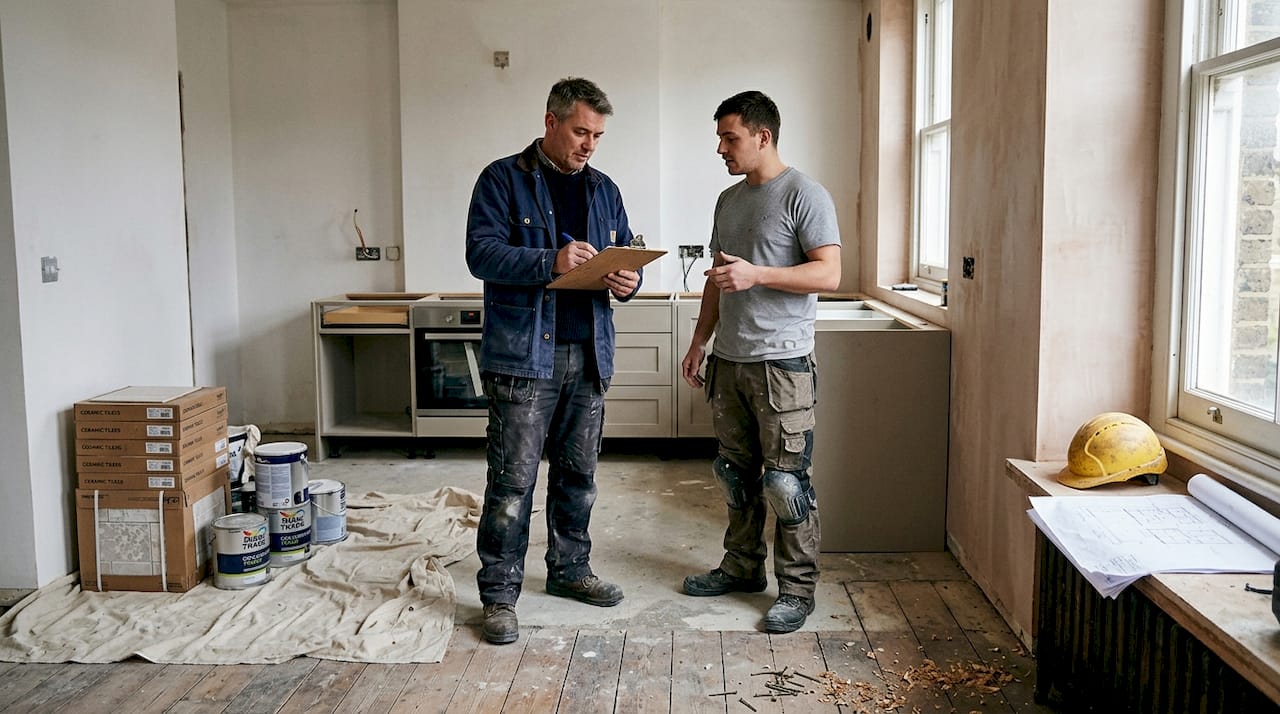
A single provider reduces risks of miscommunication and cost overruns, which is one of the clearest advantages design and build holds over the traditional split approach.
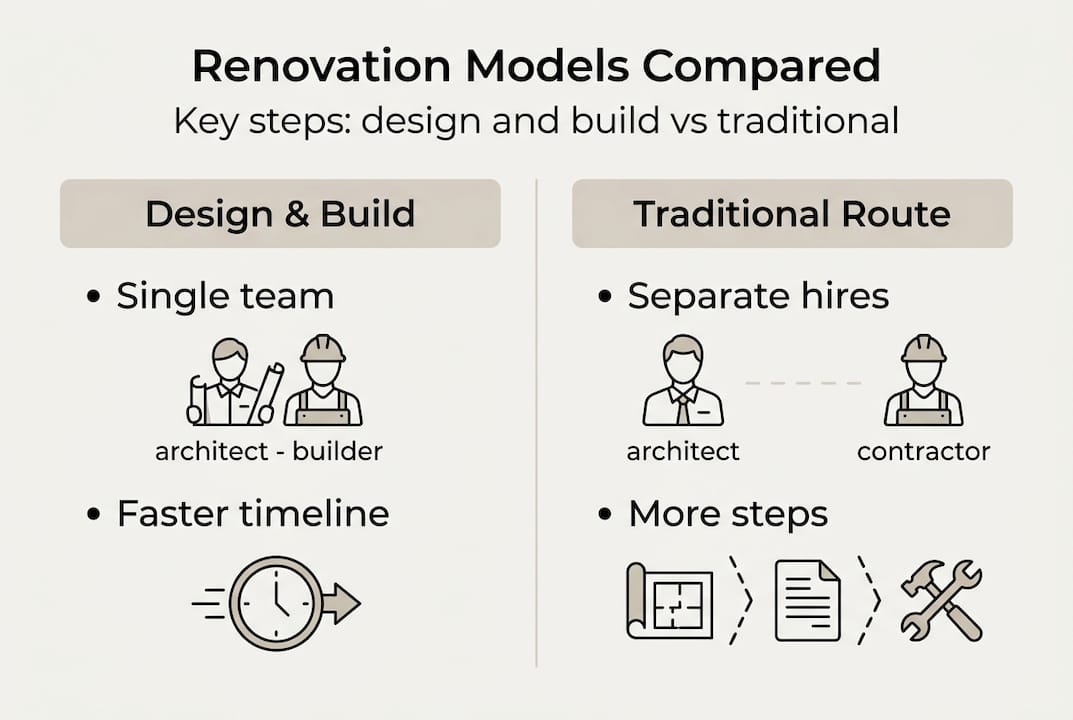
Factor | Design and build | Traditional delivery |
Point of contact | Single team | Multiple parties |
Contract structure | One contract | Separate contracts |
Cost certainty | Fixed price agreed early | Can shift during build |
Timeline | Generally faster | Depends on coordination |
Design flexibility | Focused brief required | More iterative options |
Risk of disputes | Lower | Higher |
Strengths of design and build:
Streamlined communication between designer and builder
Faster start on site once planning is approved
Reduced risk of budget surprises mid-project
Clearer accountability when issues arise
Points to consider:
You need a clear brief from the outset, as major design changes mid-project can affect cost
Less suitable if you want to run an open tender across many builders independently
When your designer and builder are the same team, the conversation about what is buildable and what it costs happens before you commit, not after. That shift alone prevents most of the disputes that derail traditional projects.
If you have previously explored managing separate builders for your Chelsea or West London property, you will recognise how much coordination effort the design and build model removes from your plate.
When should you choose a design and build service?
Not every project demands a design and build approach, but many London renovations are ideally suited to it. The question is whether your circumstances match the model’s strengths.
Design and build delivers the most value when:
You want a single point of contact and do not want to manage multiple contractors yourself
You need a fixed price and a realistic, guaranteed timeline before committing
Your project involves multiple trades working across several areas of the home
You are working within a conservation area, a mews property, or a terraced house where planning experience matters
You are not available to oversee the build day to day
Projects in built-up areas like London benefit from a team experienced with local authorities, particularly where permitted development rights are limited or where party wall agreements are required. A team that has worked across Kensington, Notting Hill, and Chiswick understands these nuances without needing to learn them on your project.
Research consistently points to design and build completing up to 30% faster than traditional split contracts. For a London homeowner, that speed translates directly into less disruption, less time in temporary accommodation, and a faster return to enjoying your home.
Pro Tip: Before appointing any design and build firm, ask to see completed case studies in your specific borough. A team with a track record in your area will navigate planning and logistics far more smoothly than one learning your neighbourhood for the first time.
The project types best suited to choosing design and build services include rear extensions, side returns, full-floor loft conversions, whole-house refurbishments, and combined kitchen and living space transformations.
A fresh perspective: what most London homeowners miss about design and build
Most homeowners focus almost entirely on the quoted price when comparing renovation options. That instinct is understandable, but it often leads to poor decisions. The cheapest quote rarely reflects the full cost of a project, and in London, the gap between the lowest quote and the final invoice can be startling.
What a strong design and build partner actually provides is risk management. When your designer and builder are separate parties, every ambiguity in the drawings becomes a potential dispute. Every planning query becomes a delay while two professionals argue over whose responsibility it is. A genuinely integrated team absorbs those friction points internally, and you never see them.
We have seen homeowners choose the lowest quote from a split arrangement and spend months managing disputes, resubmitting planning applications, and absorbing unexpected costs. The stress alone has a real impact on daily life. Selecting the lowest quote without considering the team’s local experience, track record, and communication approach can result in delays, poor finishes, or outright planning rejection.
Real value in a design and build service includes risk mitigation, proactive communication, and genuine aftercare, not just the lowest price on paper. Browse our completed design and build projects to see what this standard of work looks like in practice.
Ready to simplify your London renovation?
Having one expert team manage your project from initial concept through to handover removes the stress, the coordination burden, and the uncertainty that comes with managing separate contractors. You get a clear plan, a fixed price, and a team that is accountable for every stage.
At Tenen Ltd, we have been delivering high-quality renovations across West and Central London since 2006. Our all design and build services cover everything from London home extensions to London loft conversions, all managed by one professional team. If you are ready to transform your home without the hassle of managing it yourself, get in touch with us today for an initial consultation.
Frequently asked questions
What are the key benefits of using a design and build service in London?
The main benefits are fewer delays, lower risk of miscommunication, and a single point of responsibility for your renovation. Design and build combines all expertise into one team for better project leadership and clearer accountability throughout.
How is design and build different from hiring an architect and builder separately?
Design and build means one team handles everything under one contract, while the traditional route splits responsibility and can create delays or disputes. A single contract streamlines communications and keeps the build moving without gaps between parties.
Can I use a design and build service for listed buildings or conservation areas?
Yes, but it is essential to choose a provider with direct experience of local planning regulations in your area. Experience with London planning authorities is particularly important for properties in conservation areas or those requiring listed building consent.
Do design and build services manage planning permission applications?
Yes, reputable design and build firms handle the full planning and consent process as part of their service. The process includes planning and permissions management from submission through to approval.
Are design and build services more expensive than traditional approaches?
Overall costs are often equal or lower, thanks to clearer upfront planning and reduced risk of mid-project surprises. Design and build streamlines costs and can minimise the overruns that frequently affect traditionally delivered projects.
Recommended
Comments