
Decorating tips for London homes in 2026
TL;DR:
London homes present unique decorating challenges such as limited space and historic features that require respectful solutions. Practical tips include thorough measurement, decluttering, adopting warm earthy tones, layered lighting, and bespoke storage to maximize functionality and character. Embracing eclectic personal style and sustainable materials ensures homes feel warm, distinctive, and environmentally conscious.
London homes are genuinely unlike anywhere else. Whether you live in a compact Victorian terrace in Fulham, a Georgian conversion in Kensington, or a modern flat in Hammersmith, you face a set of decorating challenges that are distinctly local: limited square footage, period features that demand respect, and winters that seem designed to swallow natural light. These decorating tips for London homes are built around those realities, not generic advice lifted from a Scandinavian interiors magazine. You will find practical guidance on colour, lighting, storage, and personal style, all grounded in what actually works in London’s diverse housing stock.
Key takeaways
Point | Details |
Prepare before you decorate | Declutter, measure accurately, and note all architectural features before making any styling decisions. |
Warm tones are leading 2026 trends | Earthy colours like terracotta, clay, and ochre are replacing cool greys in London interiors this year. |
Lighting deserves its own plan | Layer ambient, task, and accent lighting together, and match colour temperature to each room’s function. |
Built-in storage transforms small spaces | Floor-to-ceiling and bespoke joinery maximises every centimetre without compromising the character of period homes. |
Personal touches make a home distinctive | Mixing vintage pieces with contemporary design reflects London’s eclectic character and avoids the showroom look. |
Decorating tips for London homes: start with what you have
Before you buy a single cushion or reach for a paint brush, take stock of your space honestly. This preparation stage is where most London homeowners save or waste money.
London properties come with a set of common constraints worth understanding:
Low ceilings in basement flats that make overhead lighting oppressive rather than welcoming
Single-aspect rooms that receive light for only part of the day, often making colours read very differently by afternoon
Chimney breasts and alcoves that interrupt wall space but offer genuine storage and display potential
Cornicing, picture rails, and dado rails that define the architectural period and deserve preservation rather than removal
Small or irregular floor plans that make off-the-shelf furniture an awkward fit
Start by measuring every room properly, including ceiling height and the depth of any recesses. Note where natural light enters and at what time of day. Photograph rooms at different points: morning, midday, and early evening. These photographs will tell you more about how your space actually reads than any mood board.
Decluttering comes before decorating, not after. Visual calm in a small London room depends on reducing objects, not adding more interesting ones. Once the room is stripped back, you will see its architecture clearly for the first time.
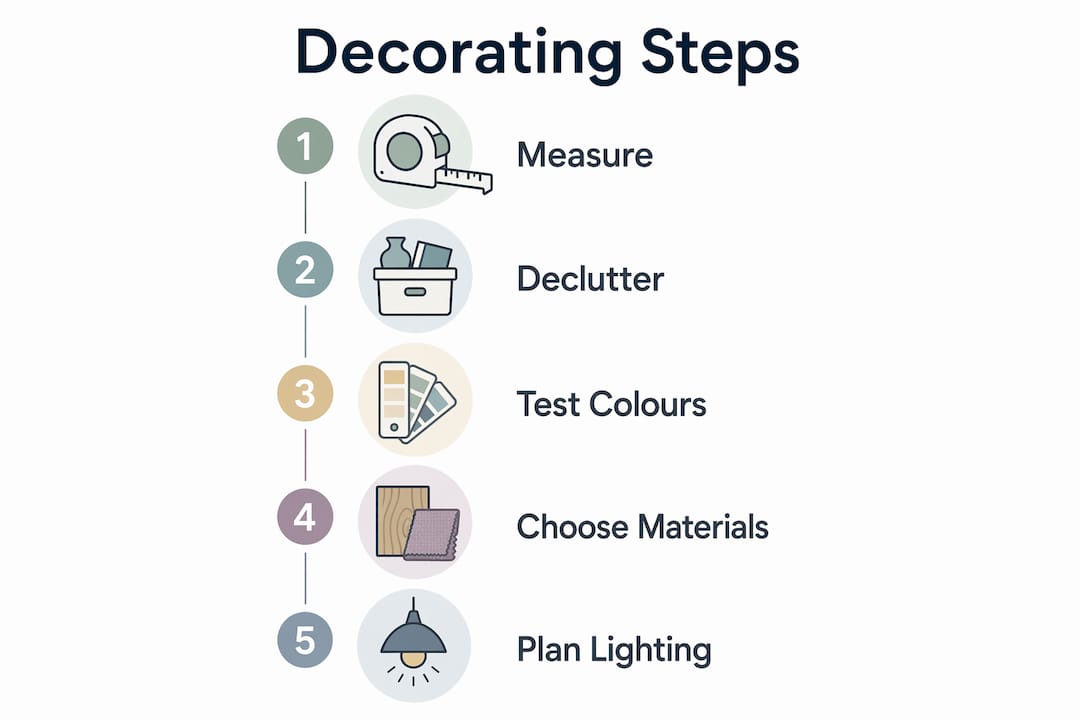
Pro Tip: Tape out the footprint of any large furniture pieces on the floor before purchasing them. In small London rooms, even a sofa that is twenty centimetres too wide will block natural movement through the space.
Colour and material trends shaping London interiors in 2026
The shift happening across London homes right now is unmistakable. Cool, grey-dominant palettes that defined the 2010s are giving way to something warmer and more textured. Terracotta, clay, walnut brown, and ochre are rising alongside dusky jewel tones including amethyst, smoky sapphire, and forest green. This is interior design that feels considered rather than transactional.
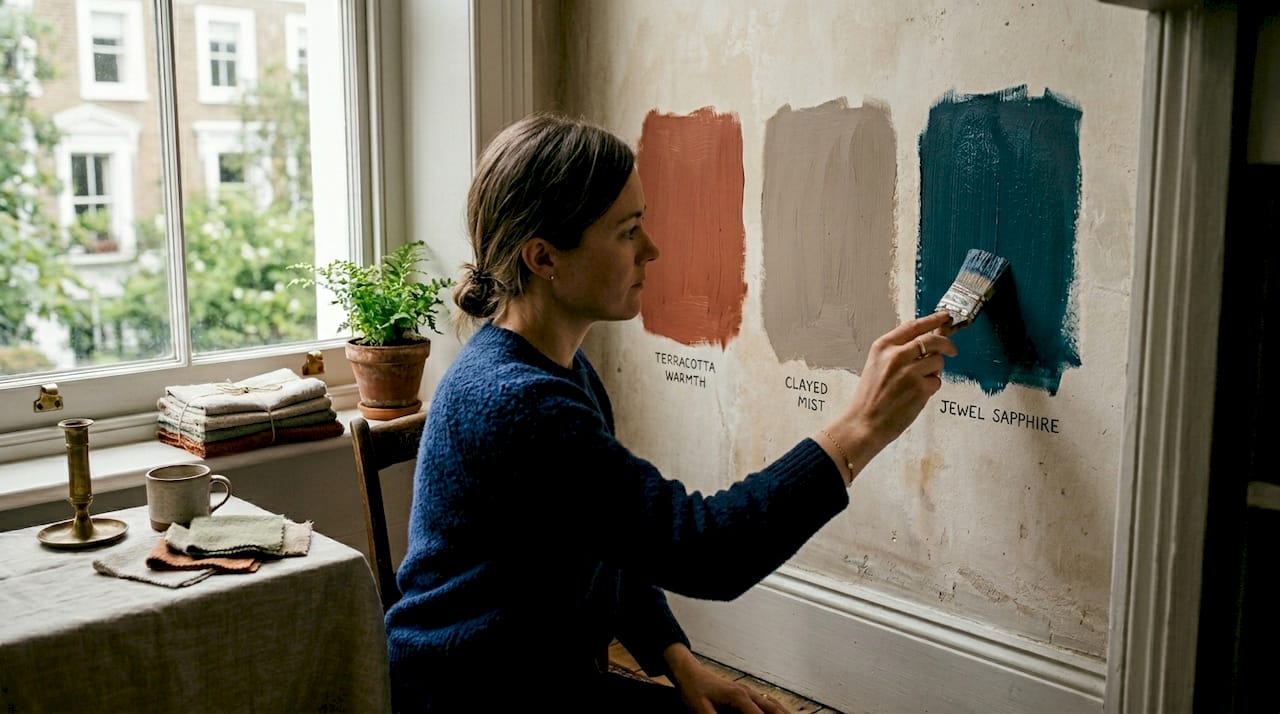
The shift matters for practical reasons, not just aesthetic ones. Warm tones perform better in London’s typical light conditions. A clay or ochre wall will hold its warmth on a grey November afternoon in a way that a pale grey simply will not.
Here is how to apply these trends thoughtfully:
Colour drenching means taking a single tone and applying it to walls, ceiling, and woodwork simultaneously. It sounds dramatic but works particularly well in small rooms because it removes the visual interruption of multiple surfaces.
Jewel tones as accents, not base colours, prevent a room from feeling heavy. A smoky sapphire on a single chimney breast wall, paired with warm timber flooring and linen upholstery, reads as considered rather than loud.
Textured materials add depth that flat paint cannot. Grasscloth wallcovering, limewash plaster finishes, and panelled wood wainscoting all add tactile interest that photographs well and feels even better in person.
Architectural detailing including picture rails, coving, and skirting boards painted in a tone slightly deeper or lighter than the wall colour draws attention to the period character that makes London homes distinctive.
Pro Tip: Test paint samples on a large piece of card (at least A3 size) and move it around the room at different times of day. Paint shades shift considerably between daylight and artificial light, and identical paints read differently under varying light conditions.
The material palette matters as much as colour. Natural textures including linen, aged brass, reclaimed oak, and hand-thrown ceramics are replacing the shiny and synthetic. They also age well, which is a practical consideration in a home you plan to enjoy for years.
Smart storage and furniture for period and small homes
Space efficiency in London is not a trend. It is a structural requirement. The difference between a flat that feels considered and one that feels cramped almost always comes down to storage decisions made at the planning stage.
Consider this hierarchy of storage choices:
Full-height built-in cabinetry running floor to ceiling. Floor-to-ceiling wardrobes with pull-out shelves and integrated lighting use height that standard furniture ignores and reduce visual clutter dramatically.
Alcove shelving and cupboards built into chimney breast recesses. These are among the most underused opportunities in Victorian and Edwardian homes. A well-designed pair of alcove cupboards with open shelving above can hold a remarkable amount while looking intentional.
Window seat storage beneath bay windows. The bay window is common in London’s terraced housing. The void beneath a window seat offers drawer or lift-up storage that disappears completely.
Custom loft and eave storage in converted upper floors. Off-the-shelf furniture wastes these spaces; bespoke joinery integrates with rooflines and creates storage that would otherwise be dead space.
The comparison below illustrates how storage choices affect both cost and character in London period homes:
Storage type | Best suited to | Approximate relative cost | Character impact |
Off-the-shelf flat-pack | New build or temporary solution | Low | Neutral to negative in period homes |
Freestanding antique pieces | Larger rooms with period detail | Medium | High, adds personality |
Bespoke built-in cabinetry | All London home types | High | Excellent, integrates with architecture |
Alcove shelving and cupboards | Victorian and Edwardian terraces | Medium | Very high, respects period rhythms |
Bespoke joinery in period interiors avoids the visual intrusion that added cabinetry can create when it sits awkwardly against cornicing or original panelling. For any significant storage project in a London period home, bespoke really is worth the investment. You can find further ideas on blending period character with modern storage in Tenenltd’s Victorian refurbishment guide.
Mixing vintage and contemporary pieces creates a look that feels personal rather than assembled from a catalogue. A mid-century sideboard, a modern sofa, and an antique mirror can coexist beautifully if they share a common element, whether that is scale, material, or tone.
Lighting design for London’s darker interiors
Lighting is the single most transformative tool available to a London homeowner, and it is consistently underinvested in. Most people make one decision, a ceiling pendant or a recessed downlight, and leave it there. That approach produces flat, functional light that does nothing for the character of a room.
Effective lighting works in three layers, each serving a distinct purpose:
Ambient lighting provides the general illumination of a room. In London homes, this is often a central pendant or recessed ceiling lights.
Task lighting serves specific activities: a reading lamp beside a chair, under-cabinet lighting in a kitchen, a desk lamp in a study area.
Accent lighting draws attention to architectural features, artwork, or shelving. A recessed spotlight angled at a textured plaster wall creates shadow and depth that transforms the surface entirely.
Combining ceiling pendants, wall lights, and accent spotlights creates flexibility that a single light source simply cannot provide. You can drop the ambient light low in the evening and let wall and accent lights carry the room, which makes a significant difference to how welcoming and comfortable a space feels.
Colour temperature matters more than most homeowners realise. Warm light between 2700K and 3000K suits living and dining areas, whilst a slightly cooler 3000K to 3500K range suits kitchens and bathrooms. Mixing temperatures across open-plan areas creates a disjointed feel that you notice without quite knowing why.
In London’s period homes, recessed fittings, LED channels, and joinery-integrated lighting are planned early in any renovation, not added as an afterthought. Natural and artificial light plans should be developed together, because warm earth tones combined with layered lighting create genuinely inviting spaces in ways that no single element achieves alone.
Pro Tip: Install dimmer switches on every circuit where you can. A single room transformed from full brightness to 30% changes entirely in mood and warmth. It costs very little to add at switch-fitting stage and is expensive to retrofit later.
If you are considering structural ways to increase natural daylight, Tenenltd’s guide to maximising daylight with rooflights explains how skylights and roof windows can transform darker rooms without requiring a full extension.
Personal style and sustainable choices
The rooms in London homes that feel genuinely memorable are rarely the most expensive or the most perfectly matched. They are the ones that tell a story. Personal artwork, inherited furniture, travel finds, and bespoke commissions all contribute to a home that could belong only to you.
Mixing vintage or heirloom items with contemporary styling builds personality and reflects Londoners’ genuinely eclectic tastes. That inherited grandfather clock, paired with a modern console and a piece of abstract art, creates a dialogue between periods that feels intentional and interesting.
Sustainability is now woven into how London homeowners approach decorating decisions, not as a compromise but as a quality marker:
Choose natural, biodegradable materials wherever possible: linen, wool, solid timber, and natural stone over synthetic alternatives.
Opt for vintage and reclaimed pieces rather than new furniture where the design quality is equivalent or superior.
Use low-VOC or natural paints that are better for indoor air quality and the environment. Many of the most beautiful limewash and clay finishes are also the most sustainable options.
Consider sustainable materials and design principles when planning any refurbishment, not just cosmetic decorating.
Seasonal refresh ideas allow you to keep your home current without large-scale redecoration. Styling tweaks rather than repainting can include swapping cushion covers and throws for the season, rotating artwork, adding or removing a rug, or changing lampshades to shift the warmth of a room. These are small changes with a real and immediate effect.
Pro Tip: Buy the best quality you can afford for the things you touch every day: door handles, light switches, taps, and textiles. These are the details that determine whether a home feels genuinely well made or just well painted.
My honest take on London interiors in 2026
I have worked across London properties for nearly two decades, and the shift I have seen over the past few years feels genuinely meaningful. When I started out, the aspiration was minimalism. White walls, concealed everything, no personality. Clients wanted homes that looked like they belonged in an architecture magazine rather than to a family.
What I see now is different. People want warmth. They want their homes to feel like theirs. The move toward earthy palettes and layered, eclectic styling is not a passing trend. It is a correction.
The thing I would tell any London homeowner is this: plan your lighting before you choose a single paint colour. I have seen beautiful colour decisions made in a showroom look completely wrong in the actual room because nobody considered the colour temperature of the artificial light that would dominate the space for six months of the year. Test everything together.
I have also come to believe that bespoke storage, even in a modest budget refurbishment, is almost always worth prioritising over surface finishes. A well-fitted set of alcove cupboards will do more for how a room functions and feels than any amount of carefully chosen accessories.
The period features in London homes are not obstacles. They are the reason the homes are worth caring about. Cornicing, picture rails, and original fireplaces are the bones of rooms that new-build properties will never have. Work with them, not around them.
— Mateja
Transform your space with Tenenltd
If your decorating ambitions reach beyond paint and soft furnishings, Tenenltd has been helping London homeowners transform their properties since 2006. We specialise in home extensions across West and Central London, loft conversions, full refurbishments, and bespoke joinery and carpentry. Whether you want to bring more natural light into a dark Victorian terrace, create built-in storage tailored to your period property, or undertake a full property refurbishment that combines structural improvements with beautiful finishes, our team works with precision and care.
We serve homeowners across Fulham, Chelsea, Kensington, Chiswick, Hammersmith, and Notting Hill. Get in touch with the Tenenltd team to discuss your project and receive expert guidance tailored to your home.
FAQ
What colours work best in London homes in 2026?
Warm neutrals including terracotta, clay, and ochre are leading the trend, paired with dusky jewel tones as accent colours. These shades perform particularly well in London’s lower light conditions across autumn and winter.
How do I make a small London flat feel larger?
Full-height built-in storage, layered lighting, and a single cohesive colour palette reduce visual clutter and create the impression of greater space. Avoid multiple competing furniture styles or too many freestanding pieces.
What is the most effective lighting approach for London interiors?
Layer ambient, task, and accent lighting in every room, and keep colour temperatures consistent within spaces. Warm light between 2700K and 3000K suits living areas; slightly cooler tones suit kitchens and bathrooms.
How can I incorporate period features without the home feeling dated?
Preserve cornicing, picture rails, and original fireplaces as architectural anchors, then contrast them with contemporary furniture and warm, modern colour palettes. Bespoke joinery that respects the proportions of period rooms also helps achieve this balance.
Are sustainable decorating choices practical for London homeowners?
Absolutely. Natural paints, reclaimed furniture, linen and wool textiles, and solid timber all offer excellent durability alongside their environmental credentials. Many sustainable options are also among the most aesthetically refined choices available.
Recommended
Comments