
CDM homeowner duties UK: what you must do
- luka bursac
- Aug 17
- 13 min read
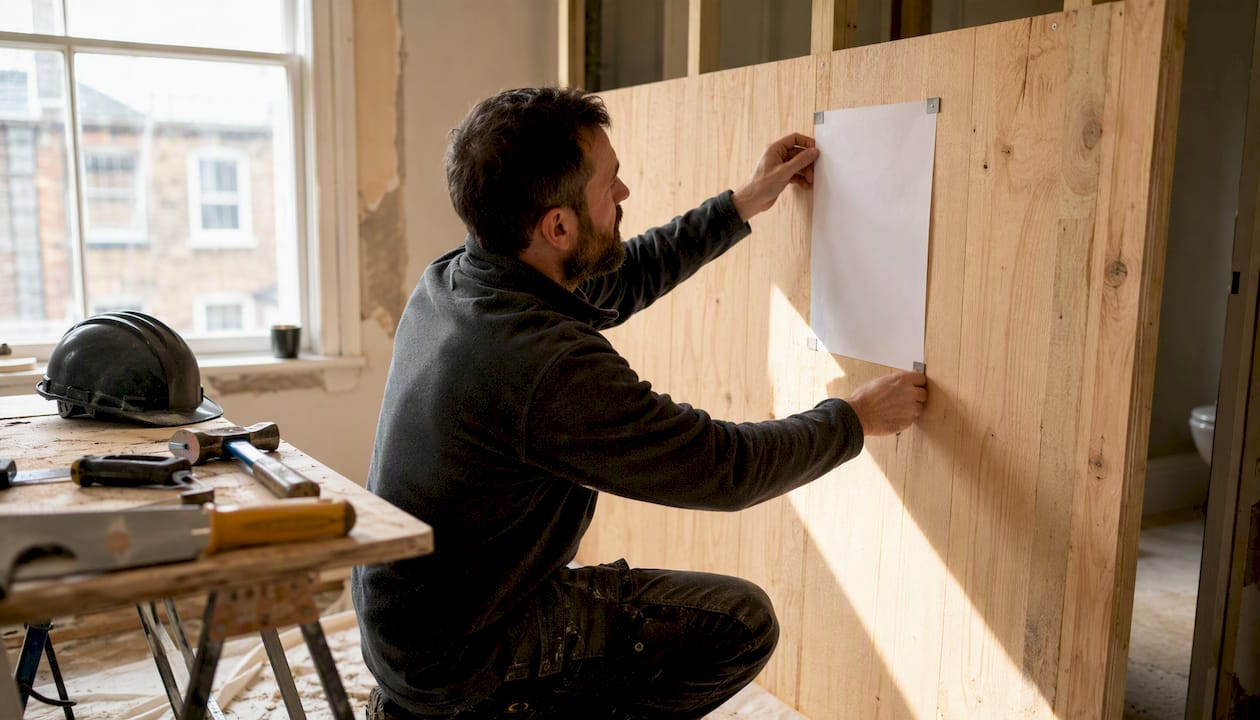
CDM homeowner duties UK exist under the Construction (Design and Management) Regulations 2015, but here’s the reassuring part: as a homeowner, most of those duties transfer straight to your contractor or principal contractor the moment you appoint one. You don’t need a construction management qualification to comply. You simply need to make sensible enquiries, allow realistic time and money, and be clear in writing about who is holding the client duties on your project.
That last point catches people out more than any other. Skip the paperwork and you may accidentally remain the legal duty holder without realising it.
Here’s what to do right now, before you sign anything:
Check whether your project is notifiable (broadly, projects lasting longer than a month with numerous workers on site at the same time, or involving a large total amount of construction work).
Ask your designer and contractor two or three simple competence questions (we give you the exact wording later in this guide).
Get it in writing who holds the client duties: the contractor, the principal contractor, or a principal designer under a signed agreement.
The Health and Safety Executive designed CDM 2015 to keep the burden on homeowners deliberately light. The real test of compliance isn’t technical expertise. It’s whether you asked the right questions and gave your team enough time and budget to work safely.
Key Takeaways
CDM 2015 places the technical safety burden on your contractor or principal contractor, provided you confirm that arrangement in writing before work begins.
Point | Details |
Confirm duty transfer in writing | State clearly in your contract who holds client duties: contractor, principal contractor, or principal designer. |
Check notification thresholds | Projects lasting more than about a month with many workers, or involving a large cumulative amount of work, need an F10 filed… |
Ask competence questions upfront | Request insurance certificates, references, and a sample Construction Phase Plan before appointing anyone. |
Provide known site information | Pass on old surveys, asbestos reports, or structural history so the team can plan around real risks. |
Keep your Health and Safety File | Retain it at handover; it’s essential for future maintenance work or when you eventually sell. |
Table of Contents
What is a domestic client under CDM 2015?
A domestic client is someone having construction work carried out on their own home, provided that work is not connected to a business. That’s the entire legal test, and it’s narrower than most homeowners expect.
If you’re an owner-occupier having an extension built, a loft converted, or a kitchen refurbished purely for your own family’s use, you’re almost certainly a domestic client. The same applies if you’re helping fund or arrange work on a parent’s or relative’s home, provided it isn’t a rental or investment property. Many self-builders fall into this category too, according to HSE’s guidance on domestic clients.
You are not a domestic client, and CDM’s ordinary commercial duties will apply to you directly, if any of the following describe your situation:
You’re a landlord commissioning work on a property you let out.
You’re a local authority or housing association managing tenanted stock.
The work is being done for or by a business, even a business you run from home.
You’re a property developer renovating to sell on.
Get this wrong and the consequences aren’t trivial. A landlord who assumes domestic-client status because the property “feels” residential could unknowingly be operating without the client duties they legally hold. If you’re at all unsure which category you fall into, it’s worth confirming with your contractor or a CDM adviser before work starts, not after.
How do domestic client duties transfer under CDM 2015?
CDM 2015 doesn’t leave domestic clients holding technical safety duties they’re unqualified to discharge. Instead, Regulation 7 automatically hands those duties to whoever is professionally positioned to manage them, based on how your project is structured.
There are three routes, and which one applies to you depends on a single question: how many contractors are involved?
One contractor doing all the work. The client duties transfer automatically to that contractor. This covers most single-trade jobs and smaller renovations where one firm manages the whole build.
More than one contractor on site. The duties transfer to the principal contractor, the firm responsible for coordinating the construction phase. This is the default position for extensions, loft conversions, and full refurbishments involving separate trades.
A written agreement with a principal designer. If you’d rather your architect or designer held the client duties from the design stage onward, you can arrange this in writing, according to HSE’s guidance on domestic client roles. This route suits projects with complex design phases, where the designer is steering decisions long before a contractor is even appointed.
Transfer route | Who holds client duties | Best suited to |
Single contractor | The contractor | Small, single-trade projects (one firm, start to finish) |
Multiple contractors | The principal contractor | Extensions, loft conversions, multi-trade refurbishments |
Written agreement | The principal designer | Design-led projects where the designer manages early phases |
What happens if nobody formally agrees who’s holding these duties? The regulations don’t leave a gap. Regulation 7 states that if the required appointments aren’t made, the designer or contractor actually in control of the work automatically becomes the principal designer or principal contractor by default. Assuming “nobody appointed anyone, so nobody’s responsible” is a genuine misconception, and one that can leave everyone on a project unclear about who’s meant to be managing safety.
What must a homeowner still do under CDM?
Duty transfer doesn’t mean you can switch off entirely. HSE guidance is explicit that domestic clients should still make reasonable enquiries of those they appoint and build enough time and money into the contract for work to be done safely.
In practice, that means four things:
Make reasonable enquiries about competence. Ask contractors and designers about their health and safety track record before you sign anything, not after work has started.
Pass on known site information. If you know about an old asbestos survey, a buried drain, unstable ground, or a previous structural issue, tell your team. They can’t plan around risks they don’t know exist.
Allow realistic time and budget. Squeezing a six-week programme into four weeks pressures contractors to cut corners on safety as well as quality.
Keep simple records. Save emails confirming appointments, competence checks, and who holds the client duties. This paper trail is your evidence of due diligence if anything is ever questioned.
When you’re interviewing prospective contractors or designers, a few direct questions go a long way: How have you managed health and safety on a similar domestic project? Who will hold the client duties on this job? Will you produce a Construction Phase Plan before work starts?
Pro Tip: The single most effective thing you can do is put the duty-transfer arrangement in writing before work starts, even if it’s just a paragraph in your appointment letter or contract. It costs nothing, takes five minutes, and is the clearest possible evidence that you acted responsibly if anyone ever questions who was managing safety on your project.
When does a project need HSE notification (F10)?
Not every renovation needs formal notification, but larger ones do. HSE requires an F10 notification when a project is expected to last longer than about a month and involve a sizable number of workers onsite at once, or when the total time worked by all on site collectively is large.
Most single-contractor loft conversions or bathroom refurbishments won’t hit these thresholds. Larger extensions, full property refurbishments, or projects running multiple trades over several months often will.
Here’s the practical sequence if your project looks notifiable:
Confirm who’s filing. In practice, this is usually the principal contractor or principal designer, since they hold the client duties and the project detail HSE requires.
Check the timing. Notification must happen before the construction phase begins, not partway through once work is already under way.
Ask for confirmation. Request a copy of the submitted F10, or at least written confirmation it’s been filed. This is a simple check that costs you nothing and protects you if anyone later questions compliance.
Display it on site. Once notified, HSE expects notification details to be visible at the site for anyone to see, including inspectors.
The number that matters most here is 500 person-days. Even a project that finishes in under 30 working days can still be notifiable if enough workers are on site cumulatively. If your extension involves groundworkers, a structural steel team, roofers, and finishing trades all overlapping across a busy few weeks, do the maths before assuming you’re under the threshold. When in doubt, your contractor should be able to calculate this for you, or you can check the criteria directly via the HSE F10 notification form.
What CDM paperwork will homeowners encounter?
Three documents run through most CDM-compliant projects, and understanding them helps you spot whether your project is being managed properly.
Pre-construction information is the starting point. This covers everything the design and construction teams need to know before work begins: existing structural surveys, known hazards like asbestos, access constraints, and site conditions. As the client, you’re expected to pass on whatever relevant information you actually hold, even informally, such as a previous builder mentioning a hidden void or an old survey report from when you bought the property.
The Construction Phase Plan (CPP) is prepared by the contractor, or the principal contractor on multi-trade jobs, before construction starts. It sets out how the work will be organised safely: welfare arrangements, how different trades will be sequenced to avoid conflicts, and how site-specific risks will be managed. You should expect to see this exist, even if you’re not required to approve every technical detail.
The Health and Safety File is compiled toward the end of the project and handed to you at completion. It’s essentially a maintenance record for the building’s future: where hidden services run, what materials were used, and any residual risks a future builder or tradesperson should know about before drilling into a wall or lifting a floorboard.

Document | Who prepares it | When it appears | Your role |
Pre-construction information | Designer or client (with input) | Before design finalises | Provide known site facts and past surveys |
Construction Phase Plan | Contractor or principal contractor | Before construction starts | Confirm it exists; ask to see a summary |
Health and Safety File | Principal designer or contractor | At project completion | Keep it safely; hand it on if you ever sell |
Keep that Health and Safety File somewhere you’ll actually find it again. It’s genuinely useful the next time you have any work done, and essential if you sell the property and the new owner’s contractor needs to know what’s behind the walls.
How should homeowners handle CDM step by step?
A CDM-compliant project has a natural sequence, and following it in order prevents most of the common headaches homeowners run into.
Brief your designer or architect. Set out what you want, your rough budget, and your timeframe. This is also the point to discuss whether you want a written agreement putting client duties on a principal designer.
Appoint your contractor. Confirm in writing whether they’re the sole contractor (duties transfer to them) or coordinating other trades as principal contractor.
Agree who holds client duties, in writing. A short clause in your engagement letter or contract does this. Something like: “The Contractor confirms it will hold the Client duties under CDM 2015 for this project, including preparation of a Construction Phase Plan prior to commencement.”
Review the Construction Phase Plan before work starts. You don’t need to approve every technical line, but you should confirm it exists.
Provide known site information promptly. Surveys, previous builder notes, anything relevant to safety.
Stay reachable during the build. If unexpected hazards turn up (old wiring, damp, structural surprises), your contractor needs to reach you quickly to adjust the plan.
Collect the Health and Safety File at handover. Confirm it’s complete before you make any final payment.
Watch for these red flags as your project progresses: a contractor who can’t clearly say who’s holding the client duties, no Construction Phase Plan despite multiple trades on site, unrealistic timescales that keep slipping, or reluctance to put appointment arrangements in writing. Any one of these on its own might be innocent. Two or three together suggest a team that isn’t taking CDM seriously, and that’s a genuine warning sign about how the rest of your project will run. For more on what a solid contract should include, see our guide to what a build contract should cover.
Pro Tip: Never rely on a verbal assurance that “we’ll sort the CDM stuff.” Ask for the duty-transfer confirmation in the same email or document where you agree the price and schedule. If a contractor is reluctant to put it in writing, treat that as information about how the rest of the project will go.
What should you ask contractors and designers before appointing them?
After years managing renovations across Fulham, Chelsea, Kensington, and the rest of West and Central London, the pattern is consistent: homeowners who ask a handful of direct questions upfront have dramatically smoother projects than those who don’t.
Ask any prospective contractor or designer:
“Who will hold the CDM client duties on this project, and can you confirm that in writing?”
“Can you show me an example Construction Phase Plan from a similar domestic project?”
“What’s your public liability and employer’s liability insurance cover, and can I see a certificate?”
“How do you handle coordination between the designer and site trades once work starts?”
“Have you managed a notifiable project before, and did you file the F10 yourself or through the principal designer?”
Copy-ready wording you can drop into an engagement letter or contract: “The parties agree that [Contractor/Principal Contractor name] will hold the Client duties under the Construction (Design and Management) Regulations 2015 for the duration of this project, including preparation of pre-construction information review, a Construction Phase Plan, and a Health and Safety File at completion.”
A few things we’d flag from direct experience:
Ask to see references from a similar-scale domestic job, not just a portfolio of finished photos. Safety management doesn’t show up in a photograph.
Insist on one point of contact for coordination between designer and contractor. Confusion over who’s answering the “who checked this detail” question is where small safety gaps creep in on multi-trade projects.
Request evidence, not just assurances. A contractor confident in their process will happily produce a sample CPP or a reference call; one who deflects the request is worth a second look. Independent guidance on why professional builders matter covers similar due diligence points worth reading before you commit.
What happens if CDM duties are not met?
Enforcement under CDM 2015 sits with the Health and Safety Executive, and the practical reality for homeowners is more reassuring than alarming: once duties have properly transferred to your contractor or principal contractor, the legal exposure for failures in day-to-day site safety sits with them, not you.
Regulation 7 doesn’t create a loophole for anyone. If nobody formally appoints a principal contractor or principal designer, the regulations automatically designate whoever is actually controlling the work. Assuming that skipping the paperwork means skipping the responsibility is exactly backwards.
HSE’s enforcement options range from improvement notices requiring specific fixes, through prohibition notices that can halt work immediately, up to prosecution and fines for serious or repeated breaches. For homeowners, the practical risk of getting the duty-transfer arrangement wrong isn’t usually a fine. It’s ending up as the default duty holder because nobody else was formally appointed, which becomes relevant if HSE ever investigates an incident on your property.
If you genuinely see something unsafe on site, don’t wait to raise it. Here’s a sensible sequence:
Raise it with the site manager or contractor immediately. Most issues are resolved on the spot once flagged.
Put your concern in writing the same day, even a short email, noting what you saw and when.
Escalate to the principal contractor or principal designer if the issue isn’t addressed and involves multiple trades.
Contact HSE directly if you believe there’s a serious, ongoing risk that isn’t being taken seriously by the project team.
Documenting concerns costs you nothing and protects everyone. A dated email trail showing you raised an issue promptly is exactly the kind of record that demonstrates you acted responsibly as a domestic client.
Should you keep CDM duties or bring in professional help?
Most homeowners are better off letting the transfer mechanism do its job: appoint a competent contractor, let the duties pass to them (or the principal contractor), and focus your energy on the questions and paperwork covered above. But a few situations genuinely call for more.
Consider retaining duties yourself, via a written agreement with a principal designer, or bringing in a dedicated CDM adviser, if your project involves:
Structural alterations affecting load-bearing walls, particularly where multiple structural engineers or specialist contractors are involved.
Known or suspected hazardous materials, such as asbestos in an older property being extensively altered.
Several trades working simultaneously over an extended period, where coordination between designer and site teams becomes genuinely complex.
A basement conversion or major structural extension, where ground conditions and adjoining-property risks raise the stakes considerably.
If any of these apply, it’s worth commissioning a few specific professional checks: confirm the principal designer appointment is documented, ask to review the Construction Phase Plan in more detail than you would on a simpler job, and consider a short independent competence review of your main contractors before signing. For projects at this scale, our guides on choosing a builder and avoiding renovation delays cover related planning ground worth reading alongside this one.
A contractor’s view on what actually matters on day one
What we consistently see on site is that the homeowners who have the smoothest projects aren’t the ones who’ve read the entire regulation. They’re the ones who asked, on day one, “who’s holding the client duties here?” and got a clear written answer before anyone picked up a tool.
That single conversation, held early, prevents nearly every CDM headache we’ve seen crop up later. It clarifies who’s producing the Construction Phase Plan, who’s filing an F10 if one’s needed, and who homeowners should actually call if something on site doesn’t look right. If you’re planning an extension, loft conversion, or full refurbishment in West or Central London and want a team that handles this properly from the first conversation, Tenen Ltd’s services are worth exploring, or take a look at our home extension projects if that’s the scale of work you’re considering.
[CTA image placeholder: Tenen Ltd site team reviewing a Construction Phase Plan with a homeowner on a West London project]
Frequently asked questions
Does CDM 2015 apply to a small bathroom refurbishment? Yes, CDM 2015 applies to all construction work regardless of size, but a single-contractor bathroom job will almost never be notifiable, and the client duties transfer automatically to that contractor with minimal paperwork required from you.
Can I hold CDM client duties myself as a homeowner? You can, but it’s unusual and generally not advisable unless you have genuine construction management experience. Most homeowners let duties transfer to their contractor or agree in writing for a principal designer to hold them instead.
What if my contractor never mentions CDM at all? Ask directly who’s holding the client duties and whether a Construction Phase Plan will be produced. A reputable contractor working on domestic projects should answer this without hesitation; reluctance is a genuine red flag.
Do I need a Construction Phase Plan for a loft conversion? Almost certainly yes, since loft conversions typically involve multiple trades, structural changes, and work at height, all factors that make a documented plan essential regardless of whether the project meets notification thresholds.
Who actually files the F10 form if my project needs one? Usually the principal contractor or principal designer, since they hold the relevant project detail. Ask for written confirmation it’s been submitted before construction work begins on site.
This article is general information, not a substitute for advice from a qualified lawyer. Consult a qualified legal professional about your own circumstances before acting on anything here.
Sources
For further reading directly from the primary sources:
The Construction (Design and Management) Regulations 2015 — regulation 7
Recommended
Comments