
What is a side return extension? West London guide
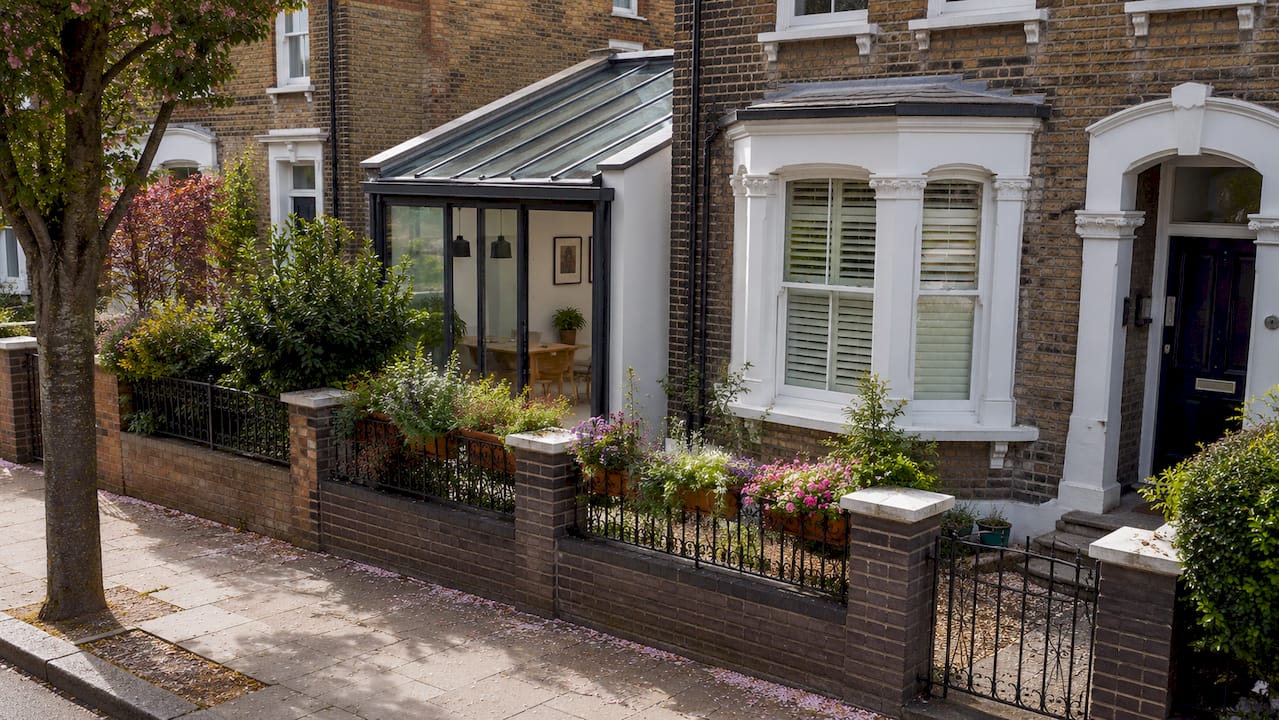
TL;DR:
A side return extension is a single-storey addition built into the narrow space beside a terraced or semi-detached house, transforming unused alleyways into functional living areas. It involves replacing the original side wall with a structural opening and extending into the boundary, often creating larger kitchens or open-plan spaces with improved natural light through glazed roofs and strategic glazing. In West London, permitted development rights limit such extensions to certain criteria, but conservation areas and listed buildings require full planning permissions, with costs varying based on size, materials, and complexity.
A side return extension is a single-storey addition built into the narrow strip of land running alongside a terraced or semi-detached house, transforming an otherwise unused alleyway into valuable living space. Popular with Victorian and Edwardian properties, this type of project is one of the most practical ways West London homeowners in areas like Fulham, Kensington, and Chiswick can significantly expand their ground floor without touching the rear garden. The result is typically a larger kitchen, open-plan dining area, or utility room that genuinely changes how a home feels and functions day to day.
What is a side return extension and how does it work?
A side return extension occupies the gap between the side wall of your house and the boundary with your neighbour’s property or the street. In most Victorian and Edwardian terraces across West London, this strip is typically 1.5 to 3 metres wide and runs the full length of the ground floor. Rather than leaving it as a narrow passage used for bins and bicycles, the extension fills that footprint and connects it to the existing interior.
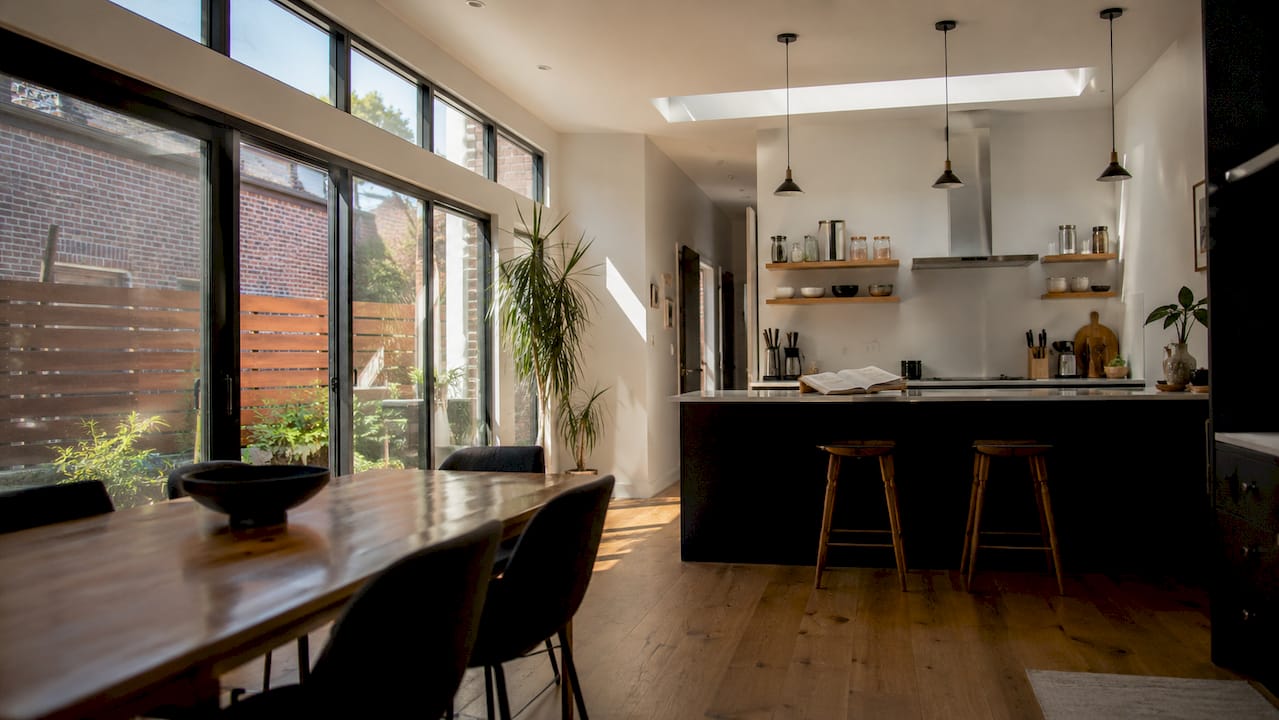
The construction process involves removing the original side wall of the house and replacing it with a new structural opening, then building outward to the boundary. The new space integrates directly with the existing ground floor layout, most commonly the kitchen or rear reception room. This is why the side return extension is so closely associated with kitchen transformations in West London homes.
What makes this type of project particularly appealing is the relatively modest footprint it adds while delivering a disproportionate improvement in usability. A kitchen that felt cramped and disconnected from the garden can become an open-plan cooking and dining space with direct access to outdoor areas. That shift in how a home flows is often more transformative than the square meterage alone suggests.
The primary design challenge: natural light
Architects consistently identify natural light as the central design challenge in a side return extension. Because the new space sits tight against the boundary, windows on the side wall are often not possible or are heavily restricted. Without a deliberate strategy, the extended area can feel dark and disconnected from the rest of the home.
The most effective solutions are glazed roofs, rooflights, and light wells. A full-width glass roof floods the new space with daylight from above, making even a narrow 2-metre-wide extension feel open and bright. Rooflights and glass roofs are now standard in well-designed side returns across West London, and the technology has improved significantly in terms of thermal performance and weather resistance.
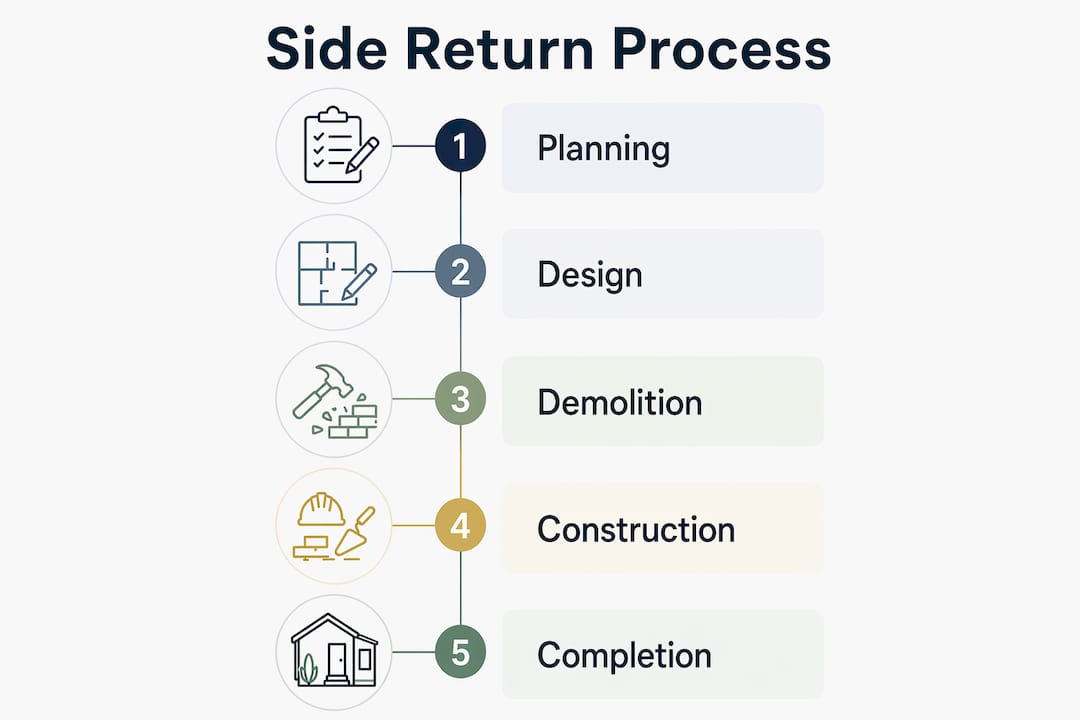
Materials matter too. Structural steel frames allow for wider openings between the old and new parts of the house, removing the visual barrier that would otherwise make the extension feel like a separate room. Polished concrete, pale stone, and light-coloured cabinetry all help bounce available light further into the space.
Pro Tip: If your side return sits close to a neighbour’s boundary, consider a frosted or obscured glazing panel on any side-facing glass rather than eliminating glazing altogether. You preserve privacy while still capturing diffused natural light throughout the day.
What are the planning rules for side returns in West London?
Under 2025/2026 Permitted Development rights, a single-storey side extension can be built without full planning permission provided it meets specific criteria. The extension must be less than half the width of the original house, and the roof height must not exceed 4 metres. Where the extension sits within 2 metres of the boundary, the eaves height is capped at 3 metres. These rules apply to the majority of standard terraced and semi-detached homes across London boroughs.
However, West London presents additional complexity. Many streets in Chelsea, Kensington, Notting Hill, and parts of Hammersmith fall within conservation areas, where permitted development rights are either restricted or removed entirely. In these locations, you will need to submit a full planning application and demonstrate that the design is sympathetic to the character of the street. Listed buildings require listed building consent on top of standard planning permission.
Key criteria to check before proceeding include:
The extension must not project beyond the principal elevation of the house
It must not result in more than half the garden area being covered by extensions
The extension cannot be used as a separate dwelling
It must not obstruct a highway or public right of way
The Party Wall Act 1996 applies if the work affects a shared wall or sits close to a neighbour’s boundary
Building regulations always apply regardless of whether planning permission is required. This covers structural calculations, fire safety, insulation standards, drainage, and electrical compliance. Skipping building regulations sign-off is a serious risk that can affect your ability to sell the property later. For a clear overview of what applies to your specific project, the 2026 extension regulations guide covers the current requirements in detail.
Single-storey side extensions in conservation areas also often require a Design and Access Statement explaining how the proposal respects the local architectural context. Working with an architect who understands West London’s specific borough policies is not optional on these projects. It is the difference between a smooth approval and months of delays.
How much does a side return extension cost in West London?
Costs for a 30 sqm side extension range from £37,500 to £161,000 excluding VAT, a wide band that reflects the significant variation in structural complexity, glazing specification, and finish quality. That range is not a quirk of the market. It reflects the genuine difference between a straightforward brick-and-tile extension with a standard rooflight and a fully glazed, architecturally designed space with underfloor heating and bespoke joinery.
Cost factor | Typical impact on budget |
Glazed roof vs. tiled roof | Glazed roofs add £8,000 to £20,000 depending on size and specification |
Structural steelwork | Wide openings between old and new space require steel beams, adding £3,000 to £8,000 |
Finish quality | High-end kitchens and flooring can account for 30 to 40 per cent of total project cost |
Conservation area requirements | Additional planning fees and design costs typically add £2,000 to £5,000 |
Party Wall agreements | Surveyor fees range from £700 to £2,000 per neighbour |
Compared to a rear extension of similar size, a side return project is often slightly more cost-effective per square metre because the footprint is already defined by the existing boundary. You are not making a decision about how far to extend. The space dictates the scope. That said, the narrow width means structural solutions for spanning the opening between old and new can be more complex than a straightforward rear addition.
Pro Tip: Build a contingency of 15 per cent into your budget from the outset. In West London, groundwork surprises such as old drainage runs or unexpected foundations are common in Victorian properties and can add cost quickly if you have not planned for them.
What design options make the most of a side return?
The most popular use of a side return extension is a kitchen and dining expansion, and for good reason. The linear nature of the space suits an open-plan layout where cooking, eating, and socialising happen in one connected area. Bi-fold or sliding doors at the rear of the extension create a direct connection to the garden, which is a significant quality-of-life improvement in West London homes where outdoor space is limited.
Beyond the kitchen, side return extensions work well for:
A dedicated utility room that frees up kitchen space for living and cooking
A home office positioned at the rear of the extension, separated from the main living areas
A ground-floor bathroom or WC, particularly useful in larger family homes
A playroom or snug that sits adjacent to the main kitchen without being part of it
Material choices have a real impact on how well the extension integrates with the existing house. For Victorian and Edwardian properties, reclaimed London stock brick on the exterior maintains the character of the street while the interior can be entirely contemporary. Zinc or standing-seam metal roofing is a popular choice for the flat or mono-pitch roof sections, offering durability and a clean modern profile.
Side return extension ideas for Kensington properties show how glazing choices in particular can define the entire character of the finished space. A full-width glass roof with slim aluminium framing reads very differently from a series of individual rooflights, and the right choice depends on the orientation of your property and the amount of direct sunlight the side return receives. South-facing returns benefit from solar control glazing to prevent overheating in summer.
Side return extensions add significant value to homes by expanding usable ground floor space, particularly in kitchens and dining areas. In West London’s property market, where buyers consistently prioritise open-plan living, a well-executed side return can return more than its cost in added value.
Key takeaways
A side return extension is the most space-efficient way to transform a Victorian or Edwardian West London home, provided you address natural light, plan for local regulations, and budget realistically from the start.
Point | Details |
Definition and scope | A side return fills the narrow strip beside a terraced house to create usable ground floor space. |
Natural light is critical | Glazed roofs and rooflights are the standard solution for bringing daylight into the narrow footprint. |
Permitted development limits apply | Extensions must be under half the house width and below 4 metres in height to avoid full planning permission. |
Cost range is wide | A 30 sqm side return costs between £37,500 and £161,000 excluding VAT depending on specification. |
Conservation areas add complexity | Many West London streets require full planning applications and design-sensitive proposals. |
Why I think most homeowners underestimate what a side return involves
Working on projects across Fulham, Chelsea, and Hammersmith over many years, I have noticed a consistent pattern. Homeowners come to us having seen a beautiful finished photograph and assume the project is straightforward because the footprint is already there. The space exists. You just fill it in. That assumption leads to surprises.
The reality is that the structural work involved in opening up the side wall and spanning the gap between old and new is often more involved than a rear extension of the same size. Victorian properties in West London were not built with future extensions in mind. Foundations are shallow, drainage runs in unexpected directions, and the existing structure sometimes needs reinforcement before you can even begin the new work.
The other thing I would encourage you to think carefully about is natural light before you finalise any design. I have seen projects where the glazing budget was cut to save money, and the result was a beautiful space that felt gloomy by mid-afternoon. The glazed roof is not a luxury on a side return. It is the feature that makes the whole project work. Spend the money there first, then adjust finishes elsewhere if you need to bring costs down.
Finally, if your property sits in a conservation area, start the planning conversation early. Borough policies in West London vary considerably, and what works in one street in Kensington may not be approved two roads away. An architect with local knowledge is worth every penny of their fee.
— Mateja
How Tenenltd can help with your side return extension
If you are considering a side return extension in West London, Tenenltd has been delivering high-quality home extensions across Fulham, Chelsea, Kensington, Chiswick, and Hammersmith since 2006. We understand the specific structural, regulatory, and design challenges that come with Victorian and Edwardian properties in this part of London.
From initial design consultation through to building regulations sign-off and final fit-out, Tenenltd manages every stage of your project with the attention to detail that West London homes deserve. Whether you are planning a kitchen transformation or a full open-plan redesign, our team brings the expertise to make it happen on time and to the standard you expect. Explore our London home extensions service page to see how we can support your project from day one.
FAQ
What is the typical width of a side return extension?
Most side returns in Victorian and Edwardian terraces are between 1.5 and 3 metres wide, determined by the gap between the house wall and the boundary. The width is fixed by the existing plot, so the design challenge is making the most of a narrow footprint rather than choosing how wide to build.
Do I need planning permission for a side return extension?
Under 2025/2026 Permitted Development rights, you do not need full planning permission if the extension is under half the original house width and below 4 metres in height. Properties in conservation areas or those with listed building status require a full planning application regardless of size.
How long does a side return extension take to build?
A typical side return extension takes between 10 and 16 weeks to complete from groundworks to final fit-out, depending on complexity and the extent of internal remodelling. Projects in conservation areas may add several months to the overall timeline due to the planning application process.
What are the main benefits of a side return extension?
The primary benefits are increased ground floor living space, an improved kitchen and dining layout, and better indoor-to-outdoor flow. Side return extensions add value to properties by expanding usable space in the areas buyers prioritise most, making them a sound investment in West London’s competitive property market.
Does the Party Wall Act apply to a side return extension?
The Party Wall Act 1996 applies if the work involves excavation within 3 metres of a neighbouring foundation or affects a shared boundary wall. You are required to serve notice on affected neighbours before work begins, and they have the right to appoint a surveyor to oversee the process.
Recommended
Comments