
How to improve home energy efficiency in 2026

TL;DR:
Simple home energy improvements can cut utility bills by up to 70 percent through sealing leaks, adding insulation, and changing habits. These basic measures provide quick savings and set the foundation for more advanced upgrades, making energy efficiency more effective. Proper system maintenance and appliance choices further reduce energy waste and ensure long-term comfort.
Improving home energy efficiency means reducing energy waste through targeted upgrades and simple behavioural changes, resulting in lower utility bills and a more comfortable home. The good news is that systematic improvements can cut your utility bills by 20% to 70%. That range reflects how much untapped potential most homes carry. Whether you live in a Victorian terrace in Fulham or a modern flat in Kensington, the same principles apply: seal the gaps, upgrade the fabric, and manage your habits. This guide covers how to improve home energy use across every major area, from quick wins to longer-term upgrades worth planning for.
Which simple changes can immediately reduce energy waste?
The fastest ways to save energy at home cost very little and take an afternoon to complete. Start with the basics before spending money on technology.
Natural ventilation and fans
Natural ventilation can reduce cooling energy needs by up to 45%. Open windows on opposite sides of a room to create a cross-breeze, which moves air without any electricity. Ceiling fans use 76% less energy than air conditioning. Run them anticlockwise in summer to push cool air down, and clockwise in winter to circulate warm air that pools near the ceiling.

Lighting and drafts
Replacing incandescent bulbs with LED lighting reduces lighting energy consumption by approximately 75%. LEDs also last far longer, so the saving compounds over time. For drafts, weather-stripping around doors and windows is one of the most cost-effective fixes available. Air sealing around doors and windows can save 10% to 20% on heating and cooling costs alone.
Phantom power
Standby or phantom power accounts for 5% to 10% of household electricity usage. Televisions, phone chargers, and kitchen appliances draw power even when switched off at the device. Smart power bars with master-slave sockets cut this waste by disconnecting peripheral devices automatically.
Open windows on opposite sides of a room for cross-ventilation before reaching for the air conditioning.
Swap all remaining incandescent bulbs for LEDs, prioritising rooms used most.
Fit weather-stripping to external doors and any draughty window frames.
Plug entertainment systems and home office equipment into smart power bars.
Unplug phone chargers, toasters, and coffee machines when not in use.
Pro Tip: Walk around your home on a cold, windy day with a lit incense stick near window frames, skirting boards, and loft hatches. Smoke movement reveals hidden air leaks that weather-stripping or sealant can fix for under £20.
How does sealing air leaks and improving insulation impact efficiency?
Air leakage is the single biggest cause of wasted heating and cooling energy in most UK homes. Every gap around a pipe, socket, or loft hatch lets conditioned air escape and outdoor air in. The result is a boiler or air conditioning unit working harder than it needs to.
The cost-benefit hierarchy of insulation upgrades
Not all insulation projects deliver equal returns. Loft insulation sits at the top of the list because heat rises and an uninsulated loft can account for a significant proportion of total heat loss. Attic insulation typically has a payback period of 2–5 years and is highly cost-effective. Wall insulation, whether cavity or external solid wall, takes longer to pay back but delivers lasting comfort improvements. Duct insulation matters most in homes where heating pipes run through unheated spaces like garages or crawl spaces.
Improvement | Typical payback period | DIY possible? |
Weather-stripping and draft proofing | Under 1 year | Yes |
Loft insulation | 2–5 years | Partial |
Cavity wall insulation | 3–7 years | No |
Solid wall insulation | 10–20 years | No |
Duct insulation | 2–4 years | Partial |
Ventilation: the critical balance
Adding insulation without addressing ventilation creates a new problem. Proper ventilation is essential when adding insulation to prevent moisture and condensation issues. Trapped moisture leads to mould, timber rot, and poor air quality. A home energy audit identifies both the leaks and the ventilation gaps, giving you a clear picture before you spend money. For London homeowners planning a loft project, the loft insulation workflow guide covers this balance in practical detail.
Pro Tip: External shading blocks summer heat more effectively than interior curtains. Fitting external blinds or shutters to south-facing windows keeps rooms cooler without air conditioning, and costs far less than a new cooling system.
What role does heating system maintenance play in saving energy?
A well-maintained heating system uses less fuel to deliver the same warmth. Neglected systems work harder, wear out faster, and cost more to run. The fix is straightforward: treat your boiler and HVAC equipment as you would a car.
Book a professional HVAC tune-up annually. Professional tune-ups maintain peak efficiency, lower bills, and extend equipment lifespan. Engineers clean coils, lubricate moving parts, and check fluid levels. A boiler running at full efficiency burns less gas for the same heat output.
Install a smart or programmable thermostat. ENERGY STAR® certified smart thermostats provide better temperature control and typically pay back within a year. Set the heating to drop by a few degrees overnight and during working hours. That single adjustment can make a noticeable difference to your annual gas bill.
Insulate your hot water tank and pipes. Water heating is typically the second-largest household energy expense. Fitting a jacket to an older hot water cylinder reduces heat loss significantly. Insulating the first metre of hot water pipe from the tank cuts standby losses further.
Consider upgrading to a heat pump or high-efficiency boiler. Modern condensing boilers and air source heat pumps deliver far more heat per unit of energy than older systems. The upfront cost is higher, but the running cost reduction is substantial over a decade. For homes undergoing a full refurbishment, this is the right moment to make the switch.
Adjust your thermostat behaviour. Turning the thermostat down by just one degree Celsius reduces heating energy use meaningfully. Wear an extra layer in the evening rather than raising the temperature. Small behavioural shifts compound into real savings across a heating season.
For a deeper look at how HVAC decisions fit into a broader renovation, the guide on HVAC in home renovation covers what homeowners need to know before committing to a system change.
How can lighting and appliance choices lower home energy use?
Appliances and lighting together account for a large share of household electricity consumption. Choosing well at the point of purchase pays dividends for years.
Choose A-rated or ENERGY STAR® certified appliances. When replacing a fridge, washing machine, or dishwasher, the energy rating label tells you the annual running cost. An A-rated appliance uses considerably less electricity than a D or E-rated equivalent over its lifetime.
Switch entirely to LED lighting. LEDs use a fraction of the energy of halogen or incandescent bulbs and last many times longer. Prioritise high-use areas like kitchens and living rooms first for the fastest return.
Use task lighting instead of overhead lights. A desk lamp or under-cabinet kitchen light directed at a work surface uses far less energy than illuminating an entire room. Thoughtful kitchen lighting design can reduce lighting energy use while improving the quality of light where you actually need it.
Manage standby power actively. As noted earlier, phantom loads are a silent drain. Unplug devices you use infrequently. Use smart plugs with scheduling features to cut power to entertainment systems overnight.
Run appliances at full loads and off-peak times. A dishwasher or washing machine run at full capacity uses the same energy as a half-load. Running them overnight, when electricity tariffs are lower on time-of-use plans, reduces cost further.
How to prioritise and plan home energy improvements effectively?
The most common mistake homeowners make is investing in expensive technology before fixing the basics. Many homeowners install advanced HVAC systems or solar panels before sealing leaks or insulating, which reduces the benefit of those upgrades significantly. A leaky, poorly insulated home wastes the output of even the best heating system.
The right sequence starts with a home energy audit. An auditor uses thermal imaging and blower door tests to identify exactly where energy is escaping. That data tells you which fixes will deliver the greatest return. Energy efficiency upgrades also increase property value, particularly for older homes that benefit from improved thermal performance. That makes the investment worthwhile beyond the monthly bill savings.
Priority | Action | Expected benefit |
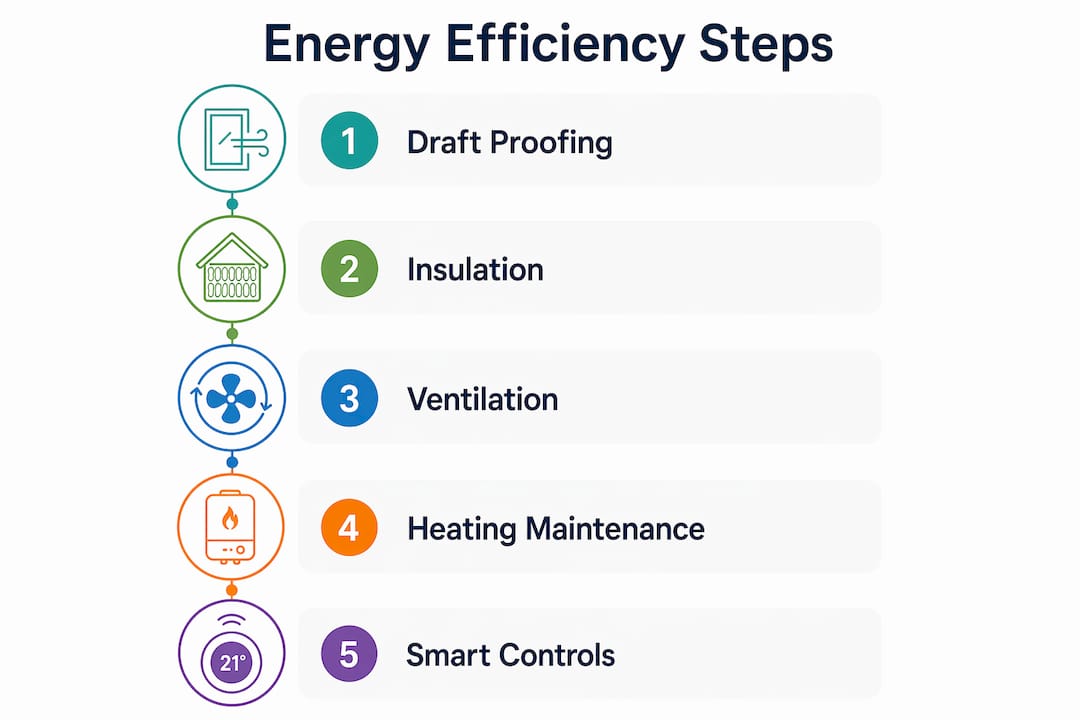
1 | Draft proofing and air sealing | Immediate bill reduction, low cost |
2 | Loft and roof insulation | Strong payback, major heat loss reduction |
3 | Smart thermostat installation | Quick payback, comfort improvement |
4 | Appliance and lighting upgrades | Steady long-term savings |
5 | Boiler replacement or heat pump | Highest upfront cost, greatest long-term gain |
Track your energy use month by month after each improvement. Your energy supplier’s online account or a smart meter display shows consumption in near real time. Seeing the numbers drop after each change is motivating and confirms which actions delivered the most impact. For homeowners planning a larger project, the full property renovation guide explains how to sequence works for maximum value.
Key takeaways
Improving home energy efficiency delivers the greatest returns when you start with air sealing and insulation before investing in heating systems or renewable technology.
Point | Details |
Start with air sealing | Sealing drafts and leaks costs little and can save 10% to 20% on heating and cooling bills. |
Insulate in the right order | Loft insulation has a 2–5 year payback and should come before wall or duct work. |
Maintain your heating system | Annual professional tune-ups keep boilers and HVAC units running at full efficiency. |
Eliminate phantom loads | Smart power bars and unplugging unused devices removes 5% to 10% of electricity waste. |
Plan before you spend | A home energy audit identifies the highest-impact fixes before you commit to any upgrade. |
What I’ve learned from watching homeowners get this wrong
The pattern I see most often is homeowners spending thousands on a new boiler or solar panels while their loft hatch has no insulation and their sash windows rattle in the wind. The new technology works hard to compensate for the losses, and the savings never materialise as expected. It is a frustrating and avoidable outcome.
The homes that transform most dramatically are the ones where the owner treats energy efficiency as a fabric problem first and a technology problem second. Fix the shell of the building. Then upgrade the systems inside it. That sequence is not glamorous, but it is the one that actually works.
I also think the comfort argument is underrated. Homeowners focus on bills, which is fair. But a properly sealed and insulated home feels different. Rooms hold their temperature. Cold spots disappear. The house is quieter. Those quality-of-life gains are real and they show up in property valuations too. For anyone considering a sustainable refurbishment, the energy efficiency work is not a cost. It is the foundation of everything else.
One final point: do not wait for a full renovation to start. Weather-stripping, LED bulbs, and a smart thermostat can be done this weekend. The savings begin immediately, and the momentum they create makes the bigger decisions easier to justify.
— Mateja
How Tenenltd can help you build a more energy-efficient home
Energy efficiency improvements deliver the most value when they are built into a project from the start, not added as an afterthought. Tenenltd has been working with London homeowners since 2006, delivering loft conversions, full refurbishments, and home extensions across Fulham, Chelsea, Kensington, and Chiswick.
When you work with Tenenltd, energy-conscious design is part of the brief. Loft conversions include proper insulation specification. Refurbishments address the thermal envelope alongside the aesthetics. Extensions are built to current standards that outperform older parts of the property. If you are planning a project and want to make sure energy performance is part of the outcome, explore Tenenltd’s loft conversion services or the full range of home improvement services to find the right starting point.
FAQ
What is the quickest way to reduce home energy bills?
Sealing air leaks with weather-stripping and draft proofing is the fastest and cheapest improvement, often costing £50–£200 with an immediate payback on heating and cooling costs.
Does loft insulation really make a significant difference?
Yes. Loft insulation typically pays for itself within 2–5 years and addresses one of the largest sources of heat loss in a UK home.
How does a smart thermostat save energy?
A smart thermostat reduces heating and cooling when the home is unoccupied, and ENERGY STAR® certified models typically pay back within a year through lower energy bills.
What is phantom power and why does it matter?
Phantom power is the electricity drawn by devices left on standby. It accounts for 5% to 10% of household electricity use and can be cut significantly with smart power bars or by unplugging devices.
Should I get a home energy audit before making improvements?
A home energy audit identifies exactly where energy is being lost, so you can prioritise the highest-impact fixes first and avoid spending money on upgrades that will not deliver the expected savings.
Recommended
Comments