
Expect 22% Higher Costs: Hammersmith House Refurbishment Budget

A whole-house refurbishment in Hammersmith typically costs several thousand pounds per square metre depending on the scope and finish level, with a full three-bedroom terrace refurbishment landing in the range of tens to low hundreds of thousands of pounds. Hammersmith’s conservation areas and period housing stock tend to push costs above the London average, so most homeowners should plan for a contingency on top of any quote. The sections below break this down by room, by fee, and by timeline, so you can build a realistic budget before you speak to a contractor, in general terms.
TL;DR:
Costs in Hammersmith are generally 22% higher than nationwide averages, making regional adjustments essential for accurate budgeting.
Typical full-house refurbishments range from about £800 to £2,800 per square metre, depending on scope and finish quality.
Conservation area restrictions often increase costs and timeline lengthening due to planning permissions and unexpected property issues.
Professional fees, permits, and contingencies add roughly 20% or more to the initial construction estimate, with expert surveys advised upfront.
A detailed, fixed-price site survey and clear scope are crucial to obtain accurate quotes and avoid costly surprises during project execution.
Table of Contents
Detailed cost breakdown by project type and per square metre
Typical project timeline and staging for a Hammersmith refurbishment
Tenen Ltd: local experience across West London refurbishments
What every Hammersmith homeowner should check before starting
Get a fixed, itemised quote for your Hammersmith refurbishment
Detailed cost breakdown by project type and per square metre
Before you can judge whether a quote is fair, you need a benchmark. RenoCost’s 2026 UK renovation cost index sets a mid-range model for a full-house refurbishment at around £47,700 on a UK-average basis, with internal refurbishment and structural work priced separately on a per-square-metre scale. These are planning ranges rather than contractor quotes, and RenoCost itself stresses that regional multipliers can shift the figure considerably once you apply them to a London postcode.
For Hammersmith specifically, that regional adjustment matters. We tend to see three broad bands depending on what the work actually involves:
Internal refurbishment (redecorating, new flooring, updated electrics and plumbing without moving walls): roughly £800 to £1,400 per square metre.
Structural refurbishment (removing walls, replacing joists, reconfiguring layouts): roughly £1,400 to £2,000 per square metre.
High-end refurbishment (bespoke joinery, underfloor heating, premium fixtures): £2,000 to £2,800 per square metre and upwards.
Picture a typical three-bedroom Victorian terrace in Hammersmith, around 90 square metres over two floors. A straightforward internal refurbishment at the lower end might come in near £75,000, a mid-range project with some structural work around £120,000, and a full high-spec refurbishment including a kitchen extension could reach £180,000 or more. These are planning figures, not fixed prices, and the final number depends heavily on what your survey uncovers once the plaster comes off.
Single rooms follow their own logic and then roll up into the whole-house total. HowMuchShouldItCost’s local data puts a full bathroom renovation in Hammersmith & Fulham at between £5,475 and £14,605, averaging around £8,520. A mid-range kitchen refurbishment typically sits higher again once you factor in cabinetry, worktops and appliances. When you’re assembling a whole-house budget, it helps to cost the kitchen and bathroom separately first, since these two rooms often account for a disproportionate share of the total spend, and then add the remaining square metreage at your chosen internal or structural rate.

Hammersmith and Fulham specific cost drivers worth knowing
National benchmarks only get you so far in Hammersmith. Several local factors consistently push real costs above the figures you’ll find in a generic calculator.
Conservation area status is the biggest one. Large parts of Hammersmith sit within designated conservation areas, and many of these carry Article 4 directions that remove permitted development rights you’d otherwise have. That means replacing windows, rendering a front elevation or altering a roofline often needs full planning permission where it wouldn’t elsewhere, which adds both time and cost to a project.
Victorian and Edwardian terraces, which make up much of the borough’s housing stock, also tend to hide problems that only surface once work begins. Original lime plaster, ageing joists, outdated wiring and damp are common discoveries, and each one can convert a modest internal refurbishment into a more structural job.
Access adds its own premium:
Narrow streets and limited parking often mean scaffolding and skip permits cost more to arrange.
Spoil removal from terraced properties with no rear access can require manual handling rather than machinery.
Many Hammersmith streets have restricted working hours, which can extend programmes.
Pro Tip: Ask any contractor quoting your project whether their figure already reflects a Hammersmith access premium, since a price built on a suburban or rural job elsewhere often underestimates logistics here.
HowMuchShouldItCost’s modelling shows that Hammersmith & Fulham costs run roughly 22% above the national average, which is a useful quick multiplier to apply to any UK-wide figure you come across.

Statutory approvals and local fees that add to your budget
Planning and building control fees are easy to overlook when you’re focused on construction costs, but they add up and arrive at specific points in the project. The London Borough of Hammersmith & Fulham’s pre-application advice service starts at £452 for written advice, rising to £1,370 for a meeting on a complex project such as one involving a basement or a listed building.
Building control fees follow a separate banded schedule. A small extension under 40 square metres typically falls in the £375 to £450 range including VAT, while work valued between £30,000 and £50,000 can carry a fee up to roughly £1,620, with larger projects over £50,000 requiring a direct quote from the council.
Fee type | Typical range | Notes |
Pre-application written advice | From £452 | LBHF, simple projects |
Pre-application meeting (complex) | Up to £1,370 | Basements, listed buildings |
Building control, under 40m² | £375–£450 | Includes VAT |
Building control, £30k–£50k value band | Up to £1,620 | Larger projects quoted individually |
Party wall surveyor fees sit outside this schedule and typically arise whenever work touches a shared wall or boundary with a neighbouring terrace, which is common in Hammersmith’s tightly packed streets. Whether you need full planning permission or can proceed under permitted development and building regulations alone depends on the scope and the conservation status of your street, so it’s worth checking before you commit to a design.
Building a reliable budget: contingency, fees and VAT
Once you have a construction estimate, the next step is turning it into a number you can actually plan around. BCIS’s 2026 construction industry forecasting points to ongoing cost volatility in materials and labour, and industry practice responds to that by building in a contingency of 15 to 20% on top of the base construction figure.
A 15 to 20% contingency on a £120,000 refurbishment means setting aside an additional £18,000 to £24,000, according to BCIS’s guidance on cost volatility. That buffer exists precisely for the structural surprises and price fluctuations that period properties tend to produce.
Beyond contingency, factor in professional fees:
Architect and design fees, typically a percentage of construction cost.
Structural engineer input, particularly where walls are coming out.
Party wall surveyor fees where a shared boundary is affected.
Planning and building control fees as set out above.
Local council guidance notes that these professional costs are commonly forgotten in early budgets and can add a further 15 to 20% on top of construction. Insist on an itemised, fixed-price quote rather than a rough estimate: an underpriced offer that omits provisional sums or exclusions tends to resurface as a variation order later, which is far harder to budget for than a contingency line agreed up front.
Typical project timeline and staging for a Hammersmith refurbishment
Timelines vary with scope, but a few bands hold reasonably well across Hammersmith projects:
Internal-only refurbishment (redecoration, new kitchen or bathroom, updated services) typically runs 6 to 10 weeks.
Loft conversion usually takes 8 to 12 weeks once planning and building control approvals are in place.
Single-storey rear extension commonly runs 10 to 16 weeks, depending on groundworks and weather.
Full-house refurbishment combining several of the above often spans 4 to 8 months.
Deciding between a phased or continuous approach affects both your living arrangements and your budget. Phasing lets you stay in the property longer but can extend the overall programme and add remobilisation costs each time work resumes. Continuous working is faster but usually means moving out, at least temporarily, for the more disruptive stages.
Conservation area status can add weeks to the front end of any project, since planning applications in these areas often take longer to determine. Long-lead items such as bespoke joinery or specific window profiles should be ordered as soon as the design is fixed, well before the main works begin.
How to get an accurate quote from a contractor
A good specification is the foundation of an accurate quote. It should list every element of the work, from demolition through to final snagging, with materials and finishes named rather than left open to interpretation. A vague specification is the single biggest reason quotes come back wildly different from each other.
Once you have that specification, get three written quotes and compare them line by line, not just by their bottom figure.
Check what each quote includes as a provisional sum, since these are estimates within the estimate and can shift significantly.
Note any exclusions, such as asbestos removal or structural steel, which can arrive as costly additions later.
Ask about the contract form being used and how payments are staged against completed work.
Confirm the contractor carries appropriate insurance before any work starts.
Pro Tip: Walk the site with each contractor in person rather than relying on photos or a video call: access constraints and hidden defects are far easier to spot and price accurately in person.
Treat a quote that arrives without a site visit, or one that refuses to itemise its pricing, as a red flag rather than a bargain.
Tenen Ltd: local experience across West London refurbishments
We’ve worked across Fulham, Chelsea, Kensington, Chiswick, Hammersmith and Notting Hill since 2006, which means we’ve seen first-hand how conservation area rules and period housing stock play out on real projects, not just in theory. Our services cover full property refurbishments, loft conversions, extensions, and kitchen and bathroom renovations, delivered with in-house teams rather than long subcontractor chains.
A project management approach means one point of accountability for your project from the first site visit through to completion, rather than a shifting cast of managers. For homeowners juggling a refurbishment alongside work and family life, that continuity tends to matter as much as the finish on the final snag list.
What every Hammersmith homeowner should check before starting
If you take one thing from this guide, let it be this: set your budget with a contingency built in from day one, not added as an afterthought when the first invoice for unexpected works lands. Before you sign anything, check your conservation area status, get three written quotes from a proper site survey, and resist the temptation to skip the structural survey on an older property to save a few hundred pounds now.
Period features are worth preserving where they add character and value, but don’t let sentiment about an original fireplace stand in the way of warmer, more efficient rooms. If you’re ready to move from planning to pricing, a site visit from a local contractor is the next sensible step.
— Mateja
Get a fixed, itemised quote for your Hammersmith refurbishment
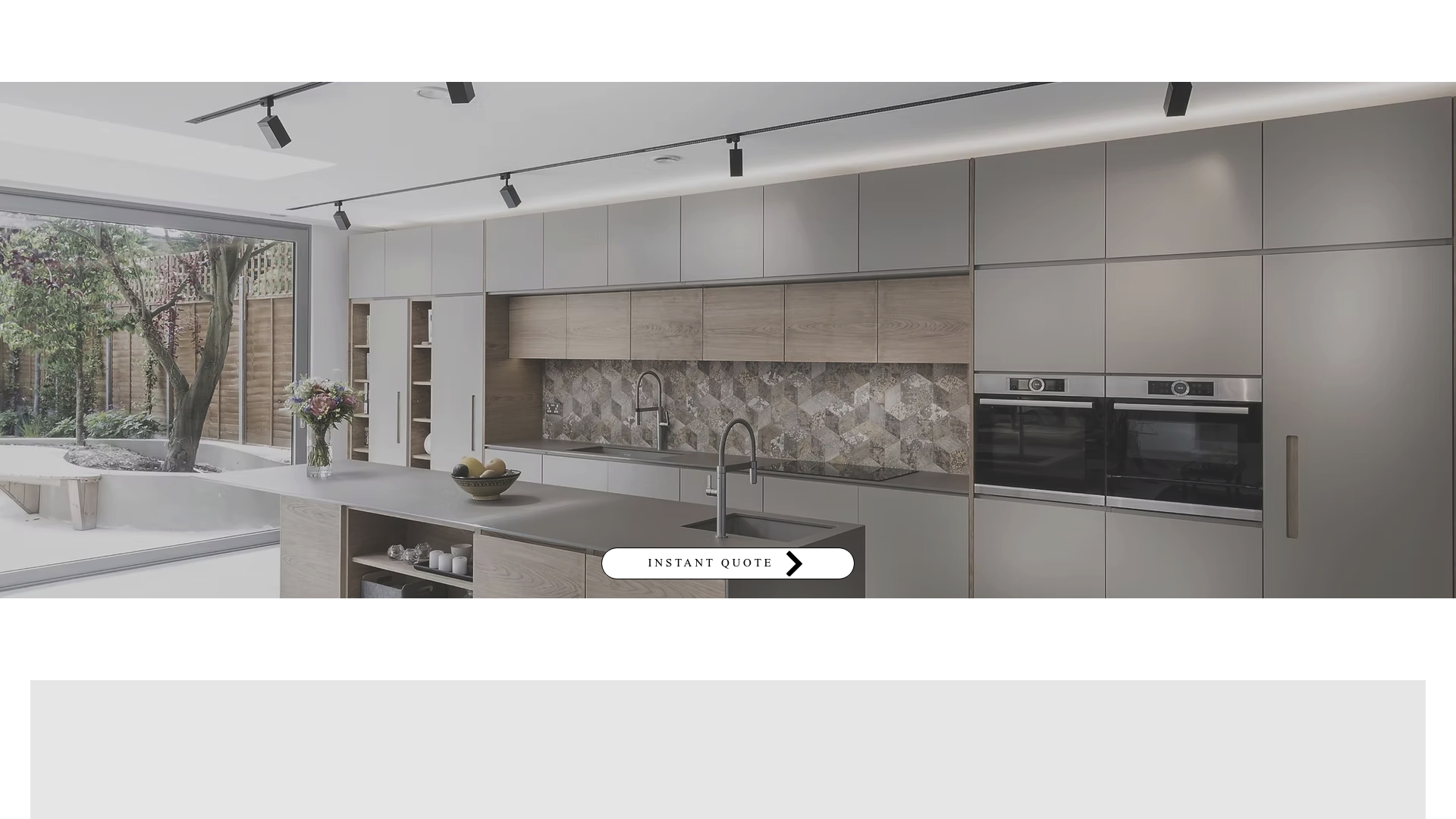
Once you’ve worked through the figures above, the next useful step is a proper site survey rather than another online calculator. We offer Full Property Refurbishment services across Hammersmith and the wider West London area, built around an itemised, fixed-price quote rather than a loose estimate that grows once work starts.
What that process typically includes:
A site visit to assess access, existing condition and scope before anything is priced.
A written, itemised quote that sets out materials, labour and any provisional sums clearly.
Director oversight throughout, so you have one accountable point of contact rather than several.
If you’re ready to put a real number against your project, get in touch to arrange a site survey and a fixed quotation for your Hammersmith home.
FAQ
How much does it cost to fully refurbish a house in the UK?
A full house refurbishment in the UK typically costs between £800 and £2,800 per square metre depending on scope and finish, with RenoCost’s 2026 benchmark placing a mid-range UK-average scenario around £47,700. Costs in Hammersmith tend to sit above this national figure once the local multiplier is applied.
Is £40,000 enough to renovate a house in the UK?
A modest internal refurbishment of a smaller property or a single significant room such as a kitchen is typically suited to cosmetic updates rather than to layout changes or extensions, as full structural refurbishments generally require significantly higher budgets in Hammersmith.
Is £30,000 enough to renovate a house?
£30,000 typically covers one major room, such as a full bathroom renovation, which HowMuchShouldItCost’s Hammersmith & Fulham data prices between £5,475 and £14,605, with budget left for some additional decorating work. It’s unlikely to cover a whole-house refurbishment at Hammersmith rates.
Is £50,000 enough to renovate a house?
£50,000 generally covers a solid internal-only refurbishment of a smaller property, or a kitchen and bathroom renovation combined with some general redecoration. For a structural refurbishment or a whole-house project in Hammersmith, this budget would need to be treated as a starting point rather than a complete allowance, given local per-square-metre rates.
Sources
Recommended
Comments