
Types of kitchen countertops: your complete UK guide
- luka bursac
- 1 day ago
- 10 min read

Choosing the right worktop material is one of the most consequential decisions in any kitchen renovation. The nine main types of kitchen countertops used in UK homes are quartz, granite, marble, concrete, soapstone, wood (butcher block), laminate, solid surface, and stainless steel. Each brings a distinct combination of durability, maintenance commitment, and visual character. There is no single best material; the right choice depends entirely on how you cook, how much upkeep you are willing to do, and what you want your kitchen to feel like.
Here is a quick snapshot of where each material tends to shine:
Quartz — low maintenance, non-porous, consistent colour; ideal for busy family kitchens
Granite — natural stone, exceptional heat resistance, needs annual sealing; suits heavy cooks
Marble — luxury aesthetic, acid-sensitive, high maintenance; best for bakers and design-led spaces
Concrete — industrial character, fully customisable shape and colour; suits modern or farmhouse kitchens
Soapstone — develops a natural patina, naturally non-porous, superb heat resistance; suits heritage or rustic kitchens
Wood (butcher block) — warm, tactile, repairable; perfect for islands and prep zones
Laminate — the most affordable option, dramatically improved in quality and appearance; suits rentals and budget refurbishments
Solid surface — seamless joints, integral sinks possible, scratch-repairable; suits contemporary fitted kitchens
Stainless steel — professional kitchen aesthetic, hygienic, extremely durable; suits industrial-style or chef-inspired spaces
Table of Contents
What are the main types of kitchen countertops and how do they differ?
Understanding each material in depth helps you move past surface-level appeal and focus on what actually matters day to day.
Quartz
Quartz is an engineered stone made from natural quartz mineral combined with a resin binder. Because it is non-porous, it resists bacteria and stains without ever needing to be sealed. It comes in a wide range of colours and patterns, including convincing replicas of marble and granite. The trade-off is heat sensitivity: the resin binder can yellow or crack under sustained direct heat, so trivets are non-negotiable.
Granite
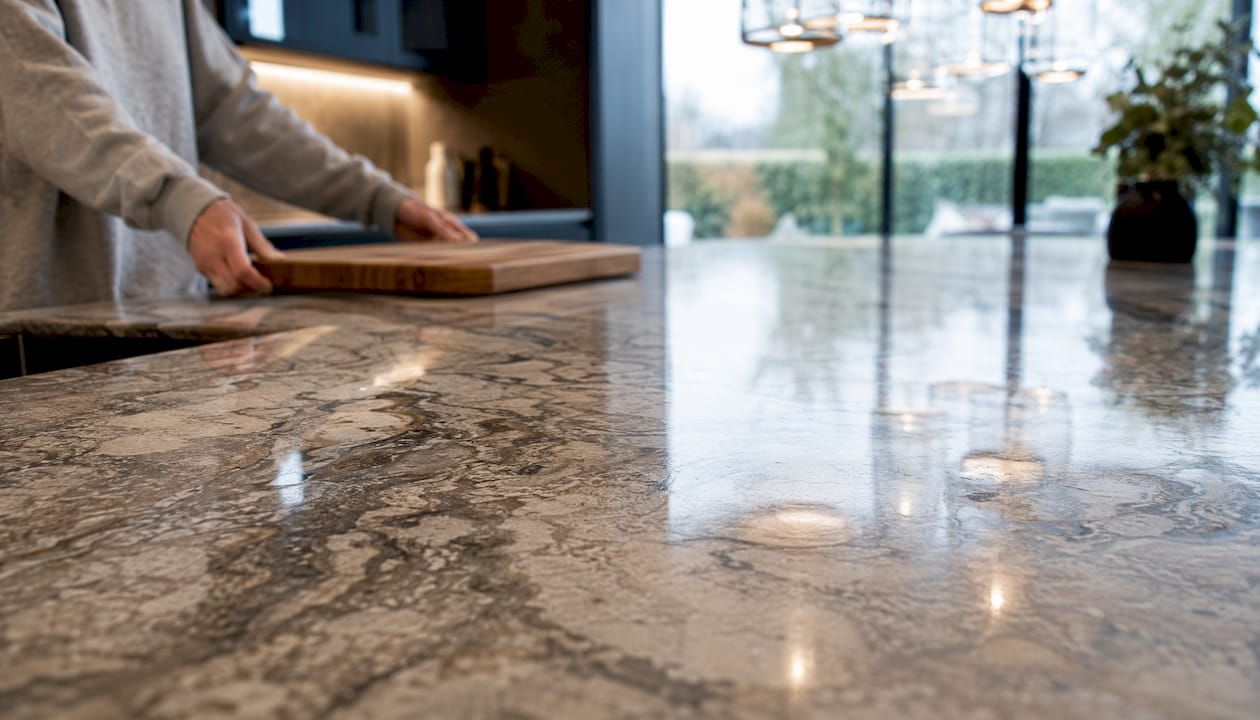
Granite is a natural stone, and every slab is genuinely unique. It tolerates heat exceptionally well, meaning a hot pan placed directly on the surface will not cause damage. The catch is porosity: granite requires periodic sealing to prevent staining and bacteria growth. Polished and matte finishes both perform well once properly sealed, and the material adds strong resale appeal to a property.
Marble
Marble is the material designers reach for when aesthetics are the priority. Its veining and luminosity are unmatched by any engineered alternative. The practical reality is harder to love: marble is acid-reactive, meaning wine, lemon juice, and even coffee can etch the surface before you have time to wipe them away. Frequent sealing slows the damage but does not eliminate it. For a kitchen that sees heavy daily cooking, marble demands a genuine commitment.
Concrete
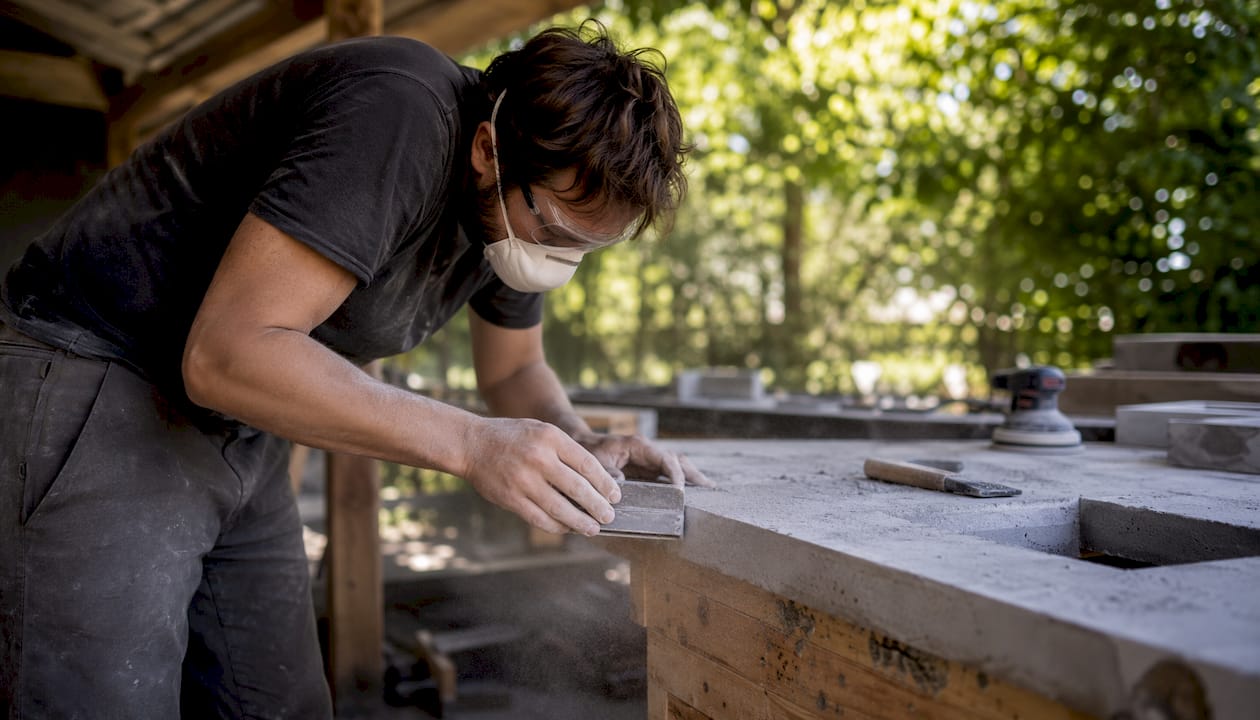
Concrete worktops are cast to order, which means you can specify any shape, thickness, colour, or integrated feature you like. The material suits industrial and modern farmhouse kitchens particularly well. It needs sealing to resist staining, and hairline cracks can develop over time if the substrate shifts. The payoff is a surface that looks genuinely one-of-a-kind.
Soapstone
Soapstone has a high talc content, which gives it a smooth, almost soap-like feel and makes it naturally non-porous without any sealing. It handles heat brilliantly. The material does scratch and nick easily, though small marks can be sanded out and treated with mineral oil. Over time it develops a rich, dark patina that many homeowners find more appealing than the original surface.
Wood (butcher block)
Butcher block brings warmth and texture that no stone or engineered material can replicate. Common species include maple, oak, walnut, and cherry. The finish you choose matters enormously: varnish improves stain resistance, while penetrating oils leave the wood more vulnerable to marks but easier to repair by sanding. Monthly oiling is the ongoing commitment, and the surface should never be used as a direct cutting surface without a board.
Pro Tip: Use butcher block on a kitchen island and a more durable stone or quartz on the perimeter worktops. You get the warmth and character of wood where it is most visible, with the practicality of a harder surface where you actually cook.
Laminate
Laminate has shed its dated reputation. Modern printing technology means today’s laminate can convincingly replicate wood grain, stone, and concrete at a fraction of the cost. Stains and heat do not damage quality laminate in normal use, but cutting directly on the surface causes permanent marks. It is the go-to choice for rental properties, budget renovations, and anyone who plans to update the kitchen again within a decade.
Solid surface
Solid surface materials are acrylic or polyester-based composites. Their defining advantage is the near-invisible joint, which makes them ideal for large runs of worktop or integrated sink installations. Small scratches can be buffed out with fine abrasive paper. The material is not particularly heat-resistant, so trivets are essential, and it scratches more readily than stone under daily use.
Stainless steel
Stainless steel is the material of professional kitchens, and it brings that same hygienic, no-nonsense character into a residential space. It is impervious to heat and bacteria, and it will not stain. The surface does show fingerprints and fine scratches over time, developing a brushed patina with use. It suits industrial-style kitchens and works particularly well as a complement to darker cabinetry.
How do different countertop materials hold up to daily kitchen use?
Performance in a real kitchen comes down to five factors: durability, stain resistance, heat tolerance, scratch resistance, and how much maintenance the material demands. Designers consistently point out that care effort is the column most homeowners underweight at purchase and most regret by year three.
Material | Durability | Stain resistance | Heat resistance | Maintenance ease | Scratch resistance | Design appeal |
Quartz | high | 10/10 | moderate | Low (no sealing) | High | Very high |
Granite | 10/10 | 8/10 (sealed) | 10/10 | Medium (annual seal) | Very high | High |
Marble | moderate | low | 8/10 | High (frequent seal) | Low | Exceptional |
Concrete | good | moderate (sealed) | high | Medium (annual seal) | Medium | High |
Soapstone | good | 8/10 | 10/10 | Low (optional oil) | Low | High |
Wood | fair | low | poor | High (monthly oil) | Low | High |
Laminate | fair | good | poor | None | Medium | Good |
Solid surface | good | high | fair | Low (buff scratches) | Low | Good |
Stainless steel | high | high | 10/10 | Low | Medium | Distinctive |
A few points from this comparison deserve emphasis:
Heat resistance separates materials sharply. Granite, soapstone, and stainless steel can take a hot cast-iron pan without damage. Quartz, laminate, and wood cannot; always use a trivet on anything rated below 8/10.
Stain resistance depends heavily on porosity. Quartz is non-porous and essentially immune to common kitchen stains. Marble etches from acid before a stain even has time to form.
Maintenance reality for natural stone and wood is frequently underestimated. Granite requires annual sealing, butcher block monthly oiling, and marble daily blotting of acid spills to preserve its appearance.
What do different countertop materials cost in the UK?
Cost varies widely across materials, and the upfront price is only part of the picture. Long-term maintenance, professional repairs, and resale impact all factor into the true value of your investment.
Material | Approx. cost per sq ft (USD) | Maintenance cost | Resale impact | Best for |
Quartz | Very low | High | Busy families, low-maintenance kitchens | |
Granite | $40–$100 | Low (annual seal) | High | Natural stone fans, heavy cooks |
Marble | High cost | High | High (if maintained) | Design-led, bakers |
Concrete | premium price range | Medium | Medium | Custom, industrial kitchens |
Soapstone | mid-high price range | Very low | Medium-high | Heritage, patina lovers |
Wood | varied price range | Medium (monthly oil) | Medium | Islands, prep areas |
Laminate | lowest price range | None | Low | Budget, rentals |
Solid surface | affordable price range | Very low | Medium | Seamless installs |
Stainless steel | Variable | Very low | Medium | Industrial, chef kitchens |
Note: these figures are sourced in USD from North American market data and are provided for comparative purposes. UK prices will vary based on supplier, slab size, and installation complexity.
A few practical points on value:
Laminate has the lowest upfront cost and zero ongoing maintenance, making it genuinely competitive for kitchens that will be updated within ten years.
Quartz costs more than laminate but requires no sealing, no specialist cleaning products, and rarely needs professional repair, so the lifetime cost gap narrows considerably.
Marble’s resale value holds well in premium London postcodes, but only if the surface has been properly maintained. A heavily etched marble worktop can actually deter buyers.
Granite at the lower end of its price range offers exceptional durability and heat resistance for the money, particularly for homeowners who cook frequently and want a natural stone feel.
How do you choose the right countertop material for your lifestyle?
The best countertop for your kitchen is the one that fits how you actually live, not the one that looks best in a showroom. Designers consistently advise homeowners to stop asking which material is best and instead decide which trade-offs they can accept.
Start with these questions:
How often do you cook? Heavy, daily cooking demands heat-resistant materials. Granite, soapstone, and stainless steel are built for this. Quartz works well too, provided you use trivets consistently.
How much maintenance will you realistically do? If the answer is “as little as possible,” quartz or solid surface are your best options. If you enjoy caring for natural materials and appreciate the character that develops over time, soapstone or wood may suit you well.
Do you have children or a busy household? Quartz is the clear front-runner here. Its non-porous surface resists stains and bacteria without any sealing, and it tolerates the kind of daily punishment a family kitchen delivers.
What is your kitchen style? Marble and quartz suit contemporary and transitional kitchens. Concrete and stainless steel fit industrial or modern farmhouse designs. Wood brings warmth to traditional and Shaker-style spaces.
Are you planning to sell? Granite and quartz both add measurable resale appeal. Laminate and solid surface are less likely to influence a buyer’s decision positively, though they will not actively deter one.
Combining materials is a growing approach in well-designed kitchens. Using butcher block on a central island and quartz or granite on the perimeter worktops gives you the warmth and visual interest of wood where it is most visible, with the durability of stone where you actually prepare and cook food. This approach also lets you manage budget more flexibly, investing in a premium stone for the main run and a more affordable material elsewhere.
Pro Tip: When reviewing custom home finish selections, consider how your countertop choice interacts with your cabinetry colour, flooring, and splashback. A custom home selections guide can help you think through these combinations before committing to a material.
How complex is it to install each countertop material?
Installation complexity varies significantly across materials, and it directly affects both cost and disruption during your renovation.
Quartz and granite both require professional templating and fabrication. A specialist measures your kitchen precisely, cuts the slab off-site, and fits it in one visit. The slabs are heavy and the joints need expert finishing, so this is not a DIY project. Lead times of two to four weeks from order to installation are typical.
Marble follows the same process as granite but demands even more care during cutting and handling due to its relative softness. Waterfall edges and mitred corners, which are popular in high-end kitchen designs, add fabrication time and cost.
Concrete is the most complex of all. It can be cast in situ (poured directly onto the cabinets) or pre-cast off-site and installed as slabs. In-situ casting is a specialist trade and requires careful formwork, curing time, and sealing. Pre-cast concrete is more predictable but still heavy and difficult to handle.
Laminate is the simplest material to install and the most DIY-friendly. Sheets are cut with standard woodworking tools and bonded to a substrate. Post-formed laminate worktops (the kind with an integrated curved front edge) are available ready-made from most UK DIY retailers and can be fitted in an afternoon.
Solid surface requires professional joining to achieve the seamless finish that defines the material. The adhesive used to bond sections is colour-matched and sanded flush, making joints virtually invisible. This is skilled work, but the installation itself is lighter and less physically demanding than stone.
Butcher block is relatively straightforward to install and can be a DIY project for a competent carpenter. It needs to be sealed or oiled before use, and any gaps around sinks must be carefully sealed to prevent water ingress.
Stainless steel worktops are typically fabricated to order by a specialist metalworker who welds, grinds, and polishes the surface. Integrated sinks are welded in during fabrication, producing a fully hygienic, seamless unit. Installation is then a matter of dropping the finished piece onto the cabinets.
For any material involving heavy slabs or specialist fabrication, working with an experienced kitchen refurbishment team ensures the templating, fitting, and finishing are done to a standard that protects your investment.
Which countertop material suits your kitchen style?
Material choice and kitchen style are closely linked, and getting this pairing right transforms a functional renovation into something genuinely beautiful.
Contemporary and minimalist kitchens suit quartz best. Its consistent patterning, clean edges, and wide colour range complement handleless cabinetry and integrated appliances. White, light grey, and concrete-effect quartz are particularly popular in London’s West and Central postcodes.
Traditional and Shaker-style kitchens pair naturally with granite or wood. Granite’s natural variation and earthy tones complement painted timber cabinetry, while butcher block islands add warmth and a sense of craftsmanship that stone cannot replicate.
Industrial and loft-style kitchens are where concrete and stainless steel come into their own. Both materials have an honest, utilitarian quality that suits exposed brick, steel-framed windows, and open-plan living spaces.
Heritage and period properties often benefit from soapstone or marble. Soapstone’s dark, matte finish and patina development suit Victorian and Edwardian kitchens particularly well. Marble has been used in British kitchens for centuries and feels entirely at home in a period setting.
High-end and statement kitchens frequently combine materials for maximum impact. A book-matched marble island with quartz perimeter worktops, or a concrete splashback paired with granite surfaces, creates a layered, considered aesthetic that adds genuine value to a property. For homeowners planning a full kitchen and bathroom refurbishment in London, material combinations like these are increasingly the standard rather than the exception.
Thinking through the full picture of your renovation, including how your countertop choice connects to your cabinetry, flooring, and layout, is covered in depth in Tenenltd’s guide to choosing renovation materials.
Key takeaways
Quartz suits most UK kitchens because it combines low maintenance, strong stain resistance, and consistent appearance, while granite remains the best natural stone choice for homeowners who cook heavily and value heat tolerance.
Point | Details |
No single best material | Every countertop involves trade-offs; match the material to your cooking habits and maintenance willingness. |
Quartz leads on maintenance | Non-porous and never needs sealing, making it ideal for busy households and family kitchens. |
Granite wins on heat | Rated 10/10 for heat resistance; tolerates direct contact from hot pans without damage. |
Marble demands commitment | Acid-reactive and rated low for stain resistance; requires frequent sealing or daily care to preserve appearance. |
Mixing materials adds value | Butcher block on islands paired with stone perimeter worktops balances warmth, function, and resale appeal. |
Ready to transform your kitchen?
Choosing the right worktop material is just one part of a successful kitchen renovation. Tenenltd has been refurbishing kitchens across West and Central London since 2006, working with homeowners in Fulham, Chelsea, Kensington, Chiswick, Hammersmith, and Notting Hill who want the job done properly. From material selection and templating through to full installation and finishing, the team handles every stage with the care and precision your home deserves.
If you are planning a kitchen renovation or a broader property refurbishment in London, get in touch with Tenenltd to discuss your project.
Recommended
Comments