
Why modernise your home: unlock value, comfort & future-proofing
TL;DR:
Strategic modernisation projects can increase London property values by up to 24 percent.
Lofts, extensions, and kitchen renovations offer the highest returns and buyer appeal.
Navigating London’s complex regulations requires early professional guidance and thorough planning.
Targeted modernisation can add up to 24% to your property’s value — a figure that surprises many London homeowners who assume a fresh coat of paint is enough. In West and Central London, where competition is fierce and buyers are discerning, the difference between a home that sells quickly and one that lingers on the market often comes down to smart, well-executed upgrades. Modernising is not simply about aesthetics. It is about comfort, energy efficiency, and creating a home that works harder for you every day. This article covers why modernisation matters, which projects deliver the strongest returns, and how to plan your project with confidence.
Table of Contents
Key Takeaways
Point | Details |
Biggest value boost | Loft conversions and smart extensions can raise your London property’s value by up to 24%. |
Popularity and ROI | Kitchens and bathrooms offer a strong return, recouping 60–80% of costs and attracting more buyers. |
Planning essentials | West and Central London projects must navigate complex permissions and higher costs, so start with professional advice. |
Avoid common pitfalls | Overspending on luxury upgrades or mismatching local tastes can actually reduce your return. |
Personal and future proof | The best modernisations balance added value with comfort, sustainability, and flexibility for the future. |
The true value of modernising your London home
London’s property market is unlike anywhere else in the UK. Buyers expect well-presented, functional homes, and they are willing to pay a premium for them. That is why understanding the property refurbishment benefits specific to this city is so important before you commit to any project.
The numbers speak for themselves. Adding a bedroom and bathroom through a loft conversion or rear extension can deliver a value uplift of up to 24%, according to recent analysis. On a £900,000 Fulham terrace, that translates to over £200,000 in added value. Few investments in any other asset class come close.
Beyond pure financial return, modernisation dramatically improves daily life. A reconfigured kitchen layout, a properly insulated loft room, or a newly fitted bathroom can transform how you experience your home every morning. These are not luxuries. In a city where homes are often compact and older stock dominates, functional upgrades are essential.
“Turnkey homes command a measurable premium in London’s competitive market. Buyers increasingly want to move in without lifting a spanner.”
The improvement solutions for London homes that deliver the best results tend to combine space creation with quality finishes. Here is a snapshot of typical ROI by project type:
Project type | Typical cost range | Estimated value uplift |
Loft conversion | £30,000–£80,000 | 15%–24% |
Rear extension | £40,000–£120,000 | 10%–20% |
Kitchen renovation | £15,000–£50,000 | 5%–10% |
Bathroom renovation | £8,000–£25,000 | 3%–8% |
Full refurbishment | £120,000–£280,000 | 10%–25% |
The Nationwide value uplift data confirms that strategic projects consistently outperform cosmetic ones. The key is choosing the right upgrade for your home, your neighbourhood, and your goals.
Space creation projects (lofts, extensions) offer the highest absolute value gains
Kitchen and bathroom upgrades deliver strong buyer appeal and faster sales
Full refurbishments suit homes that need structural or systemic improvement
Energy efficiency upgrades are growing in importance for both value and saleability
The most impactful upgrades: what really works in London
Not all modernisation projects are created equal. In West and Central London, where property prices are high and buyers are experienced, certain upgrades consistently outperform others in terms of return and day-to-day satisfaction.
The top four projects worth prioritising are:
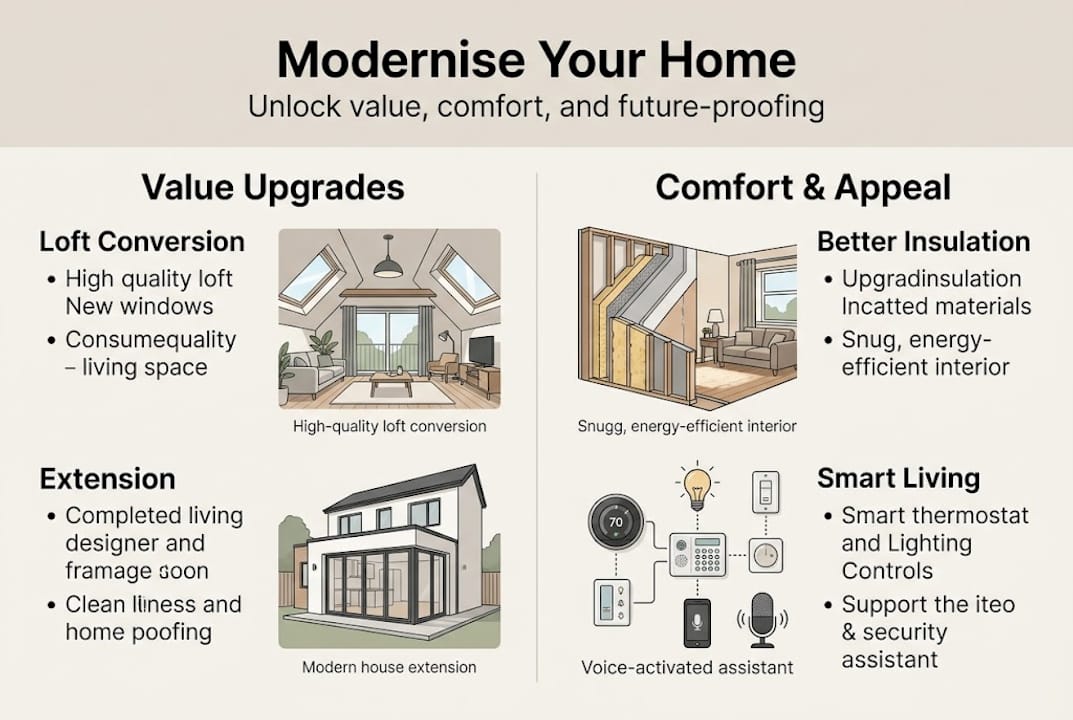
Loft conversions — Converting unused roof space into a bedroom, bathroom, or home office is one of the most reliable value-adds available. Loft conversions in London are particularly effective in Victorian and Edwardian terraces, which dominate areas like Chiswick, Hammersmith, and Kensington.
Rear and side extensions — These create the open-plan kitchen-diner layouts that buyers in Chelsea and Notting Hill actively seek. Explore home extension ideas tailored to London’s terraced and semi-detached stock.
Kitchen and bathroom renovations — Kitchen and bathroom upgrades recoup 60%–80% of their costs and are consistently ranked as the top priority for buyers. A dated kitchen or tired bathroom can kill a sale; a renovated one seals it.
Energy efficiency improvements — Upgrading insulation, windows, and heating systems improves your EPC rating. Energy-efficient upgrades widen your buyer pool considerably, as mortgage lenders increasingly favour higher-rated properties. You can read more about sustainable refurbishments in London to understand the long-term gains.
Here is a practical comparison to help you weigh your options:
Upgrade | Typical London cost | Cost recouped | Buyer priority |
Loft conversion | £30,000–£80,000 | 70%–90% | Very high |
Rear extension | £40,000–£120,000 | 65%–85% | Very high |
Kitchen renovation | £15,000–£50,000 | 60%–80% | High |
Bathroom renovation | £8,000–£25,000 | 60%–75% | High |
EPC improvements | £5,000–£20,000 | 50%–70% | Growing |
One risk worth flagging is over-specification. Fitting a bespoke Italian marble kitchen in a street of modest two-bedroom flats rarely pays off. Green retrofitting in London faces similar challenges, with upfront costs sometimes outpacing immediate value gains.

Pro Tip: Before committing to any upgrade, speak with a local estate agent who knows your specific street. They can tell you exactly what buyers are paying premiums for right now, which saves you from investing in the wrong project.
Planning, regulations, and pitfalls: navigating London’s modernisation maze
Even the most carefully chosen project can run into serious trouble if you underestimate London’s regulatory environment. This is where many homeowners come unstuck, and where professional guidance pays for itself many times over.
London carries a 20%–40% cost premium over the rest of the UK for renovation work. That means a loft conversion costing £40,000 in Manchester might cost £55,000 or more in Kensington. Budget accordingly from the start.
“In West and Central London, regulatory complexity is not the exception — it is the rule. Conservation areas, listed buildings, and party wall agreements affect a significant proportion of properties.”
Architect involvement and regulatory compliance are far more demanding here than in most UK regions. Many streets in Chelsea, Notting Hill, and Fulham sit within conservation areas, which restrict external changes and sometimes internal ones too. Listed building consent adds another layer of complexity.
The most common pitfalls we see in London projects include:
Ignoring party wall agreements — Required when work affects a shared wall with a neighbour. Skipping this step can halt your project entirely.
Underestimating planning timelines — Permitted development rights are more restricted in conservation areas. Allow extra time for consent.
Choosing contractors without London experience — Local knowledge of access restrictions, material delivery logistics, and borough-specific rules matters enormously.
Failing to account for hidden costs — Older London properties often reveal asbestos, outdated wiring, or structural issues once work begins.
Over-budgeting on finishes, under-budgeting on structure — A beautiful kitchen fitted into a poorly insulated, damp-prone room is a poor investment.
Using an essential home refurbishment checklist before you begin can save you significant time and money. Understanding extension costs explained in detail is equally important for realistic budgeting.
Pro Tip: Engage a planning consultant or architect early, ideally before you finalise your project scope. In conservation areas especially, early RIBA planning advice can reshape your plans in ways that save months of delay.
Tailoring your modernisation for maximum impact
With regulations and risks understood, the final step is making this personal. The best modernisation project for your neighbour may not be the right one for you. Your home’s location, current condition, your occupancy plans, and your financial goals all shape the right decision.
One important principle: do not overshoot your neighbourhood. Overspending on luxury finishes or adding a fourth bedroom to a street of two-bedroom homes rarely delivers the return you expect. The market sets a ceiling, and no amount of premium specification lifts you above it.
Here is a practical decision framework to help you move forward with clarity:
Define your primary goal — Are you modernising to sell, to rent, or to stay long-term? Each goal shapes different project choices.
Research your local market — Talk to two or three local agents. Find out what buyers are paying premiums for on your specific street.
Assess your home’s current condition — Structural, damp, and energy issues should be resolved before cosmetic upgrades.
Set a realistic budget — Include a 15%–20% contingency for unexpected discoveries, particularly in older London properties.
Prioritise broad appeal over personal taste — Neutral, durable finishes attract more buyers and tenants than highly personalised choices.
Consult a professional early — Whether an architect, a planning consultant, or a specialist contractor, early advice shapes better outcomes.
Plan for the long term — Consider how your needs might change over five to ten years. Flexibility built into a design today saves costly alterations later.
Working with expert improvement services that understand London’s unique market conditions makes each of these steps considerably more straightforward.
Pro Tip: Focus on durability and broad appeal rather than following current interior trends. What feels fresh today may feel dated in three years. Quality materials and timeless design choices protect your investment far better.
Our perspective: the modern London home isn’t just about value
After nearly two decades working on London properties, we have seen one pattern repeat itself: homeowners who focus exclusively on ROI often miss the bigger picture. The smartest modernisation projects we have been involved with always balance financial return with genuine lifestyle improvement.
The market will always push for more space and higher specifications. But the homes that age best are those designed with flexibility in mind. A loft room that works as a bedroom today can become a home office tomorrow. An open-plan kitchen-diner that suits a young family can adapt for later life.
Sustainability is another dimension that too many homeowners still treat as optional. Exploring sustainable modernisation insights reveals that energy efficiency improvements reduce running costs, improve comfort, and increasingly affect mortgage eligibility and resale value.
“The best modernised homes we see are not the most expensive ones. They are the ones where every decision was made with purpose.”
Modernisation is ultimately a personal calculation. Value matters, but so does the quality of life you create in the process.
Ready to modernise your home in London?
If this article has clarified your thinking, the next step is a conversation with a team that knows London’s property landscape inside out. At Tenen Ltd, we have been helping homeowners across Fulham, Chelsea, Kensington, Chiswick, and Notting Hill transform their properties since 2006.
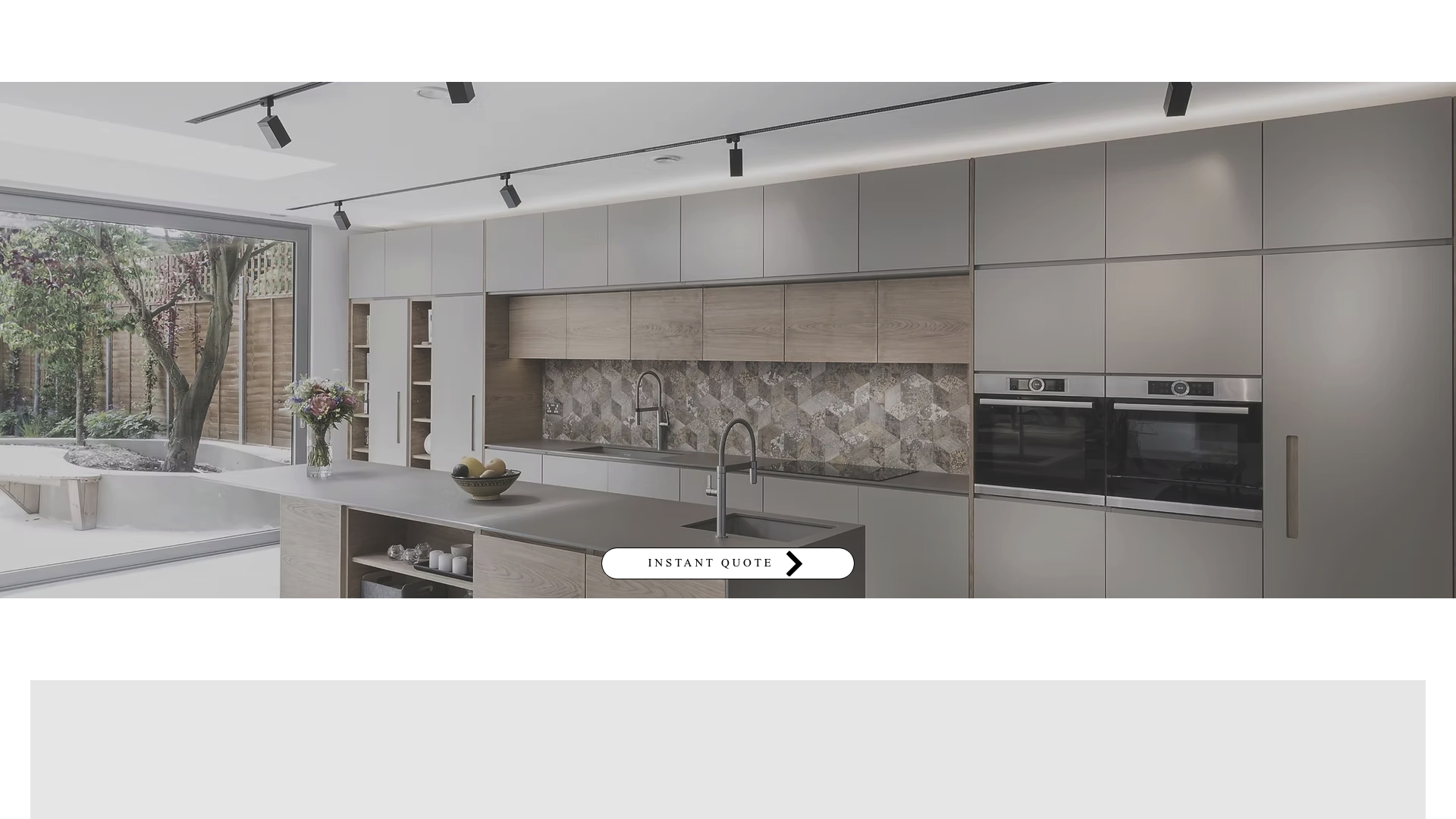
Whether you are considering loft conversions in London, a full property refurbishment, or a beautifully executed kitchen and bathroom renovation, we bring the expertise, attention to detail, and local knowledge your project deserves. Get in touch today to arrange a consultation and receive tailored recommendations for your home.
Frequently asked questions
What modernisation adds the most value to a London home?
Loft conversions and rear extensions typically deliver the greatest value gains, with potential uplifts of 10%–24% based on recent London market research. These projects also create the additional space that London buyers actively seek.
How much should I budget for a full home renovation in West London?
A full 100m² renovation in West London typically costs between £120,000 and £280,000, reflecting the 20%–40% London premium over the rest of the UK. Always include a 15%–20% contingency for older properties.
Do all home modernisations need planning permission in central London?
Not every project requires planning permission, but extensions, loft conversions, and facade changes often do, particularly in the conservation areas that cover much of Central London. Party wall agreements are also frequently required.
Is it worth modernising kitchens and bathrooms before selling?
Yes. Updated kitchens and bathrooms recoup 60%–80% of costs and are consistently the top priority for buyers, boosting both appeal and final sale price significantly.
Recommended
Comments