
What is contemporary design? your 2026 guide
- luka bursac
- Jul 17
- 8 min read

TL;DR:
Contemporary design reflects the current moment by focusing on natural materials, warm palettes, and open layouts. It differs from modern design, which is fixed in a specific historical period, and from minimalism, which prioritizes reduction over warmth and personality. The style emphasizes patience, selective curation, and seamless technology integration to create timeless, liveable spaces.
Contemporary design is defined as the style of the present moment, reflecting current materials, technologies, and cultural values rather than a fixed historical aesthetic. Unlike modern design, which refers to a specific movement rooted in the early to mid-20th century, contemporary style evolves continuously, absorbing new influences as culture and technology shift. This distinction matters enormously for homeowners who want spaces that feel genuinely current rather than period-specific. In 2026, what is contemporary design comes down to one core idea: curated, warm, and alive to the moment you are living in.
What are the core characteristics of contemporary design?
Contemporary design is not a single look. It is a set of principles that produce spaces feeling open, considered, and grounded in real life. Understanding these principles gives you a reliable framework for recognising and applying the style.
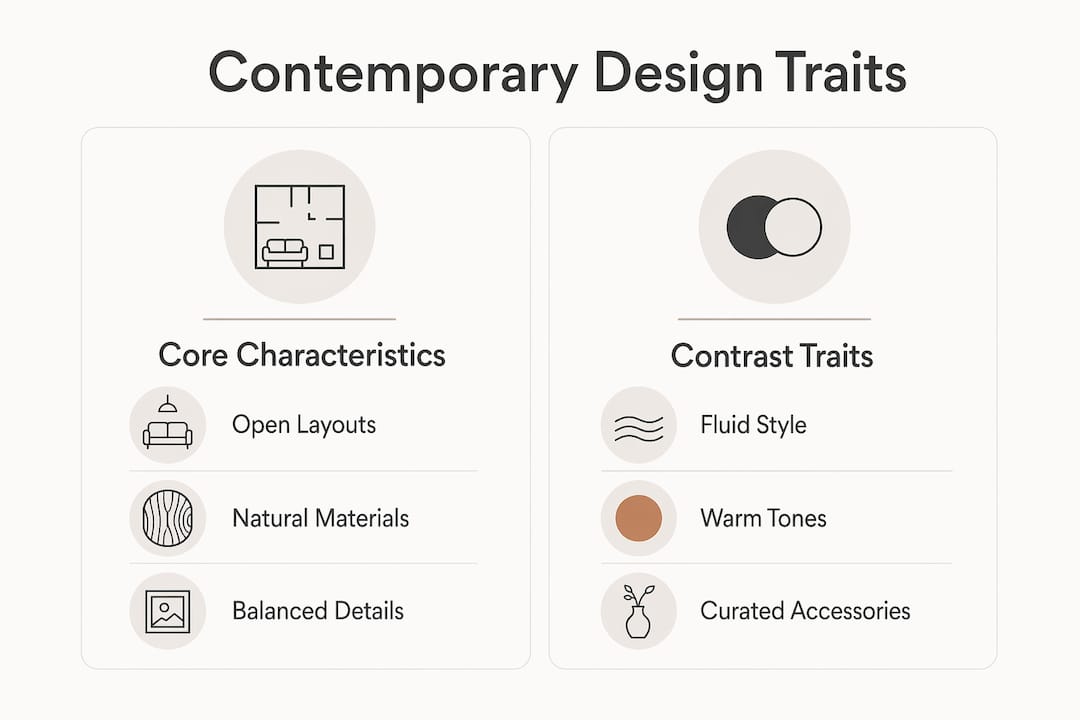
The most consistent characteristic is the balance between openness and curated detail. Contemporary interiors prioritise airiness and natural light, but they are never empty. Every object earns its place. A well-executed contemporary living room might feature a single large artwork, a sculptural pendant light, and a textured linen sofa. Nothing more is needed.
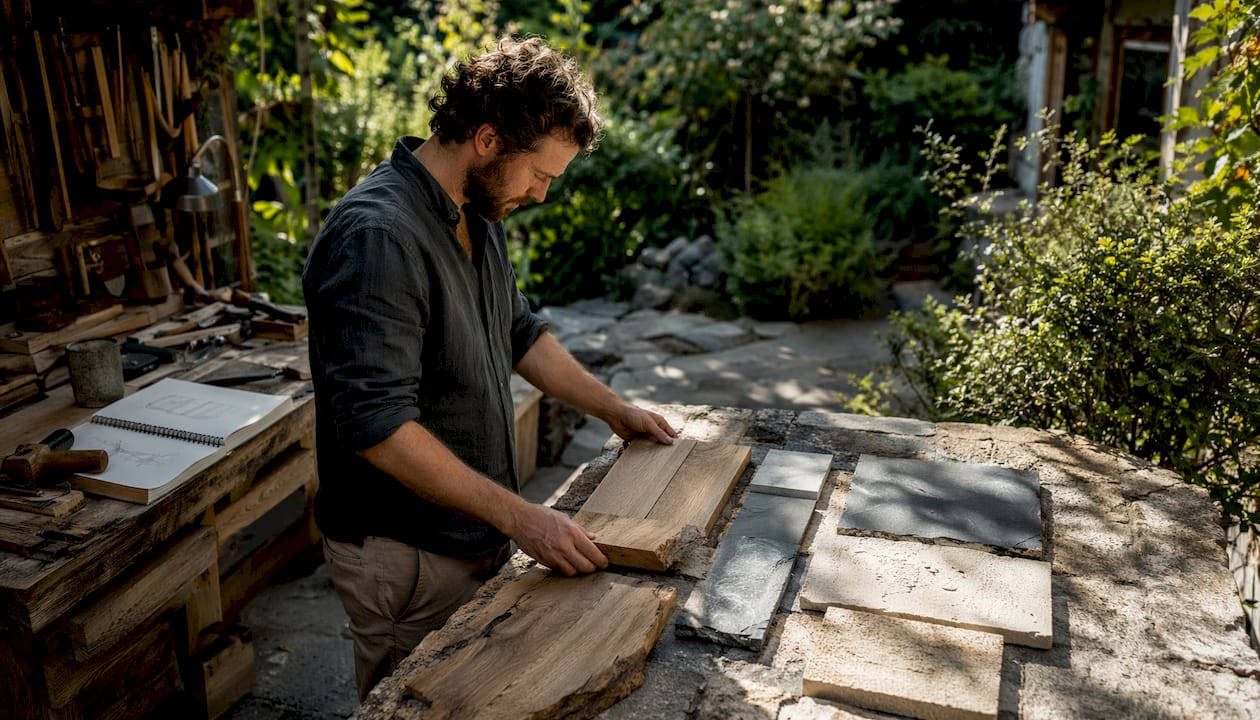
Material choice defines the quality of a contemporary interior more than any other single decision. The style has shifted decisively away from synthetic surfaces towards tactile, natural materials: stone, plaster, linen, and leather. These materials age well and develop character over time, which suits the contemporary preference for spaces that feel lived in rather than staged.
Colour palettes in contemporary interiors are warm and grounded. Soft whites, warm ochre, terracotta, and deep saturated greens or blues appear consistently. These tones create comfort without sacrificing sophistication. The contrast between a warm plaster wall and a deep velvet sofa, for example, delivers visual richness without clutter.
Light and layout carry more weight than ornamentation. Contemporary design uses architectural decisions, such as ceiling height, window placement, and open-plan flow, to do the heavy lifting. Decoration follows structure rather than compensating for its absence.
Open, airy layouts that prioritise natural light and floor continuity
Tactile natural materials including stone, linen, leather, and raw plaster
Warm, earthy colour palettes with bold accent colours used selectively
Sophisticated material contrasts, such as concrete paired with velvet or oak
Minimal ornamentation, with each decorative object chosen deliberately
Furniture with slim legs or pedestal bases to maintain visual lightness across the floor plane
Pro Tip: Choose furniture with slim legs or pedestal bases rather than solid plinths. Visual lightness underfoot keeps open-plan spaces feeling airy rather than heavy, even in smaller rooms.
How does contemporary design differ from modern design and minimalism?
This is the question that trips up most homeowners, and the confusion is understandable. The three terms overlap visually but describe fundamentally different things.
Modern design refers to a fixed historical period, broadly spanning the 1920s to the 1970s. It has defined aesthetics: flat planes, Bauhaus-influenced furniture, a strict palette of black, white, and natural wood, and a functionalist philosophy that rejected ornament almost entirely. Mid-century modern furniture by designers such as Charles and Ray Eames sits firmly within this category. The style does not change because the period is closed.
Contemporary design, by contrast, is fluid. It borrows from modern design, from Scandinavian traditions, from Japanese wabi-sabi, and from industrial aesthetics, but it is not bound by any of them. What was contemporary in 2005 differs significantly from 2026’s interpretation. This is the defining quality: contemporary design is always of its time.
Minimalism is a philosophy rather than a period or a style. It is the deliberate reduction of objects, colour, and detail to their bare essentials. Contemporary design can draw on minimalist principles, but it is warmer and more curated. The contemporary aesthetic values quality and intentionality, allowing for art collections, decorative objects, and layered textures that pure minimalism would reject.
Feature | Modern design | Contemporary design | Minimalism |
Time reference | 1920s–1970s | Present moment | Timeless philosophy |
Palette | Black, white, natural wood | Warm ochre, terracotta, saturated accents | White, off-white, monochrome |
Ornamentation | Functional only | Curated and selective | Near absent |
Furniture forms | Geometric, angular | Soft, rounded, mixed | Simple, unadorned |
Flexibility | Fixed | Constantly evolving | Fixed philosophy |
Pro Tip: If you are drawn to clean lines but find pure minimalism cold, contemporary design is the right direction. It gives you the clarity of minimalism with the warmth of real living.
What materials, colours, and furniture styles are trending in 2026?
The 2026 interpretation of contemporary design is notably warmer and more tactile than the versions that dominated the previous decade. Several clear trends define the current moment.
Materials leading the shift
Natural, imperfect materials are the foundation of 2026 contemporary interiors. Limewash plaster walls, honed stone worktops, raw linen curtains, and aged leather seating appear across residential projects from Chelsea townhouses to Chiswick flats. These materials share one quality: they improve with age rather than showing wear. Tenenltd regularly specifies these finishes in full refurbishment projects because clients consistently report that they feel more satisfied with the result years later.
Timber is returning in warmer tones. Pale Scandi oak has given way to darker, richer woods such as walnut and smoked oak. These pair naturally with the terracotta and ochre palettes that define the current moment.
Colour in 2026
Colour family | Role in contemporary interiors | Example application |
Warm white and plaster | Base and backdrop | Limewash walls, ceiling plaster |
Terracotta and ochre | Warmth and depth | Cushions, ceramics, accent walls |
Deep green and blue | Bold accent | Velvet sofas, cabinetry, tiles |
Warm grey and taupe | Neutral grounding | Flooring, upholstery |
Furniture forms
Contemporary design in 2026 embraces rounded, softer furniture forms, moving away from the rigid geometry that defined earlier minimalist trends. Curved sofas, arched mirrors, and oval dining tables replace the sharp rectangles of the previous decade. Curves introduce psychological comfort and visual softness, which counterbalances the clean geometry of contemporary architecture.
Artisan and vintage pieces play a growing role. A handthrown ceramic lamp or a mid-century sideboard sourced from a London dealer adds depth and personality that mass-produced furniture cannot replicate. Contemporary interiors often combine vintage pieces with modern furnishings to avoid a sterile, showroom feel.
Curved and rounded sofas, armchairs, and ottomans
Oval and organic-shaped dining and coffee tables
Arched mirrors and doorways as architectural features
Handcrafted ceramics and artisan lighting as focal points
Vintage or antique accent pieces mixed with contemporary base furniture
Bespoke joinery, including quality door and millwork details, for considered transitions between spaces
How can homeowners apply contemporary design principles at home?
Applying contemporary design well is less about buying the right products and more about making considered decisions at every stage. The following sequence gives you a practical framework.
Prioritise layout and light first. Before choosing materials or furniture, assess how your space flows and how light moves through it. Contemporary design depends on openness. If your home has a fragmented layout, consider whether structural changes, such as removing a partition wall or designing open-plan spaces, would deliver more impact than any decorative choice.
Choose natural materials over synthetic alternatives. Replace laminate with stone or solid timber. Swap polyester curtains for linen. These changes cost more upfront but produce a result that reads as genuinely contemporary rather than trend-chasing.
Mix old and new deliberately. One or two vintage or antique pieces give a contemporary interior soul. A Georgian mirror above a concrete fireplace, or a 1960s sideboard in an otherwise current kitchen, creates the layered quality that separates a curated home from a showroom.
Use soft shapes and warm colours to add comfort. A curved sofa in warm terracotta or a deep green velvet armchair does more for a contemporary interior than any number of accessories. Commit to one or two bold colour decisions rather than spreading accent colours thinly across every surface.
Integrate technology discreetly. Smart home technology is now a hallmark of contemporary interiors, but it must remain invisible. Concealed wiring, built-in storage for devices, and flush-mounted controls preserve the clean lines that define the style. A well-planned smart home upgrade should be invisible in use and invisible in appearance.
Pro Tip: Resist the urge to accessorise every surface. Contemporary design is a ‘curated, not cluttered’ aesthetic that balances clean lines with warm personal touches. Edit ruthlessly, then add one piece back.
Key takeaways
Contemporary design is defined by its relationship to the present moment, making ongoing curation and material awareness the two most important skills for achieving it well.
Point | Details |
Contemporary vs modern | Contemporary is fluid and present-tense; modern refers to a fixed 1920s–1970s movement. |
Natural materials define quality | Stone, linen, plaster, and leather outperform synthetic finishes in longevity and character. |
Warmth over minimalism | Curated warmth with soft shapes and earthy palettes distinguishes contemporary from cold minimalism. |
Technology must be invisible | Smart systems and hidden automation preserve clean lines and uncluttered aesthetics. |
Curation is ongoing | What reads as contemporary in 2026 will shift; spaces need periodic editing to stay current. |
Why contemporary design rewards patience more than budget
Working with contemporary design for nearly two decades has taught me one thing that most articles skip: the style punishes impatience more than any other. Homeowners who rush to fill a newly refurbished space with everything at once almost always produce a result that looks dated within three years. The ones who live with a space for a few months before committing to furniture and art consistently end up with something that still feels right a decade later.
The other lesson is that contemporary design is not about spending more. It is about spending better. One genuinely good piece of natural stone, one well-made sofa with a considered form, one piece of art that means something to you: these carry a room. Ten average pieces in the right colours do not. I have seen beautifully proportioned rooms in West London properties where the only furniture was a single sofa, a rug, and a lamp, and the space felt complete. I have also seen rooms full of expensive contemporary-adjacent furniture that felt hollow.
The distinction between modern and contemporary trips people up constantly, and I understand why. The terms sound interchangeable. But getting it right matters because it changes every decision you make, from the furniture you choose to the materials you specify. If you are working on a refurbishment or extension, clarifying this distinction at the outset saves significant time and money later.
— Mateja
How Tenenltd can help you achieve a contemporary home
Contemporary design principles work best when they are built into a space from the structure outward, not applied as a surface layer afterwards.
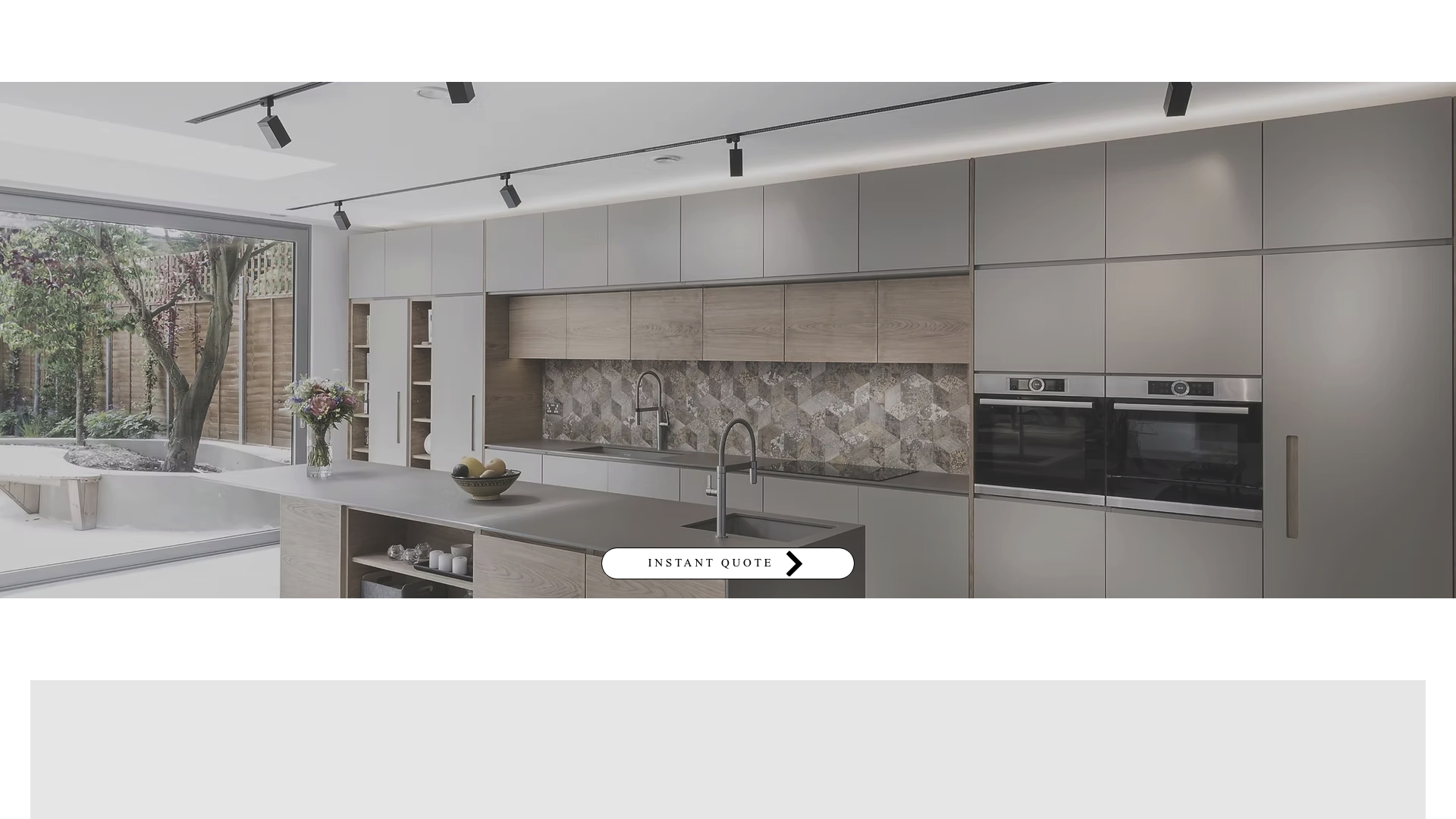
Tenenltd has been delivering high-quality refurbishments, home extensions, and loft conversions across West and Central London since 2006. Whether you want to open up a ground floor to create the airy, light-filled layout that contemporary design requires, or refurbish a kitchen or bathroom with natural stone and considered joinery, Tenenltd brings the craftsmanship and material knowledge to deliver it properly. Our team works with homeowners in Fulham, Chelsea, Kensington, Chiswick, and Notting Hill who expect the best. Get in touch to discuss your project and see how we can help you build a home that reflects the way you live now.
FAQ
What is the difference between contemporary and modern design?
Modern design refers to a fixed aesthetic movement from the 1920s to the 1970s, characterised by functionalism and strict minimalism. Contemporary design is fluid and tied to the present moment, constantly evolving to reflect current materials, technologies, and cultural values.
What are the key characteristics of contemporary design?
Contemporary design is defined by open layouts, natural tactile materials, warm earthy colour palettes, curated ornamentation, and the discreet integration of technology. Soft, rounded furniture forms are a defining characteristic in 2026.
Is contemporary design the same as minimalism?
Contemporary design is not minimalism. Minimalism is a philosophy of reduction, while contemporary design is warmer and more curated, allowing for layered textures, art collections, and decorative objects chosen with intention.
What colours are used in contemporary interiors in 2026?
The dominant palette includes warm whites, terracotta, ochre, soft taupe, and bold saturated greens or blues used as accents. These tones create depth and warmth without the coldness associated with earlier minimalist palettes.
How do I make my home feel more contemporary?
Prioritise layout and natural light first, then choose natural materials over synthetic ones. Mix one or two vintage pieces with current furniture, commit to a warm colour palette, and integrate technology discreetly to preserve clean lines throughout the space.
Recommended
Comments