
Small kitchen design ideas that maximise space
TL;DR:
Thoughtful small kitchen design in London includes floor-to-ceiling cabinetry, integrated appliances, and strategic use of shallow pantries. Prioritizing workflow, storage capacity, and cohesive color schemes creates a spacious and functional environment. Custom cabinetry and layout adjustments maximize space, making compact kitchens both practical and visually appealing.
Small kitchens are one of the most common design challenges for London homeowners, and the frustration is real. You want a space that works hard, looks great, and doesn’t feel like a cupboard. The good news is that thoughtful small kitchen design ideas can transform even the most compact layout into something genuinely impressive. It comes down to storage strategy, layout logic, colour choices, and the kind of craftsmanship that makes everything feel intentional. This article walks you through exactly what to consider, what to prioritise, and how to get results you’ll actually love.
Table of Contents
Key takeaways
Point | Details |
Continuous cabinetry is transformative | Floor-to-ceiling cabinet runs can increase storage and worktop space by 50–60% without structural work. |
Functional zones beat the old triangle | Organising your kitchen by task zones improves workflow far better than following the traditional triangle model. |
Colour affects perceived size | Soft, warm neutrals like greige and putty make small kitchens feel calmer and more spacious than cold bright whites. |
Integrated appliances reduce visual noise | Panel-ready appliances create seamless cabinetry lines that make compact kitchens feel significantly larger. |
Layout adjustments unlock hidden space | Removing a door or repositioning a wall can add a shallow pantry or extra worktop without a full extension. |
1. How to evaluate small kitchen design ideas before committing
Before you spend a penny, you need a framework for deciding which ideas are worth pursuing. Not every popular trend suits every kitchen, and the wrong choice wastes both money and space.
Start by assessing your kitchen against these core criteria:
Storage capacity. Can you reach everything without crouching, stretching, or rummaging? If not, your current layout is failing you.
Worktop continuity. Interrupted surfaces break your workflow. Look for opportunities to create longer, unbroken runs of usable prep space.
Visual clarity. Every appliance left on the worktop, every mismatched handle, every open gap above a cabinet contributes to a feeling of chaos. Good design eliminates visual noise.
Lighting quality. Poor lighting shrinks a space psychologically. Under-cabinet lighting and well-placed ceiling fixtures make rooms feel larger and more welcoming.
Finish coherence. Mixing metals, colours, and materials without intention creates a cluttered look even in a tidy kitchen.
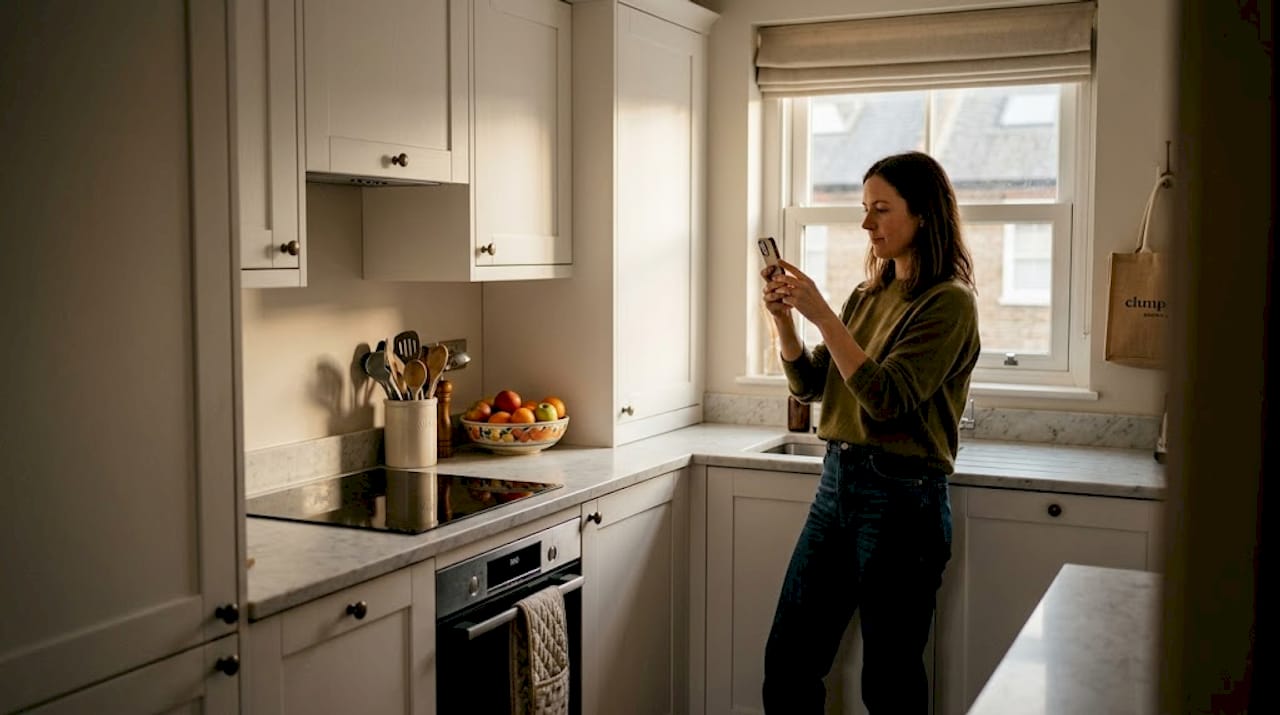
Pro Tip: Before booking any trades, photograph your kitchen from the doorway at eye level. This is exactly how guests perceive it. If the image feels crowded, the solution is almost always editing rather than adding.
Once you can see your kitchen clearly through this lens, the right small kitchen design ideas become far easier to identify.
2. Cabinetry that goes floor to ceiling
The single most impactful change you can make in a compact kitchen is committing to floor-to-ceiling cabinetry. A 169-square-foot kitchen remodel documented by an architect in Baltimore achieved 50% more worktop space and 60% more cabinet storage purely through layout and cabinetry adjustments, without knocking down a single wall.
The key is treating the entire wall as one continuous unit. Extending cabinets to the ceiling removes the awkward gap above standard-height units, eliminates the temptation to store clutter up there, and makes the room feel taller. Finish those upper sections with trim panels or matching soffits if you’re not going bespoke.
What makes this truly powerful is the psychological effect. A wall of cabinetry that runs seamlessly from floor to ceiling reads as architecture rather than furniture. It feels custom, considered, and permanent.
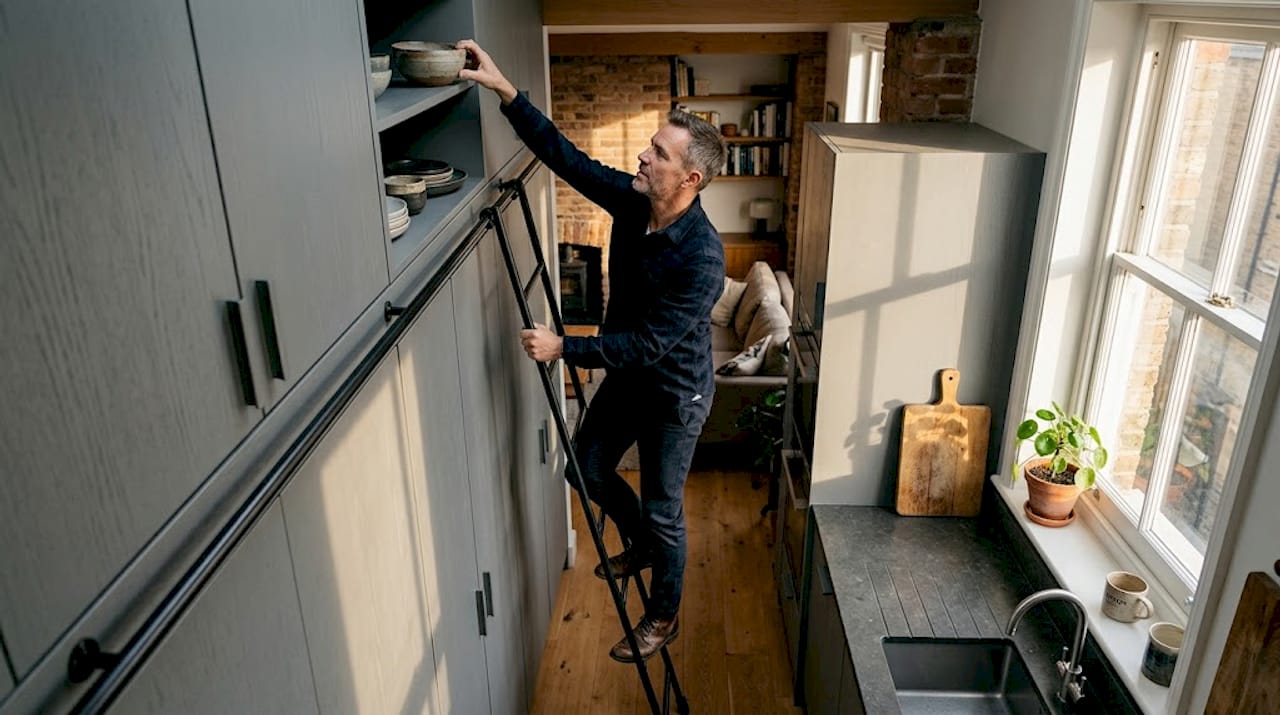
Pro Tip: If ceiling height allows, add a slim pull-out ladder rail to access upper shelves. It looks deliberate and removes any excuse for wasted high storage.
3. Pullouts, pocket doors, and clever internal fittings
The inside of your cabinets matters as much as the outside. Drawer and pullout solutions like spice racks, knife drawers, and appliance garages materially increase usable space and keep worktops clear.
Here’s what works in practice:
Pullout spice racks fitted beside the cooker keep condiments accessible without occupying drawer or worktop space.
Deep pan drawers below the hob are far more practical than traditional base cupboards, where pots at the back become inaccessible.
Knife drawers with angled inserts keep blades safe and free up a knife block from the worktop entirely.
Pocket doors on appliance garages allow the kettle and toaster to disappear completely when not in use, restoring the clean visual line of your cabinetry.
The table below shows how internal fittings compare by function:
Fitting type | Best use | Space benefit |
Pullout spice rack | Beside hob or oven | Frees worktop, keeps items visible |
Deep pan drawers | Below hob | Full access without crouching |
Appliance garage | Kettle, toaster, coffee machine | Clears worktop instantly |
Knife drawer | Below prep zone | Removes block, safer storage |
Bin pullout | Under sink or island end | Hides bins, saves floor space |
4. Shallow pantries and the case against deep cabinets
One of the most underused small space kitchen solutions is the shallow pantry. A 10-inch deep pantry added by converting a swinging door into a fixed wall improved both storage capacity and daily accessibility in a documented small kitchen renovation.
The logic is simple. Deep cabinets cause items to get lost at the back. You buy a second jar of paprika because you can’t see the first one. A shallow pantry with items stored one row deep means everything is visible at a glance and retrievable in seconds.
Detailed drawer organisation paired with shallow storage eliminates the inefficiency that plagues deeper cabinets. Combined, these two approaches make a small kitchen feel genuinely organised rather than merely tidy on the surface.
5. Integrated appliances and panel-ready design
Visual noise is the enemy of a calm, spacious kitchen. Panel-ready integrated appliances are trending in 2026 as a design essential precisely because they allow the fridge, dishwasher, and even the microwave to disappear behind matching cabinet fronts.
The effect is significant. When you remove the visual interruption of a stainless steel fridge sitting between white units, the entire wall reads as one cohesive surface. The room feels larger because your eye isn’t snagged by competing focal points.
If full integration isn’t within your budget, start with the dishwasher. It’s the easiest appliance to panel and the one that makes the most visual difference since it sits at eye level and runs the full height of a base unit.
6. Colours and finishes that open up the space
Colour choice has a measurable impact on how a small kitchen feels to be in. Soft, warm palettes like warm white, greige, putty, and taupe are consistently recommended by designers over cold bright whites, which can feel harsh and clinical under artificial lighting.
The most effective approach is tonal continuity. Use the same material for your worktop and splashback, or choose complementary stones with subtle veining. This removes the horizontal visual break that makes a kitchen feel chopped into sections.
A few additional finishing principles worth following:
Choose one metal finish for all hardware, taps, and fixtures. Mixing brushed brass with chrome and black reads as indecision rather than eclecticism.
Select a worktop with a slim profile edge. Thick laminate edges on a small kitchen feel heavy and dated.
Use under-cabinet lighting as a non-negotiable. It eliminates shadows on the worktop, makes the space feel brighter, and adds warmth that overhead lighting alone cannot achieve.
This approach to functional kitchen design ties together every material decision into something coherent and intentional.
7. Layout strategies for compact kitchen spaces
Layout is where most small kitchen renovation ideas either succeed or fail. The traditional kitchen triangle (cooker, fridge, sink) was developed for much larger spaces. Modern designs replace it with task-based functional zones, grouping activities like prep, cooking, and cleaning into dedicated areas with minimal steps between them.
For galley kitchens specifically, limiting upper cabinetry on one side and using light colours above the worktop line creates a sense of openness that a fully enclosed corridor cannot achieve. Vertical storage such as tall pull-out larder units on one wall compensates for the reduced upper cabinets without sacrificing capacity.
Key layout principles for compact kitchens:
Maintain at least 900mm of clearance between facing units or appliances to avoid a traffic-jam effect.
Place a landing zone of at least 300mm beside the fridge and on both sides of the hob wherever possible.
Consider removing a door that swings into the kitchen and replacing it with a sliding or pocket alternative to reclaim floor space.
Position the sink under a window if at all possible. Natural light at the prep and washing zone transforms the daily experience of using the kitchen.
Evaluate whether a small island or peninsula works for your clearance. A 600mm-wide rolling island on castors can double as a prep surface and be moved aside entirely when not needed.
8. Comparing design approaches side by side
Not all small kitchen design ideas suit every situation. Here’s how the most common approaches compare:
Design approach | Best for | Trade-off |
Floor-to-ceiling closed cabinetry | Maximum storage, clean look | Higher cost, requires precise planning |
Open shelving above worktop | Visual lightness, easy access | Collects dust, demands neatness |
Integrated appliances | Seamless look, calm aesthetic | Premium price, harder to service |
Visible freestanding appliances | Budget-friendly, flexible | Breaks visual continuity |
Warm palette (greige, putty) | Welcoming feel, works in low light | Can feel dated if not balanced well |
Cool or neutral palette | Crisp, modern feel | Can feel cold in north-facing kitchens |
Custom bespoke cabinetry | Perfect fit, maximum efficiency | Higher investment upfront |
Flat-pack or modular units | Lower cost, quicker turnaround | Gaps and visual breaks inevitable |
The right combination depends on your budget, your kitchen’s orientation, and how much time you’re willing to invest in maintenance. A north-facing kitchen in a West London terrace will perform very differently to a south-facing open-plan space in a Kensington flat.
What I’ve learned from years of small kitchen projects
Working alongside homeowners on kitchen refurbishments across London, I’ve seen the same missteps repeated more often than I’d like to admit.
The biggest one is prioritising aesthetics over workflow. A beautiful kitchen that forces you to walk four steps between the kettle and the sink, or that has no natural landing zone beside the hob, will frustrate you every single day. Style matters enormously, but it has to work around how you actually cook.
My personal favourite approach in a compact kitchen is continuous cabinetry in a warm matte finish, panel-ready appliances, and one statement material used consistently across the worktop and splashback. It reads as intentional and considered without trying too hard.
The detail I see overlooked most often is the gap above cabinets. Homeowners fill it with plants and baskets thinking it adds personality. What it actually does is signal to every visitor that the kitchen wasn’t properly designed. Taking those cabinets all the way to the ceiling costs relatively little extra and changes the entire character of the room.
— Mateja
Transform your kitchen with Tenenltd
If you’ve been inspired by these ideas and you’re ready to see what’s possible in your own home, Tenenltd is the team to call. Based in London and serving homeowners across Fulham, Chelsea, Kensington, Chiswick, and beyond, Tenenltd has been delivering high-quality kitchen refurbishments since 2006.
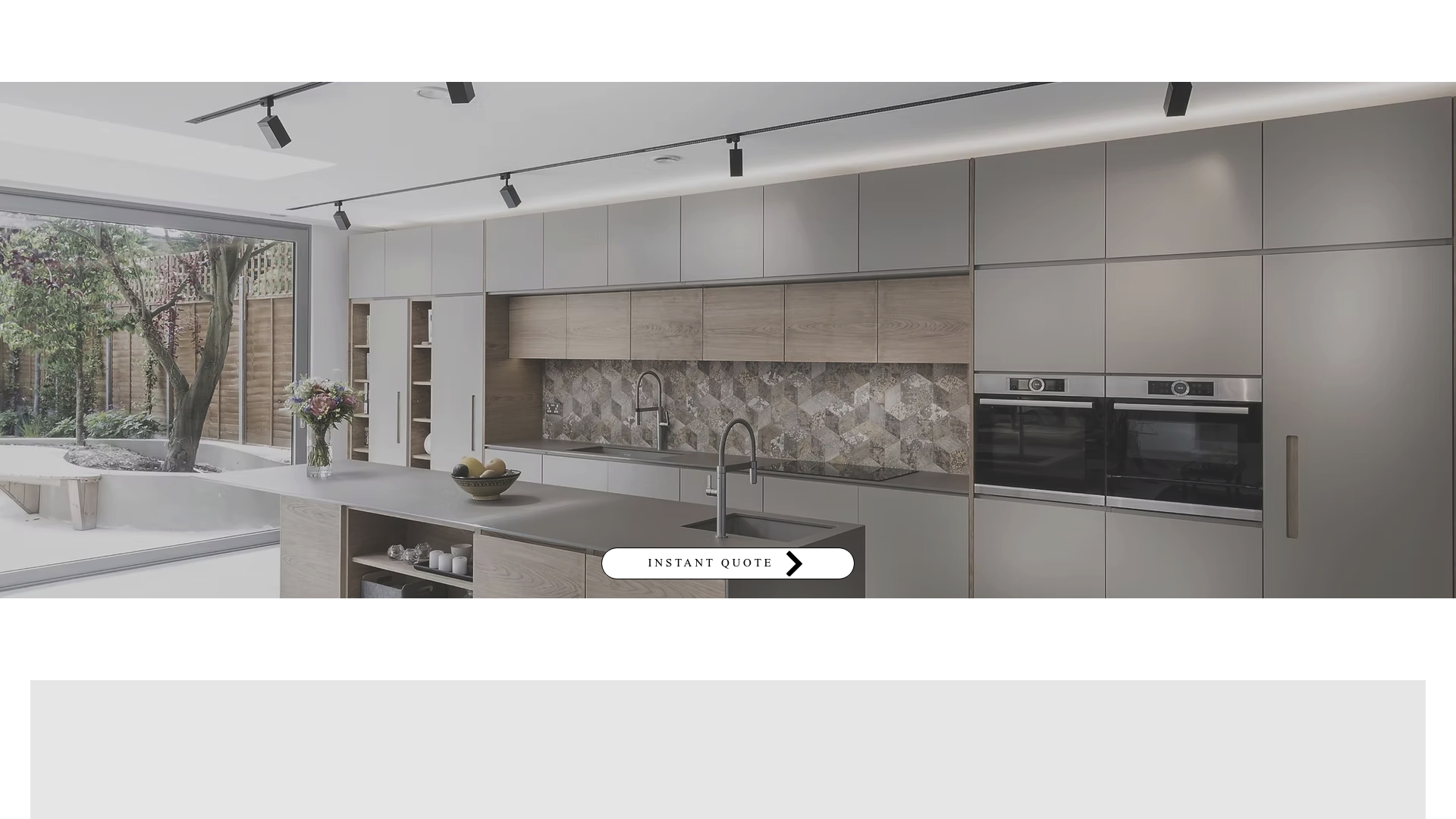
Whether you want bespoke floor-to-ceiling cabinetry, a full kitchen refurbishment with integrated appliances and custom millwork, or you’re considering a home extension to give your kitchen the footprint it deserves, Tenenltd brings the craftsmanship and planning expertise to make it happen. Every project is tailored to your space, your lifestyle, and your vision. Get in touch to arrange a consultation and take the first step towards a kitchen you’ll genuinely love using every day.
FAQ
What are the best small kitchen design ideas for tight spaces?
Floor-to-ceiling cabinetry, integrated appliances, and shallow pantries consistently deliver the greatest gains in tight kitchens. Pairing these with a warm neutral palette and under-cabinet lighting transforms both function and atmosphere.
What colours work best in a small kitchen?
Soft, warm neutrals such as warm white, greige, putty, and taupe outperform cold bright whites in small kitchens, particularly those with limited natural light. Consistent tonal choices across walls, units, and worktops reinforce the sense of space.
Is open shelving a good idea in a compact kitchen?
Open shelving creates visual lightness and makes a small kitchen feel less enclosed, but it demands consistent tidiness and collects dust quickly. It works best above the worktop on one wall as a complement to closed storage rather than a replacement for it.
How do I improve the layout of a small galley kitchen?
Limit upper cabinetry to one side, use tall pullout larder units for vertical storage, maintain at least 900mm of clearance between facing surfaces, and use light colours above the worktop line. These adjustments make galley kitchens feel significantly less cramped.
Are bespoke cabinets worth the extra cost in a small kitchen?
Yes, in most cases. Custom cabinetry eliminates the gaps and visual breaks that come with modular units, and in a small kitchen every centimetre counts. The upfront investment pays back in storage efficiency, visual quality, and long-term satisfaction with the space.
Recommended
Comments