
How to budget a refurbishment: step-by-step guide
TL;DR:
Proper upfront budgeting prevents costly overruns in West London home refurbishments.
A comprehensive budget includes construction, design, permits, contingency, and finishes.
Active cost tracking and professional help reduce the risk of exceeding the budget.
Planning a home refurbishment in West London is exciting, but it comes with real financial risk. 2 out of 5 UK renovations go over budget, and in an area where labour and materials already carry a premium, the stakes are even higher. The good news is that budget overruns are largely preventable with the right preparation. This guide walks you through everything you need to know, from understanding what drives costs in West London to building a solid, realistic budget and keeping your spending firmly on track throughout the project.
Table of Contents
Key Takeaways
Point | Details |
Budgeting prevents overspending | A well-planned budget is the main tool for keeping your refurbishment on track and affordable. |
Include all cost categories | List every major and minor area of expenditure, and do not forget a contingency fund for surprises. |
Step-by-step planning works best | Build your budget with a structured approach and update it as your project develops. |
Active cost control is essential | Monitor your spending closely throughout the project to avoid the common 20% overrun. |
Why budgeting is critical for refurbishment success
A home refurbishment is one of the most significant investments you will ever make in your property. Yet many homeowners underestimate just how quickly costs can escalate when a project lacks a disciplined financial plan.
Full house renovations typically cost between £60,000 and £200,000, with 40% of projects exceeding their budgets by an average of 20%. In West London, where properties in areas like Chelsea, Kensington, and Fulham often carry higher specification expectations, costs can push well beyond these national figures. A 20% overrun on a £150,000 project means an unexpected £30,000 bill. That kind of surprise is rarely welcome.
So what causes budgets to spiral? The most common culprits include:
Scope creep: Adding extra work mid-project that was not in the original plan
Inaccurate quotes: Accepting estimates that do not reflect the full scope of work
Hidden structural issues: Problems discovered once walls or floors are opened up
Rising material costs: Prices for timber, steel, and fixtures fluctuate throughout the year
Underestimating finishing costs: Tiles, fittings, and joinery often cost far more than homeowners expect
Forgetting planning and permit fees: These are real costs that belong in your budget from day one
“The biggest mistake is treating a budget as a rough guide rather than a working financial document. Every line item matters.”
For West London homeowners, two additional factors are worth noting. First, finding quality tradespeople in a competitive market often means paying a premium. Second, your property may have specific constraints, such as conservation area rules or listed building status, that add cost and complexity. Understanding the cost breakdown for refurbishments before you begin gives you a realistic baseline to plan from.
The benefits of investing time in upfront planning are significant. A thorough budget helps you prioritise what matters most, avoid nasty surprises, secure accurate quotes, and make confident decisions throughout the project. For a deeper look at how location affects pricing, explore the West London cost factors that distinguish this market from the national average.
Essential elements of a refurbishment budget
With a clear understanding of why budgeting matters, the next step is to break down what your budget should actually cover. Many homeowners focus heavily on construction costs and overlook the full picture.
A complete refurbishment budget should cover not only construction but also design, permitting, contingency, and finishing costs. Miss any one of these and you will find yourself making difficult choices mid-project.
Here are the core categories every refurbishment budget needs:
Structural and construction work: Walls, floors, roofing, extensions, and any load-bearing changes
Mechanical and electrical: Rewiring, plumbing runs, boiler upgrades, and heating systems
Fixtures and fittings: Kitchens, bathrooms, lighting, and built-in storage
Finishes: Flooring, tiling, plastering, painting, and decorating
Design and professional fees: Architect, structural engineer, and interior designer costs
Planning and building regulations: Permit applications and inspection fees
Project management: Whether handled by a contractor or separately
Contingency fund: Typically 10 to 20% of the total budget
Use the table below as a starting template to organise your own estimates:
Budget category | Estimated cost (£) | Actual cost (£) | Notes |
Structural and construction | |||
Electrical and plumbing | |||
Fixtures and fittings | |||
Finishes and decorating | |||
Design and professional fees | |||
Planning and permits | |||
Project management | |||
Contingency (15%) | |||
Total |
Filling this in with real quotes, not estimates pulled from search results, is what separates a reliable budget from a wishful one. The London refurbishment checklist can help ensure no category slips through the gaps.

Pro Tip: Always request itemised estimates from every tradesperson and contractor. A single lump-sum figure tells you very little. An itemised breakdown shows you exactly what you are paying for, makes it easier to compare quotes fairly, and gives you clear reference points if costs change later in the project.
Step-by-step process for planning your refurbishment budget
Now that you know what your budget should contain, here is a step-by-step approach to building it from scratch.
Define your full scope: Write down everything you want to achieve, room by room. Be specific. Vague scope leads to vague quotes.
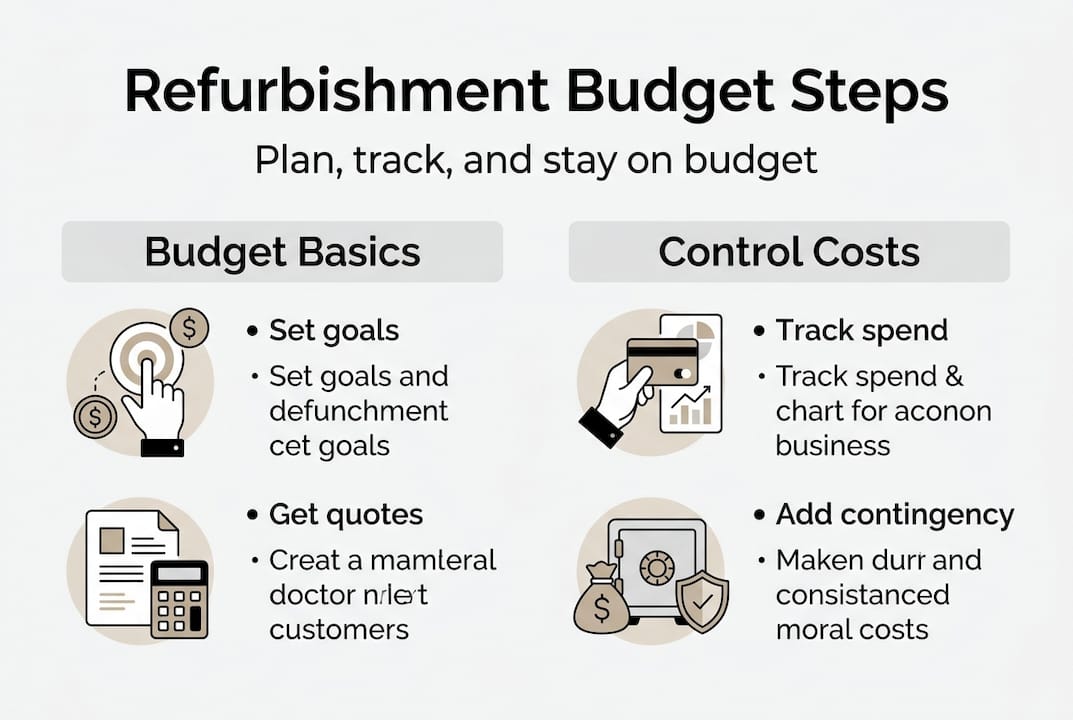
Gather multiple quotes: Contact at least three contractors and ask for itemised proposals. This gives you a realistic price range and exposes any outliers.
Research material costs independently: Do not rely solely on contractor estimates for materials. Check current prices yourself so you can have informed conversations.
Set your priorities: If the total exceeds your limit, decide what is essential and what can be phased or dropped. Prioritising early prevents painful mid-project compromises.
Add your contingency: Include 10 to 20% on top of your total. Professional advice consistently shows this is the single most effective way to avoid 20%+ overruns.
Finalise and document your plan: Write it all down in one place, with costs assigned to each category and a clear total.
The table below shows how DIY budgeting compares to working with a professional consultant:
Aspect | DIY budgeting | Professional consultant |
Cost accuracy | Variable, often optimistic | Based on real project data |
Time required | High | Lower for homeowner |
Risk of omissions | Higher | Lower |
Quote negotiation | Limited | Experienced and informed |
Local market knowledge | General | Specific to West London |
Contingency guidance | Often underestimated | Realistic and evidence-based |
A common mistake is forgetting permit costs entirely. Building regulations applications, structural engineer sign-off, and planning fees are easy to overlook but can add several thousand pounds. Review the full refurbishment steps before you finalise anything.
Pro Tip: When researching costs, ask your contractor for references from similar West London projects completed in the last 12 months. Recent local data is far more accurate than national averages, particularly for labour rates and specialist trades. For specific rooms, resources like a bathroom budgeting guide can give you a useful benchmark.
How to control costs and stay on budget
Once your budget is set, the final challenge is ensuring you stick to it from start to finish. This is where many well-planned projects still run into trouble.
2 in 5 homeowners overshoot by 20%, and active cost control throughout the project makes a major difference to the final outcome. Here is what that looks like in practice:
Track every expenditure weekly: Use a spreadsheet or budgeting app to log costs as they occur. Do not wait until the project is over to reconcile spending.
Review your budget at each project milestone: Before starting each new phase, check your running total against your original plan and adjust your expectations accordingly.
Request updated quotes before scope changes: Any change to the original specification, however small, should come with a revised cost estimate in writing before work begins.
Watch for red flags early: If a contractor is consistently asking for additional payments beyond the agreed schedule, or if material deliveries are being delayed, address it immediately rather than hoping things will self-correct.
Maintain a clear change log: Record every decision that differs from the original scope, who approved it, and what it cost. This protects you if disputes arise later.
“Clear, written communication with your builder is not just professional courtesy. It is your most effective financial control tool.”
Suppliersand tradespeople respond well to clients who are organised and engaged. When you ask the right questions and demonstrate that you are tracking the budget closely, you create an environment where accuracy matters to everyone on site. Working with London property improvements specialists who are experienced in West London projects reduces the risk considerably, as they already understand the local pricing landscape. If you are uncertain about managing this yourself, consider the case for why you should hire a refurbishment expert from the outset.
Our perspective: What most homeowners miss when budgeting refurbishments
After working on refurbishment projects across Fulham, Chiswick, Notting Hill, and beyond since 2006, we have seen the same pattern repeat itself. Homeowners put genuine effort into building a budget, get reasonable quotes, and still end up over their limit. The numbers are rarely the real problem.
What actually derails projects is optimistic thinking. Homeowners assume the structural survey will come back clean. They assume the builder will flag issues early. They assume their own decision-making will be quick and decisive. In practice, discoveries happen, conversations take time, and choosing between two finishes takes longer than anyone expects. Each delay costs money.
What professional project managers do differently is build time buffers into the financial plan, not just cost buffers. They also insist on formal sign-off for every change, no matter how minor it seems at the time.
Here is a tip that is specific to West London and rarely discussed: the best way to get an accurate estimate is to show contractors a finished project in your area that is similar to yours in scope and specification. Rather than describing what you want in words, a visual reference from a comparable property refurbishment makes pricing far more precise. It reduces ambiguity on both sides and leads to quotes you can actually rely on.
Next steps: Transform your refurbishment plan with professional expertise
If you are ready to take action on your refurbishment plan, expert support is available right here in West London. A well-structured budget does not just protect your finances. It gives you the confidence to move forward and enjoy the process of transforming your home.
At Tenen Ltd, we work with homeowners across Chelsea, Kensington, Hammersmith, and Fulham to build realistic budgets, manage projects with precision, and deliver results that genuinely enhance property value. Whether you are planning a full refurbishment or a targeted renovation, our team brings the local knowledge and hands-on experience that makes a real difference. Explore our expert London property refurbishments or browse our full range of refurbishment services to find the right starting point for your project.
Frequently asked questions
How much should I budget for a typical house refurbishment in West London?
Full house refurbishments in West London typically cost between £60,000 and £200,000, depending on the scope, specification, and condition of the property. West London premiums for labour and materials can push costs toward the higher end of that range.
What is the biggest cause of going over budget during refurbishment?
Unplanned scope changes and underestimating the cost of finishes or structural work are the top reasons for overspending. 2 in 5 UK renovations go over budget, most often because the original scope was not clearly defined from the start.
How much contingency should I include in my refurbishment budget?
A contingency of 10 to 20% is recommended to cover unexpected costs. Average cost overruns sit around 20%, so building that buffer into your plan from the outset is essential rather than optional.
Is it better to hire a professional to help set my refurbishment budget?
For complex refurbishments, hiring a professional significantly reduces the risk of costly mistakes. Professional advice helps avoid the common pitfalls that lead to overruns of 20% or more, particularly in a competitive market like West London.
Recommended
Comments