
UK gas safety regulations: what landlords and engineers must know
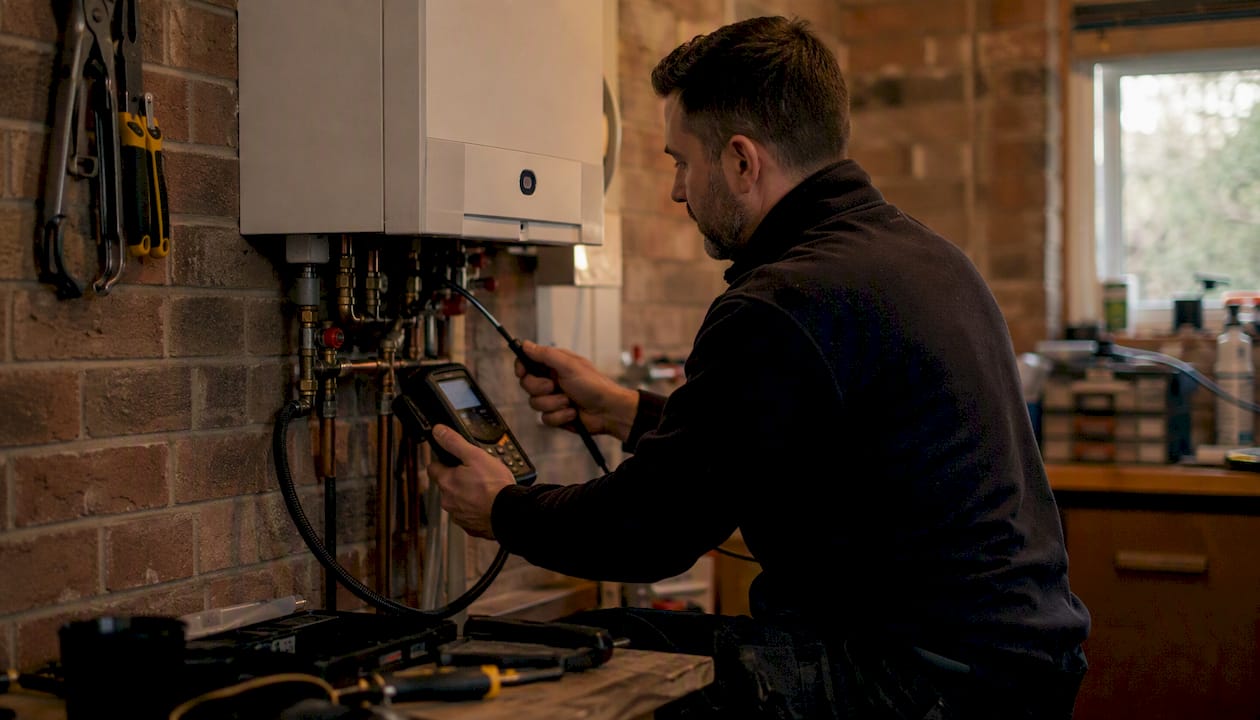
Gas safety in the UK is governed primarily by the Gas Safety (Installation and Use) Regulations 1998 (GSIUR), supported by the Gas Safety (Management) Regulations 1996 (GSMR) and interpreted through HSE Approved Code of Practice L56. Three duties sit at the heart of compliance:
Use only competent, Gas Safe registered engineers for any gas installation, maintenance, or repair work.
Landlords must maintain appliances and arrange an annual gas safety check (producing the CP12 record), then provide a copy to tenants within 28 days.
In any gas emergency, open windows, shut off the supply at the meter, and call the National Gas Emergency Service on the national freephone emergency number
The sections below translate each statutory requirement into practical steps, whether you are a landlord, a Gas Safe registered engineer, or a homeowner wanting to stay safe and compliant.
Key takeaways
UK gas safety law requires landlords, engineers, and homeowners to follow GSIUR 1998, use only Gas Safe registered engineers, and treat the CP12 as a living compliance record, not a one-off annual tick.
Point | Details |
Primary legislation | GSIUR 1998 and GSMR 1996 govern gas safety; HSE ACOP L56 interprets the duties in practice. |
Landlord annual check | CP12 must be issued to tenants within 28 days; retain records until two further checks are completed. |
Competence requirement | Only Gas Safe registered engineers may legally carry out gas work; verify the ID card and appliance categories before work starts. |
Gas emergency number | Call 0800 111 999 immediately if you smell gas or a CO alarm sounds; open windows and leave the building first. |
Tenenltd | Coordinates Gas Safe engineers within renovation projects and provides a full compliance file at practical completion. |
Table of Contents
What are the UK gas safety regulations and where do they come from?
What are landlords’ legal duties under gas safety regulations?
How should you maintain gas appliances between annual checks?
Who enforces gas safety rules and what happens if you do not comply?
Gas safety compliance checklist: landlords, engineers, and homeowners
Gas-safety-aware renovation and refurbishment in West London
What are the UK gas safety regulations and where do they come from?
Three legal instruments set the framework for gas safety compliance in the UK.
The Gas Safety (Installation and Use) Regulations 1998 (GSIUR) is the central statute. It covers the installation, maintenance, and use of gas fittings, appliances, and flues in domestic and many commercial premises. Legislation.gov.uk publishes the full statutory text, including the key provisions on competence (Regulation 3), appliance safety (Regulation 26), and landlord duties (Regulation 36). A 2018 amendment introduced timing flexibility for annual checks, which is explained in the landlord duties section below.
Instrument | What it covers | Where to read it |
GSIUR 1998 (as amended 2018) | Installation, maintenance, use of gas fittings and appliances; landlord duties; competence requirements | legislation.gov.uk; HSE ACOP L56 |
GSMR 1996 (amended 2023) | Gas transporter duties, network safety cases, emergency reporting services | HSE guidance L80 |
HSE ACOP L56 | Practical interpretation of GSIUR; compliance advice for landlords, engineers and employers | hse.gov.uk/pubns/books/l56.htm |
The Gas Safety (Management) Regulations 1996 (GSMR) sits alongside GSIUR and governs gas transporters, pipeline operators, and emergency reporting services. For most landlords and homeowners, GSMR is less directly relevant, but it matters where communal or network supplies are involved. The HSE guidance L80 covers the 2023 amendments, which updated aspects of network duties and emergency reporting.
HSE ACOP L56 is not itself a statute, but it carries significant legal weight. Following ACOP L56 gives you a strong presumption of compliance with GSIUR; departing from it requires you to demonstrate an equally effective alternative. Think of it as the authoritative translation of the law into practical action. For statute text, go to legislation.gov.uk; for what that text means in practice, ACOP L56 is your first stop.
Who may legally carry out gas work in the UK?
Regulation 3 of GSIUR sets the competence requirement plainly: no person may carry out gas work unless they are competent to do so. Employers and self-employed persons must not allow anyone to work on gas fittings unless that competence standard is met. In practice, competence is demonstrated through registration with the Gas Safe Register, the official list of qualified gas engineers in Great Britain, Northern Ireland, Isle of Man, and Guernsey.
Registration is not a blanket licence. Each engineer’s Gas Safe ID card lists the specific appliance categories they are qualified to work on, such as domestic boilers, cookers, LPG appliances, or commercial catering equipment. An engineer registered for domestic boilers is not automatically authorised to work on a commercial catering range.
How to verify an engineer before they start work:
Ask to see their Gas Safe ID card on arrival.
Check the card’s expiry date and confirm the licence number is current.
Cross-reference the licence number on the Gas Safe Register website or by calling 0800 408 5500.
Confirm the appliance categories listed on the card match the work you need done.
Ask for a copy of their Gas Safe registration certificate if you have any doubt.
Pro Tip: If an engineer cannot produce a valid Gas Safe ID card, do not allow them to start work. Report suspected illegal gas work directly to the Gas Safe Register, which actively investigates such reports and inspects the work of registered engineers to maintain standards.
A useful starting point for homeowners new to this process is this Gas Safe certification guide, which explains what registration means and how to read an ID card correctly.
Red flags include engineers who claim registration has “lapsed temporarily,” who offer to work without a written quote, or who pressure you to proceed immediately. Unregistered gas work is illegal, potentially dangerous, and will invalidate most home insurance policies.
What are landlords’ legal duties under gas safety regulations?
Regulation 36 of GSIUR places three distinct duties on landlords of residential premises let on leases of fewer than seven years.
First, maintain all gas appliances, flues, and installation pipework that you own and that serve the let premises. Maintenance is a continuous duty, not something that happens once a year alongside the safety check.
Second, arrange an annual gas safety check on every gas appliance and flue you own in the property. The check must be carried out by a Gas Safe registered engineer, and the resulting record (commonly called the CP12) must be issued to existing tenants within 28 days and to new tenants before they move in. HSE’s landlord guidance INDG285 sets out these requirements clearly.
Third, retain the gas safety record until two further checks have been completed, then you may dispose of the earlier one. In practice, keeping all records for the duration of a tenancy and for two years beyond is a sensible minimum.
Duty | Timing | Record to keep |
Annual gas safety check (CP12) | Regular interval defined by regulations including some timing flexibility | CP12 certificate; retain until two further checks completed |
Tenant notification | Within 28 days for existing tenants; before move-in for new tenants | Copy of CP12 issued; note date of issue |
Maintenance of appliances and flues | Ongoing; act immediately on defects | Service records, repair invoices, engineer reports |
Inspection of installation pipework | Before re-letting; after damage or tenant reports | Engineer’s inspection note or soundness test record |
The 2018 amendment to GSIUR introduced a practical timing window: you may carry out the annual check up to two months before the due date, and the original expiry date is preserved. So if your check is due on 1 October, you can book it as early as 1 August without shortening the certification cycle. Many landlords are unaware of this flexibility, which is specifically designed to help with access difficulties, particularly in occupied properties.
When a tenancy ends, inspect the installation pipework before re-letting, especially if there is any reason to suspect damage or disturbance. HSE’s maintenance guidance recommends testing pipework for soundness and carrying out a visual inspection at this stage, even though pipework is not automatically covered by the annual safety check.
Pro Tip: If a tenant refuses access for the annual check, document every attempt in writing, including letters, emails, and text messages. This paper trail is your evidence of due diligence if the matter is ever investigated. Seek legal advice on access rights if a tenant persistently refuses.
Which appliances and premises fall under the regulations?
GSIUR applies to “relevant premises,” which broadly covers residential properties let on leases of fewer than seven years, including assured shorthold tenancies, and many commercial premises. Owner-occupied homes are not subject to the landlord duties in Regulation 36, though the competence requirements in Regulation 3 still apply to any gas work carried out.
Covered under the landlord duties:
Gas appliances provided by the landlord (boilers, gas fires, cookers, water heaters).
Flues and chimneys serving those appliances.
Installation pipework owned by the landlord and serving the let premises.
Communal boilers serving multiple flats, where the landlord owns the installation.
Common exclusions and edge cases:
Appliances owned by the tenant are the tenant’s responsibility, not the landlord’s. The flue serving a tenant-owned appliance is similarly excluded from the landlord’s annual check duty, though a landlord who is aware of a dangerous flue should not ignore it.
Certain non-domestic premises and industrial gas supplies fall outside the scope of GSIUR’s domestic provisions; specialist advice is needed for these.
LPG appliances in holiday parks and caravans have specific rules; the Regulations do apply, but the practical arrangements differ from mains gas.
Communal flues serving multiple appliances, some of which are tenant-owned, create shared responsibility questions. ACOP L56 provides guidance on these arrangements, and specialist legal advice is worth seeking for complex multi-occupancy buildings.
The practical test is straightforward: if the landlord owns the appliance or the pipework, the landlord is responsible for it. If the tenant brought it in, the tenant owns the duty.
How should you maintain gas appliances between annual checks?
The annual gas safety check and ongoing maintenance are not the same thing, and confusing them is one of the most common compliance mistakes landlords make. HSE’s maintenance guidance is explicit: maintenance is a continuous duty under Regulation 36(2), and the annual check is a minimum floor, not a substitute for regular servicing.
Effective maintenance typically includes a physical condition inspection, performance tests, and remedial work where needed. For boilers, manufacturers usually specify annual servicing; where no manufacturer guidance exists, annual servicing is the recommended default. A practical regime for a residential letting looks like this:
Task | Frequency | Who carries it out |
Annual gas safety check (CP12) | Annually | Gas Safe registered engineer |
Boiler service | Annually (or per manufacturer’s schedule) | Gas Safe registered engineer |
Visual inspection of appliances and flues | At each tenancy change and after any reported concern | Landlord or managing agent (initial check); Gas Safe engineer if concern found |
Installation pipework soundness test | Before re-letting; after damage or disturbance | Gas Safe registered engineer |
Carbon monoxide alarm test | Monthly (tenant); at each tenancy change (landlord) | Tenant monthly; landlord at check-in |
Treat the CP12 as a starting point, not a complete record. HSE’s guidance on gas safety records states that the record must include details of any defects found and remedial action taken, and recommends supplementing it with repair invoices, follow-up inspection notes, and service records. A landlord who completes the annual check but cannot show evidence of remedial work carried out after a defect was noted is exposed, even if the CP12 box was ticked.
Pro Tip: Create a simple property gas safety folder, physical or digital, containing the CP12, service records, repair invoices, and any engineer’s notes. Update it every time work is done. This is the ‘living document’ approach HSE recommends, and it is your strongest defence in any enforcement or insurance dispute.
For a practical overview of what a boiler service involves and how to prepare for one, this homeowner’s guide to gas boiler servicing is a useful reference.
Carbon monoxide alarms deserve specific attention. Landlords in England must install a CO alarm in any room containing a gas appliance (excluding cookers) under the Smoke and Carbon Monoxide Alarm (Amendment) Regulations 2022. Alarms must be in working order at the start of each tenancy. Tenants should test them monthly. If an alarm sounds, treat it as an emergency.
Who enforces gas safety rules and what happens if you do not comply?
The Health and Safety Executive (HSE) is the primary enforcement body for GSIUR. Local authorities may also have enforcement roles in certain premises. The Gas Safe Register plays an active investigatory role: it investigates reports of illegal gas work and inspects work carried out by registered engineers, which means it functions as both a register and a quality-assurance body.
Non-compliance carries serious consequences. HSE can prosecute landlords and contractors under GSIUR, with unlimited fines and, in serious cases, custodial sentences. Beyond criminal liability, failing to hold a valid CP12 or using unregistered engineers will typically invalidate landlord insurance and buildings insurance policies, leaving you personally exposed to civil claims if a tenant is harmed.
If you smell gas or suspect a carbon monoxide leak, act immediately:
Open all doors and windows to ventilate the property.
Do not operate any electrical switches, naked flames, or anything that could cause a spark.
Turn off the gas supply at the meter if you know how to do so safely.
Leave the building and keep others away.
Call the National Gas Emergency Service on 0800 111 999 (available 24 hours).
Do not re-enter until the emergency service has declared it safe.
Arrange repairs only through a Gas Safe registered engineer.
For non-emergency concerns, such as suspecting that a neighbour or landlord has used an unregistered engineer, report it to the Gas Safe Register online or by phone. You can also raise concerns with HSE directly. Neither body requires you to give your name, and both take reports seriously.
Gas safety compliance checklist: landlords, engineers, and homeowners
For landlords
Book the regular gas safety check with a Gas Safe registered engineer as recommended by regulations and guidance.
Issue the CP12 to existing tenants within 28 days; give new tenants a copy before they move in.
Retain CP12 records until two further checks have been completed.
Keep separate service records and repair invoices alongside the CP12.
Install CO alarms in every room with a gas appliance (excluding cookers) and test them at each tenancy start.
Inspect installation pipework before re-letting, especially after any reported damage.
Document all access attempts in writing if a tenant refuses entry for a check.
For Gas Safe registered engineers
Carry your Gas Safe ID card and show it before starting any gas work.
Confirm your registered appliance categories cover the specific work requested.
Complete the CP12 with all required details: appliance descriptions, your name and registration number, the date, defects found, and any remedial actions taken or recommended.
Advise the landlord in writing of any defects requiring follow-up work, and note them on the record.
Report any immediately dangerous appliances using the Gas Safe Register’s Unsafe Situations Procedure.
For homeowners and tenants
You are not subject to Regulation 36 landlord duties, but Regulation 3 still applies: only use Gas Safe registered engineers for any gas work in your home.
Verify your engineer’s Gas Safe ID card and check their licence number on the Gas Safe Register website before work begins. Hiring contractors in London is covered in more detail in this homeowner’s contractor checklist.
Test your CO alarm monthly and replace batteries as needed.
Report any gas smell or CO alarm activation immediately: call 0800 111 999.
If you rent, your landlord is responsible for appliances they own; you are responsible for any appliances you brought into the property.
Key regulation numbers and where to find the statutory text
Regulation | Plain English summary | Where to read it |
Regulation 3 (GSIUR) | No one may carry out gas work unless competent; employers must not allow incompetent persons to do gas work | legislation.gov.uk (GSIUR 1998) |
Regulation 26 (GSIUR) | Gas appliances must be installed and maintained so they are safe; specific requirements on ventilation and flues | legislation.gov.uk (GSIUR 1998) |
Regulation 36 (GSIUR) | Landlord duties: maintain appliances, arrange annual checks, issue and retain CP12 records | legislation.gov.uk (GSIUR 1998); HSE ACOP L56 |
Regulation 36A (GSIUR, inserted 2018) | Timing flexibility for annual checks: check may be carried out 10–12 months after the previous one while retaining the original expiry date | HSE ACOP L56; INDG285 |
GSMR 1996 (amended 2023) | Gas transporter and emergency reporting duties; network safety cases | HSE guidance L80 |
The full statutory text of GSIUR 1998 on legislation.gov.uk is the authoritative source for the exact wording of each regulation. HSE ACOP L56 is the place to go for what each regulation means in practice. The 2018 amendment to GSIUR introduced Regulation 36A and the timing flexibility described above. The GSMR 2023 amendments updated network and emergency reporting provisions, relevant primarily to gas transporters and estate operators rather than individual landlords.
Why renovation projects need a gas safety plan from day one
Renovation projects create specific gas safety risks that a standard annual check will not catch. Temporary disconnections during building work are one of the most common pitfalls: a boiler or gas fire is isolated for a kitchen or bathroom refit, the work runs long, and the reconnection is either delayed or, worse, carried out by someone who is not Gas Safe registered. The result is an unrecorded gap in the safety record and potentially dangerous work that no one has formally signed off.
Subcontractor management is the other pressure point. On a multi-trade project, a plumber might move a gas pipe to accommodate a new layout, assuming another trade will handle the formal gas work. Without clear coordination, that assumption can leave gas fittings in an unverified state. Scheduling Gas Safe engineers at the right phase, before walls are closed up and before appliances are reconnected, is the practical answer.
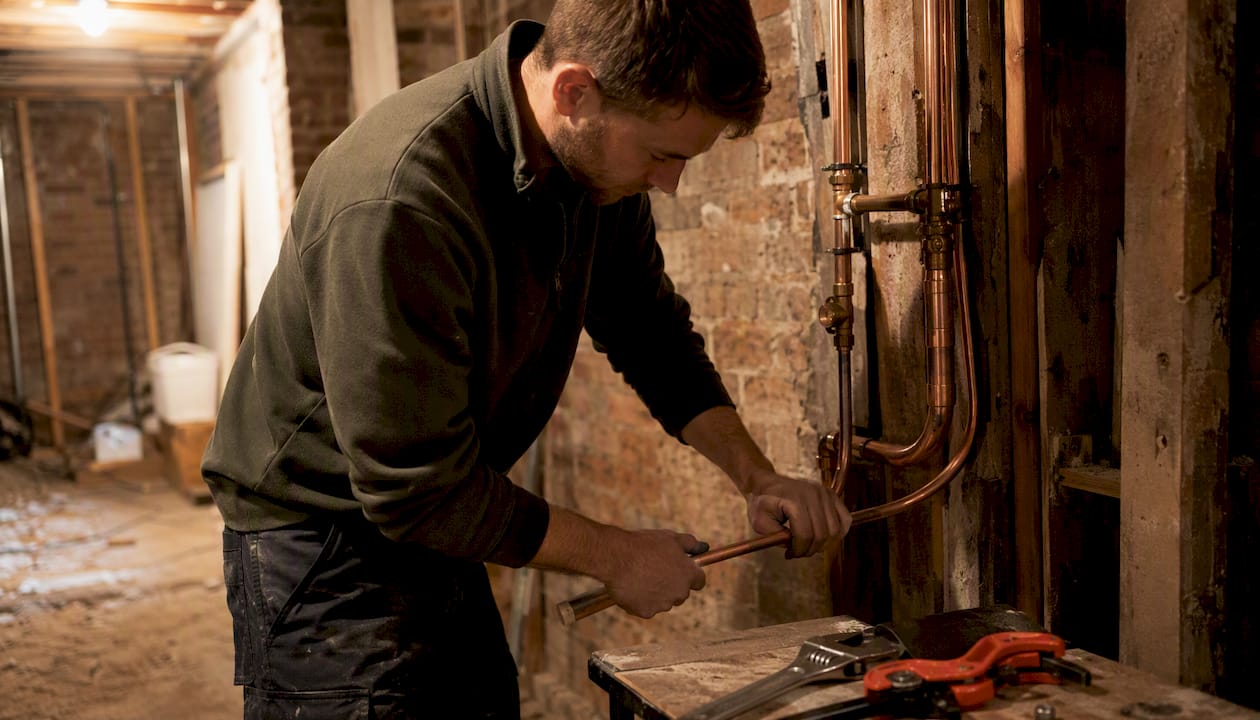
The approach that works is treating the gas safety record as part of the project file from the start, not an afterthought at practical completion. Every disconnection, reconnection, and test should be documented by the Gas Safe engineer who carries it out, with copies retained alongside the building control sign-off and other compliance records. For projects that also involve structural work, coordinating gas compliance with building regulations from the outset prevents costly rework later.
Tenenltd has been managing residential refurbishments across West and Central London since 2006. The coordination between trades, including Gas Safe registered engineers, is built into every project plan, not bolted on at the end.
Gas-safety-aware renovation and refurbishment in West London
Compliance paperwork and contractor coordination during a refurbishment can feel like a project in themselves. Tenenltd handles both. As a London-based construction and refurbishment company with nearly two decades of experience, we schedule Gas Safe registered engineers at the correct project phases, maintain a running safety record throughout works, and hand over a complete compliance file at practical completion.

Whether you are planning a kitchen or bathroom renovation where gas appliances need repositioning, or a full property refurbishment that involves new gas installations, our project management approach keeps your property compliant at every stage. We serve homeowners across Fulham, Chelsea, Kensington, Chiswick, Hammersmith, and Notting Hill. Request a site survey today and get a clear plan for your project, gas safety included.
Sources
The sources below are the authoritative references for everything covered in this guide.
Recommended
Comments