
Best flooring products for London homes: a clear guide
TL;DR:
Engineered wood, large-format porcelain, luxury vinyl tile, and carpet are the best flooring choices for London homes. Proper subfloor preparation and professional installation are essential to ensure durability and performance over time.
For most London homes, the best flooring products are engineered wood, large-format porcelain, luxury vinyl tile (LVT), and carpet — each suited to different rooms and property types. The smartest next step is booking a site survey with a professional London contractor before committing to any material.
Here is why each material works so well in London:
Engineered wood offers greater dimensional stability than solid wood and handles underfloor heating reliably, making it the go-to choice for reception rooms and open-plan living spaces.
Large-format porcelain creates a calm, spacious feel with fewer grout lines, ideal for kitchens and ground-floor receptions.
LVT is fully waterproof and hard-wearing. There is a real performance gap between entry-level products with thinner wear layers and premium rigid-core LVT with thicker wear layers, so specify the thicker option for hallways and kitchens.
Carpet remains the right choice for bedrooms and upper floors where warmth and acoustic comfort matter.
Underfloor heating quick check: engineered wood and rigid-core LVT both work well; porcelain is excellent; carpet is generally unsuitable. Always confirm the maximum surface temperature with your installer — many LVT products cap at 27°C.
Three questions to ask any contractor at first contact: Do you carry out a full site survey before quoting? Will the quote be written and itemised? How do you handle acoustic underlay and subfloor preparation in flats?
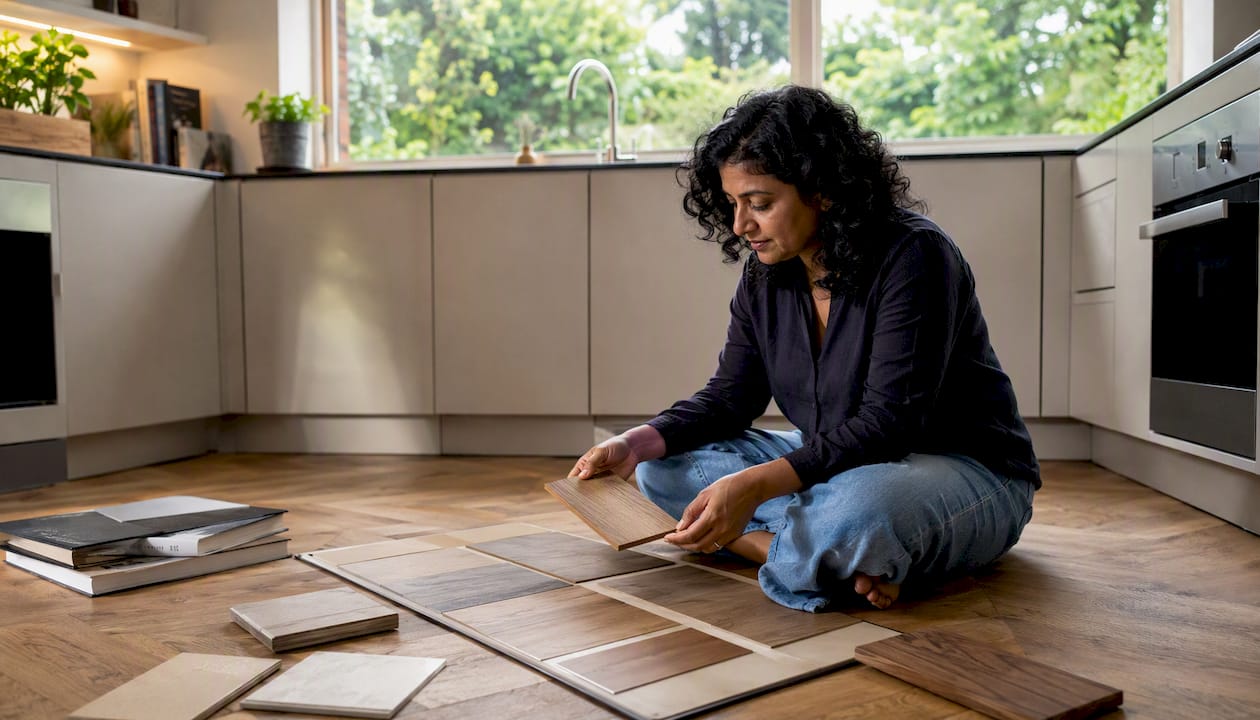
Pro Tip: Borrow large sample boards and view them in your own rooms at different times of day. London lighting changes how wood and stone finishes look compared with a showroom, and a small swatch rarely tells the full story.
The main cost drivers on any project are subfloor preparation, acoustic underlay, material grade, and labour — not the floor itself.
Table of Contents
Which design choices age well in London homes?
Wide planks and herringbone layouts are the two formats designers consistently recommend for longevity. Both age well and adapt as décor changes around them, so you are not locked into a look that dates in five years. Wide-plank engineered oak suits the proportions of Victorian and Edwardian rooms particularly well, while herringbone works in both period and contemporary interiors. The floor anchors the whole room, and getting the pattern right at the start means you rarely need to revisit it.
What practical constraints do London properties create?
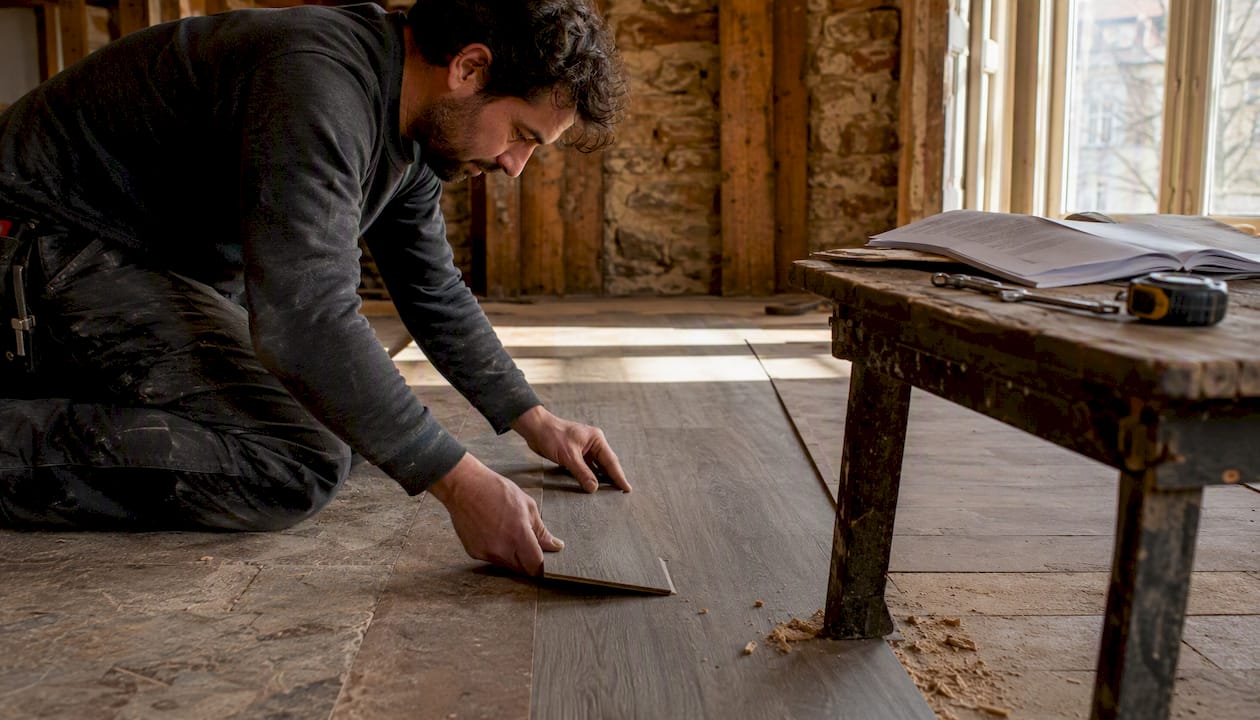
London period properties and high-density flats present two recurring challenges: moisture control and sound insulation. Older subfloors in Victorian terraces are often uneven or damp, requiring levelling compound and damp-proof membranes before any floor goes down. In leasehold flats, building regulations and lease terms typically require a minimum acoustic performance between floors, which determines underlay specification. Professional subfloor preparation is not optional — skipping it is the most common cause of post-installation problems. For period properties specifically, a Victorian house refurbishment approach that addresses the subfloor first protects every penny spent on the floor above.
How durable is each flooring type in London conditions?
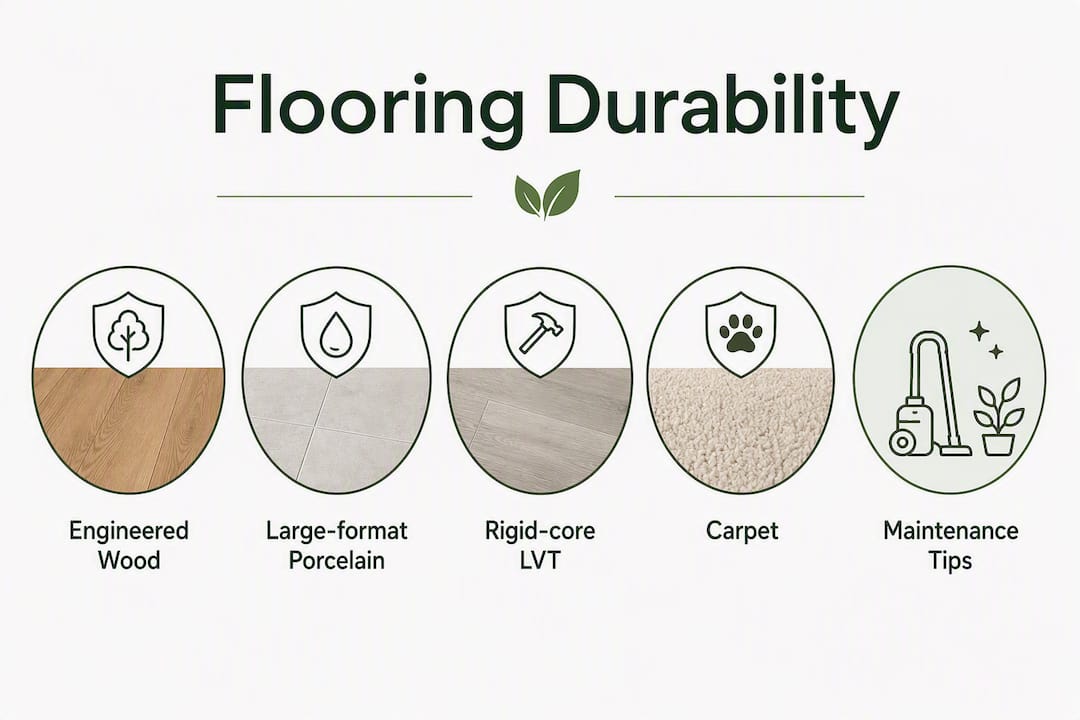
Engineered wood, when correctly installed and maintained with periodic oiling or re-coating, lasts decades and can be sanded and refinished. Rigid-core LVT with a 0.55mm wear layer handles heavy foot traffic in hallways and kitchens without visible wear for many years. Large-format porcelain is virtually indestructible under normal residential use; the grout lines are the only maintenance point. Carpet in bedrooms needs vacuuming regularly and professional cleaning every few years, particularly in London where urban dust accumulates quickly. Mixing materials across a property — engineered wood in receptions, LVT in kitchens — balances durability, aesthetics, and budget effectively.
What are the sustainability credentials of these materials?
Sustainably sourced engineered wood carrying FSC or PEFC certification is the strongest eco-conscious choice, using less virgin timber than solid wood while delivering the same appearance. Large-format porcelain has a long service life, which reduces replacement frequency and associated waste. LVT is a synthetic product, though longer-lasting premium grades reduce the volume going to landfill over time. For homeowners prioritising sustainability, the sustainable refurbishment approach — specifying certified materials and minimising subfloor waste — is worth discussing with your contractor at the survey stage.
Do you need planning permission for new flooring in London?
In most cases, replacing flooring inside a property does not require planning permission. However, there are exceptions worth knowing. If your property is listed, any material change to internal finishes may require listed building consent from your local authority. In leasehold flats, your lease may require written consent from the freeholder before installing hard flooring, particularly where acoustic performance standards apply. Permitted development rights cover most internal works, but always check with your local London borough if you are unsure. Your contractor should flag any compliance requirements during the site survey.
How can flooring choices affect your home insurance?
Flooring changes can affect your home insurance in two ways. First, a significant refurbishment increases the rebuild value of your property, so you should notify your insurer and review your sum insured after any major project. Second, some insurers treat water damage claims differently depending on whether hard flooring or carpet is fitted, particularly in ground-floor or basement rooms. Using a professional contractor who provides a written warranty for the installation gives you documented evidence of workmanship quality, which can support any future claim. Always inform your insurer before starting a substantial renovation.
Tenenltd: professional flooring installation across West and Central London
Choosing the right material is only half the decision. The quality of the installation, and the contractor behind it, determines how well that floor performs for the next 20 years.
Tenenltd has been delivering property refurbishments across West and Central London since 2006. Every flooring project starts with a no-obligation site survey covering subfloor condition, moisture testing, acoustic requirements for flats, underfloor heating compatibility, and in-home sample placement. You receive a written, itemised quotation covering materials, subfloor preparation, acoustic underlay, labour, and a realistic timeline — so there are no surprises once work begins.
Projects are managed in-house with director oversight throughout, and all work comes with a warranty and aftercare support. Tenenltd serves Fulham, Chelsea, Kensington, Chiswick, Hammersmith, Notting Hill, and the surrounding areas. For a broader look at what a full refurbishment involves, the residential services page covers the complete scope.
Ready to move forward? Book your site survey and get a written quote from a contractor who knows London properties inside out.
Key takeaways
Engineered wood, large-format porcelain, rigid-core LVT, and carpet are the best flooring products for London homes, but professional subfloor preparation and acoustic underlay are as important as the material itself.
Point | Details |
Top materials for London | Engineered wood, large-format porcelain, LVT, and carpet each suit specific rooms and property types. |
LVT wear-layer matters | Specify 0.55mm rigid-core LVT for hallways and kitchens; 0.3mm entry-level products wear faster under heavy use. |
Subfloor prep is non-negotiable | Skipping levelling, damp-proofing, or acoustic underlay is the most common cause of post-installation defects. |
Design longevity | Wide planks and herringbone age well and adapt to changing décor, preserving the room’s look over time. |
Tenenltd | Offers site surveys, written itemised quotes, and in-house project management for flooring projects across West and Central London. |
Recommended
Comments